Belvedere district
Visit the Belvedere Palace in Vienna: Klimt's The Kiss, the baroque gardens, the Lower Belvedere and Orangery. Tickets, tips and what to skip.
Vienna: Upper Belvedere & Permanent Collection Entry Ticket
Quick facts
- District
- 3rd (Landstrasse)
- Nearest tram
- D (Schloss Belvedere stop)
- Upper Belvedere ticket
- Around 16€ (adult)
- Key work
- Klimt's The Kiss (1907–08)
The Belvedere and Klimt’s most famous canvas
The Upper Belvedere palace houses what is arguably the most-visited single painting in central Europe: Gustav Klimt’s The Kiss (1907–08). On a gold-leaf field, two figures — a man and a woman — embrace in a cloak of Byzantine-patterned gold, their faces tilted, the surrounding darkness suggested rather than stated. The gold is actual gold leaf applied to the surface.
The flowers at the base are painted with botanical precision. The figures are identifiable as distinctly human beings within an almost entirely abstract decorative environment. It is simultaneously one of the most intimate and most formally ambitious paintings of the early 20th century, and it has been drawing longer queues in its room than the Mona Lisa does in the Louvre — scaled for the size of the institution.
| Where | 3rd district (Landstrasse), Tram D stop “Schloss Belvedere” |
| Cost | Around 16€ Upper Belvedere; combined tickets available |
| Time needed | Half a day for Upper + Lower Belvedere and gardens |
| Getting there | Tram D from Schwarzenbergplatz, or 15 min walk from Hauptbahnhof |
| Best time | Weekday mornings, April–June or September–October |
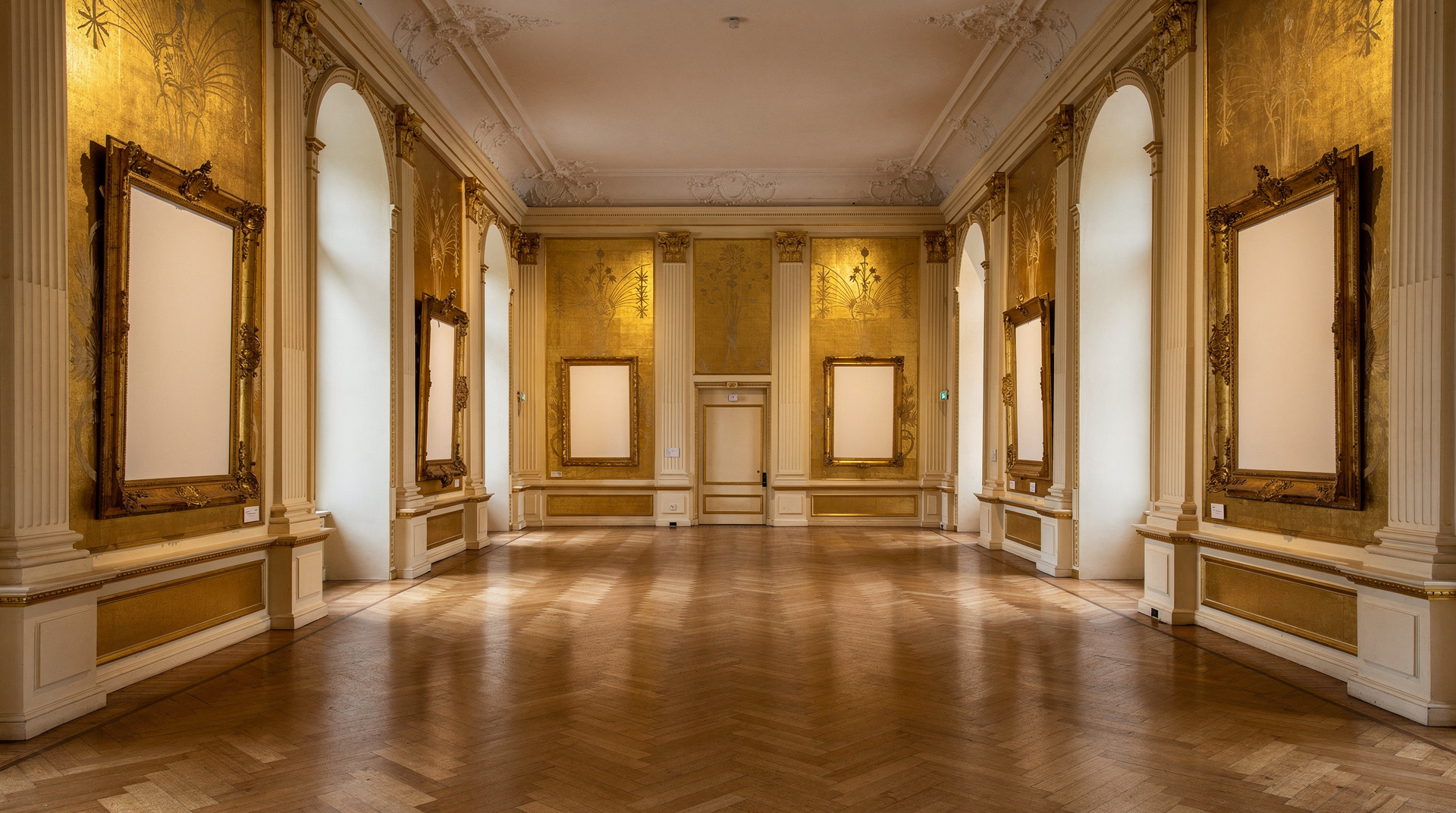
But reducing the Belvedere to The Kiss misses a remarkable collection. The permanent holdings cover Austrian art from the baroque period through the Vienna Secession and Austrian Expressionism — with major works by Egon Schiele, Oskar Kokoschka, and a strong selection of 18th-century European painting including Flemish and Italian works from Prince Eugene’s original collection. The building itself, built by Prince Eugene of Savoy between 1717 and 1723 to designs by Johann Lukas von Hildebrandt, is one of the finest baroque palaces in Europe — and unlike Schönbrunn or the Hofburg, it was built for pleasure and display rather than practical governance, which gives it a lighter, more theatrical quality.
Upper Belvedere
The Upper Belvedere houses the permanent collection across three floors, each covering a distinct period of Austrian art history. The ground floor covers medieval and baroque work, including several altarpieces from dissolved Austrian monasteries and a strong survey of 17th-century Austrian religious painting.
The first floor is where most visitors spend their time — the Klimt rooms (several major works, not just The Kiss, including Judith I and the extensive collection of preparatory studies) and the Schiele and Kokoschka holdings that make the Belvedere’s Vienna Secession and Expressionism holdings among the deepest anywhere. The top floor surveys Austrian Biedermeier painting from the early 19th century, a period often overlooked but characterised by a sharp-eyed domesticity — the painters of the Biedermeier era documented middle-class Viennese life with a specificity that constitutes an extraordinary social record.
Buy Upper Belvedere entry with the permanent collection ticket — the online booking avoids the entrance queue, which can grow considerably through mid-morning on busy days, and confirms your entry time.
A private Belvedere and Klimt guided tour is the best way to understand the symbolism in The Kiss and Klimt’s relationship with his models, patrons and the Secession movement — the story of the painting is considerably richer with a knowledgeable guide explaining the context that the room labels alone cannot provide.
Lower Belvedere and Orangery
The Lower Belvedere (at the north end of the formal gardens, with a separate entrance from Rennweg) houses the Baroque Museum and the Orangery. The Baroque Museum shows Prince Eugene’s original collection, including the marble sculptures that once decorated the palace’s grand staircase before they were moved indoors for conservation. The works here — by Georg Raphael Donner and Balthasar Permoser among others — represent the high point of Austrian and Central European baroque sculpture and are as important historically as anything in the Upper Belvedere.
The Orangery occupies a long, barrel-vaulted hall designed for overwintering tropical plants — a practical space transformed into one of the most beautiful exhibition rooms in Vienna. It hosts temporary exhibitions and, regularly, classical concerts in an intimate setting that the Upper Belvedere’s scale does not permit.
The Lower Belvedere is consistently overlooked by visitors who go directly to the Upper Belvedere for The Kiss and leave. Combined tickets covering both buildings are available and represent good value. The Marble Hall in the Lower Belvedere is alone worth the visit — a gilded, frescoed ceremonial room where the ceiling fresco by Martino Altomonte depicts Apollo and the Muses, and Prince Eugene’s equestrian portrait in full regalia anchors the east wall. It is one of the finest interiors in Austria.
The gardens
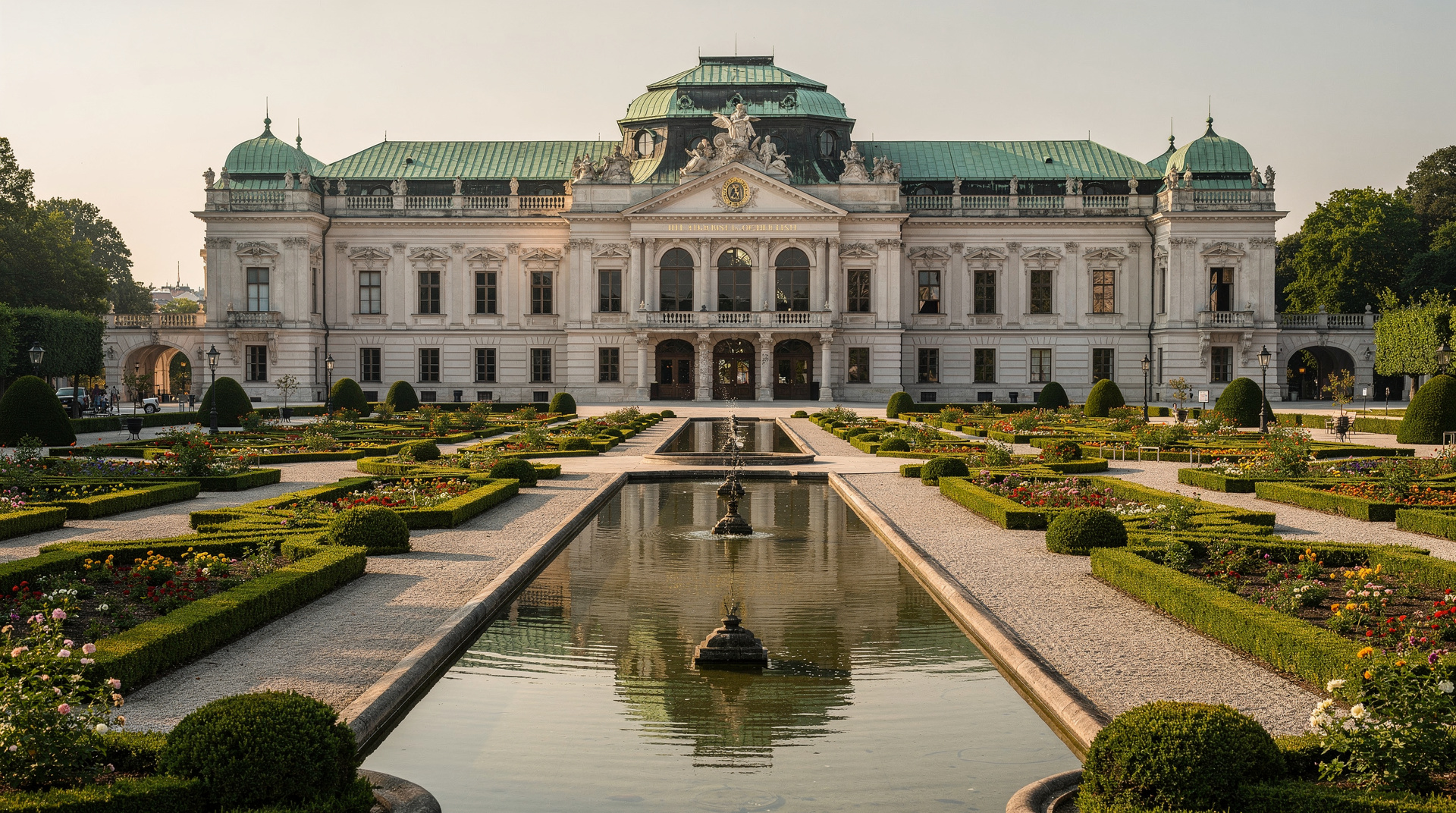
The formal French gardens between the two palaces are free to enter from the main gate on Prinz-Eugen-Strasse (open from 06:30). The central axis, running from the Lower Belvedere fountain through the ornamental parterres to the grand entrance of the Upper Belvedere, is one of Vienna’s finest formal garden walks — and one of the very few great baroque garden sequences in the city that is genuinely accessible without a palace ticket.
Sphinx sculptures flank the steps on the central axis; the reflecting pools in front of the Upper Belvedere mirror the palace facade, a composition most effective in morning light when the building faces the sun. The formal parterres on either side of the central axis were restored in the late 20th century to their 18th-century designs and are planted with period-appropriate species — clipped hedges, roses, and the ornamental cabbages that 18th-century gardening favoured in geometric beds.
The Alpine Garden (Alpengarten) on the eastern edge of the Belvedere grounds is one of Europe’s oldest alpine plant gardens, in continuous cultivation since 1803. It is open from April to July with a separate admission charge and specialises in high-altitude Central European species — dwarf conifers, alpine wildflowers, and rock garden plants that have no parallel in any other Vienna garden. Specialised but excellent for garden enthusiasts.
Getting there
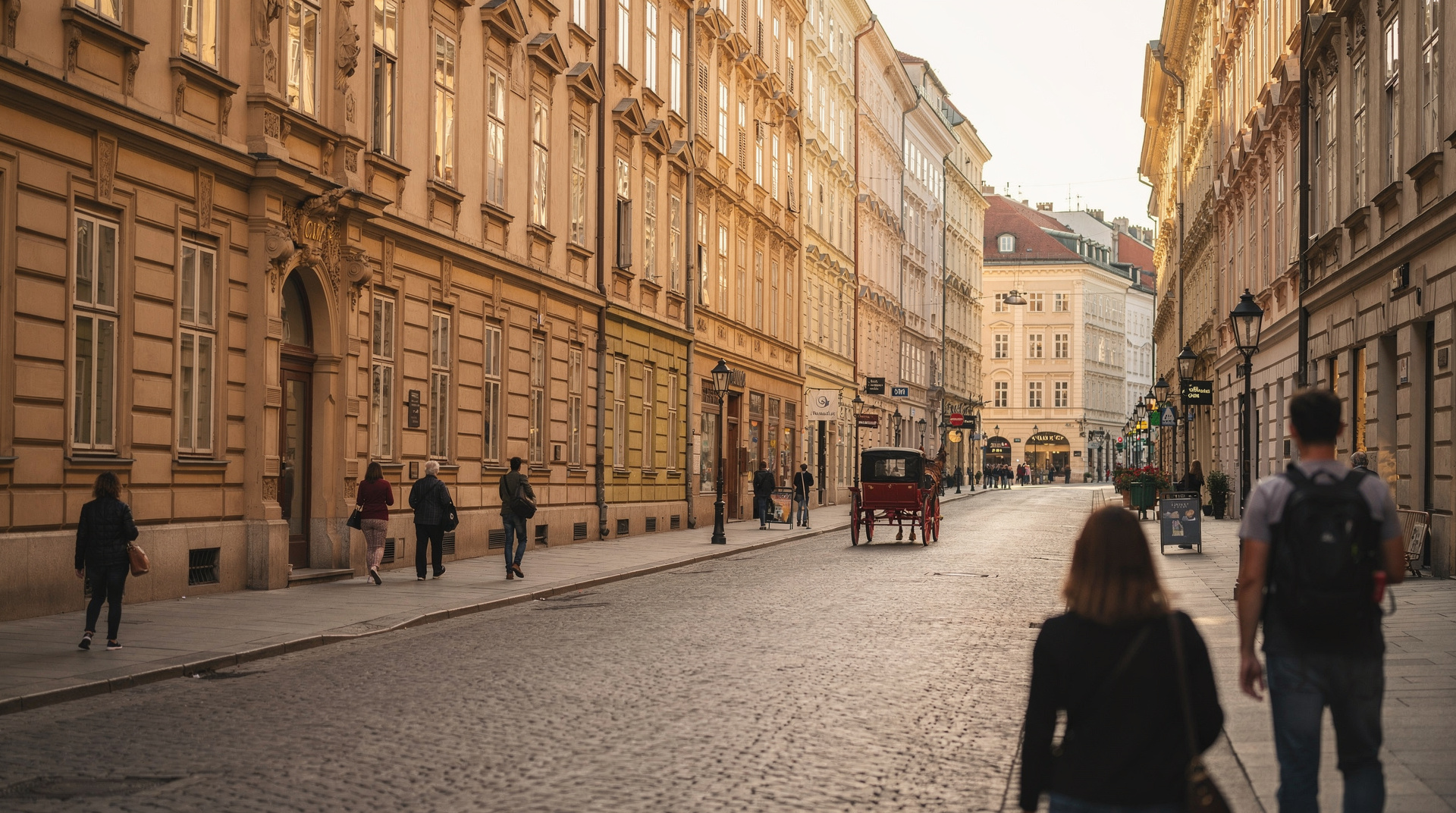
Tram D from the Schwarzenbergplatz to Schloss Belvedere takes about 10 minutes from the Ringstrasse — direct and reliable. By foot from the Hauptbahnhof (main train station): 15 minutes through Arsenalstrasse. By foot from the Innere Stadt: 25 minutes past the Schwarzenbergplatz, through one of Vienna’s finest 19th-century residential streets. The walk from the Schwarzenbergplatz through the Landstrasse district gives a good sense of how the Belvedere related to the city — it was built just outside the old city limits, in a position that allowed the gardens to extend toward the hills.
Belvedere 21
Belvedere 21 — formerly the Austrian Pavilion at the 1958 Brussels World’s Fair, relocated to Vienna and reopened as an exhibition space in 2011 — stands in the Schweizergarten park south of the Südbahnhof, about 15 minutes’ walk from the Upper Belvedere.
It specialises in Austrian contemporary art from 1945 to the present: an intentionally undervisited branch of the Belvedere group, which makes it one of the more rewarding spaces for anyone interested in postwar Austrian abstraction, Vienna Actionism, and the generations of Austrian artists who follow. The building, a glass-and-steel modernist structure by Karl Schwanzer, is itself an important work of 1950s architecture, and the contrast with the baroque formality of the main Belvedere complex is deliberately extreme.
Planning your visit and going deeper
For the fullest background on the collection, layout and ticket options, the Belvedere Palace guide goes room by room in more depth than fits here. Klimt enthusiasts should also read the Klimt trail through Vienna, which links the Belvedere’s holdings to his other Vienna sites, and the Egon Schiele and the Vienna Secession movement is covered more fully in the Schiele and Vienna Secession guide — useful context before the first-floor rooms.
The Belvedere skip-the-line guided tour is a straightforward alternative to the private Klimt tour above if you want a fixed-departure group option rather than a private booking.
If time allows only one more Vienna museum stop afterward, the Innere Stadt walking district ties the Belvedere’s baroque architecture back to the historic centre it was built to complement, with the Ringstrasse’s grand civic buildings along the way.
Shaping a half-day around the Belvedere
The simplest rhythm is to start in the gardens and let the day unfold downhill or uphill, depending on which palace you want fresh. Many visitors head straight for the Upper Belvedere while their energy is highest, spend real time in the Klimt rooms, and then drift through the parterres toward the Lower Belvedere, where the Marble Hall and the Baroque Museum reward a slower pace. Finishing in the quieter Lower Belvedere also means the end of the visit feels like a release rather than a rush.
If you only have a morning, decide in advance what you are protecting. For most people it is The Kiss and the first-floor rooms, followed by a walk through the formal gardens. If you have the whole half-day, add the Lower Belvedere and leave room for a pause on a bench by the reflecting pools. The Vienna 3-day itinerary places the Belvedere alongside the other major sights, and the Vienna weekend itinerary shows how to fit it into a shorter stay without losing the rest of the city.
Pairing the Belvedere with other stops
The Belvedere sits comfortably between the old centre and the modern railway quarter, so it combines well with a wide range of other visits:
- Imperial history: the palace was built for pleasure rather than government, which makes it a useful counterpoint to the formal state rooms of the Hofburg palace guide and to Schönbrunn. The comparison in Schönbrunn vs Hofburg helps you decide how many palaces your trip really needs.
- Other art museums: after the Belvedere’s Austrian holdings, the Leopold Museum guide offers a complementary look at Schiele and the Secession, and the best museums in Vienna overview helps you choose among the rest.
- Coffee and cake: the walk back toward the centre is a natural moment for a café stop, and the Viennese coffee house guide explains how to enjoy one without falling into a tourist trap.
- The Ringstrasse: the Ringstrasse architecture walk makes a good companion for the tram or walking route back, and the wider Ringstrasse district page sets out what lies along it.
How to look at the paintings
Crowds in the Klimt room are part of the experience, but a few habits make the visit more rewarding. Look at The Kiss first from a distance, where the pattern of the gold reads as a single glowing shape, and only then step closer to see the surface detail, the flowers at the bottom edge and the way the two faces are handled compared with the ornament around them. Then turn to the other Klimt works in the same rooms: the contrast between the decorative gold and the more psychological portraits shows how varied his output was.
The Schiele and Kokoschka rooms ask for a different kind of attention. These are not canvases built to dazzle from across the room; they reward slow, close looking at line, posture and colour. If you have read the Schiele and Vienna Secession guide beforehand, the rooms make more sense, and the Klimt trail through Vienna explains how these artists relate to one another. For a personal account of following Klimt around the city, the Klimt trail diary is a readable companion.
The upper floor’s Biedermeier paintings are easy to hurry past, yet they are often the most quietly absorbing part of the collection. Take a few minutes to read the details of interiors, clothing and small domestic scenes; they tell you how ordinary Viennese lived in the years before the Ringstrasse transformed the city.
Practical comfort and timing
A palace visit involves more standing and walking than most people expect, so wear comfortable shoes and plan a seated break in the middle. The gardens are open to everyone, which makes them a convenient place to regroup between buildings, and they are pleasant in good weather but still worth a stroll on a cloudy day, when the reflecting pools take on a softer look.
Season changes the feel of the visit. Spring and early autumn show the gardens at their most graceful, while winter turns the Belvedere into a quieter, more contemplative stop; the Vienna in winter guide and the best time to visit Vienna page help you weigh the options. If you are travelling with children, the Vienna with kids guide suggests how to keep younger visitors engaged, and the open gardens give them room to move after the galleries. If mobility is a concern, check the accessible Vienna guide before you go.
Finally, remember that the Belvedere is a place to take your time. The collection is rich enough that trying to see everything leads to fatigue, while choosing a handful of rooms and giving them proper attention leaves a much clearer memory of the day. Use the table below to settle on the ticket approach that suits your own pace.
Comparing your Belvedere ticket options
| Option | Best for | Trade-off |
|---|---|---|
| Upper Belvedere entry ticket | Solo visitors who want The Kiss and the permanent collection at their own pace | No guide, so context is limited to room labels |
| Private Klimt guided tour | Visitors wanting the deeper story behind the paintings | Higher cost, needs advance booking |
| Skip-the-line guided tour | Groups or fixed schedules, avoiding entrance queues | Fixed departure time, less flexibility |
| Combined Upper + Lower ticket (at the ticket office) | Anyone with a full half-day to spend | Requires more time to see both buildings properly |
Top experiences
Bookable activities with verified prices and instant confirmation on GetYourGuide.