Vienna vs Prague: which city should you visit?
Vienna: Transfer to Prague via fabulous Cesky Krumlov
Should I visit Vienna or Prague?
Prague wins on medieval atmosphere, beer culture, and the visual impact of the old town from Charles Bridge. Vienna wins on museum depth, classical music, Habsburg imperial heritage, and coffee-house culture. Prague is cheaper; Vienna is more sophisticated. The best Central European itinerary includes both — 4 hours apart by train, or 8–10 hours via the extraordinary Český Krumlov.
Vienna and Prague: different kinds of extraordinary
Vienna and Prague are the two most frequently compared capitals in Central Europe, and the comparison is legitimate: both are former imperial seats, both have extraordinary old towns, both attract millions of tourists annually. But they are fundamentally different cities and the comparison obscures as much as it illuminates.
This guide does the honest work: what each city does better, what each disappoints on, and how to make the trip work if you want both.
| Vienna | Prague | |
|---|---|---|
| Best for | Museums, classical music, imperial grandeur | Medieval streetscapes, beer, budget travel |
| Daily budget (mid-range) | around €90–130/day | around €60–85/day |
| Ideal length of stay | 3–4 nights | 3 nights |
| Getting between the two | Railjet, around 4 hours direct | via Český Krumlov, around 8–10 hours |
| Best season | April–May, September–October | April–May, September–October |
The character difference
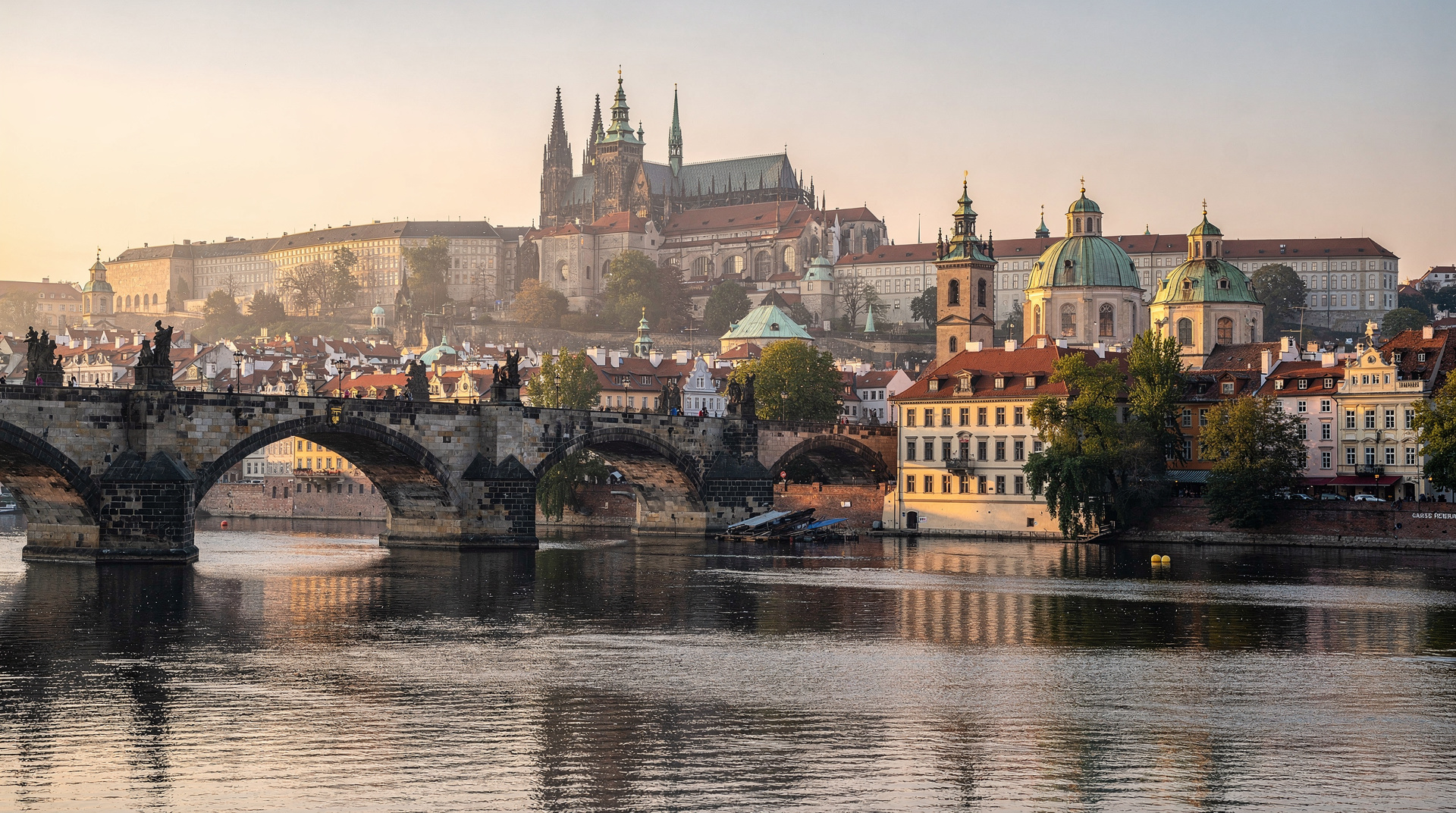
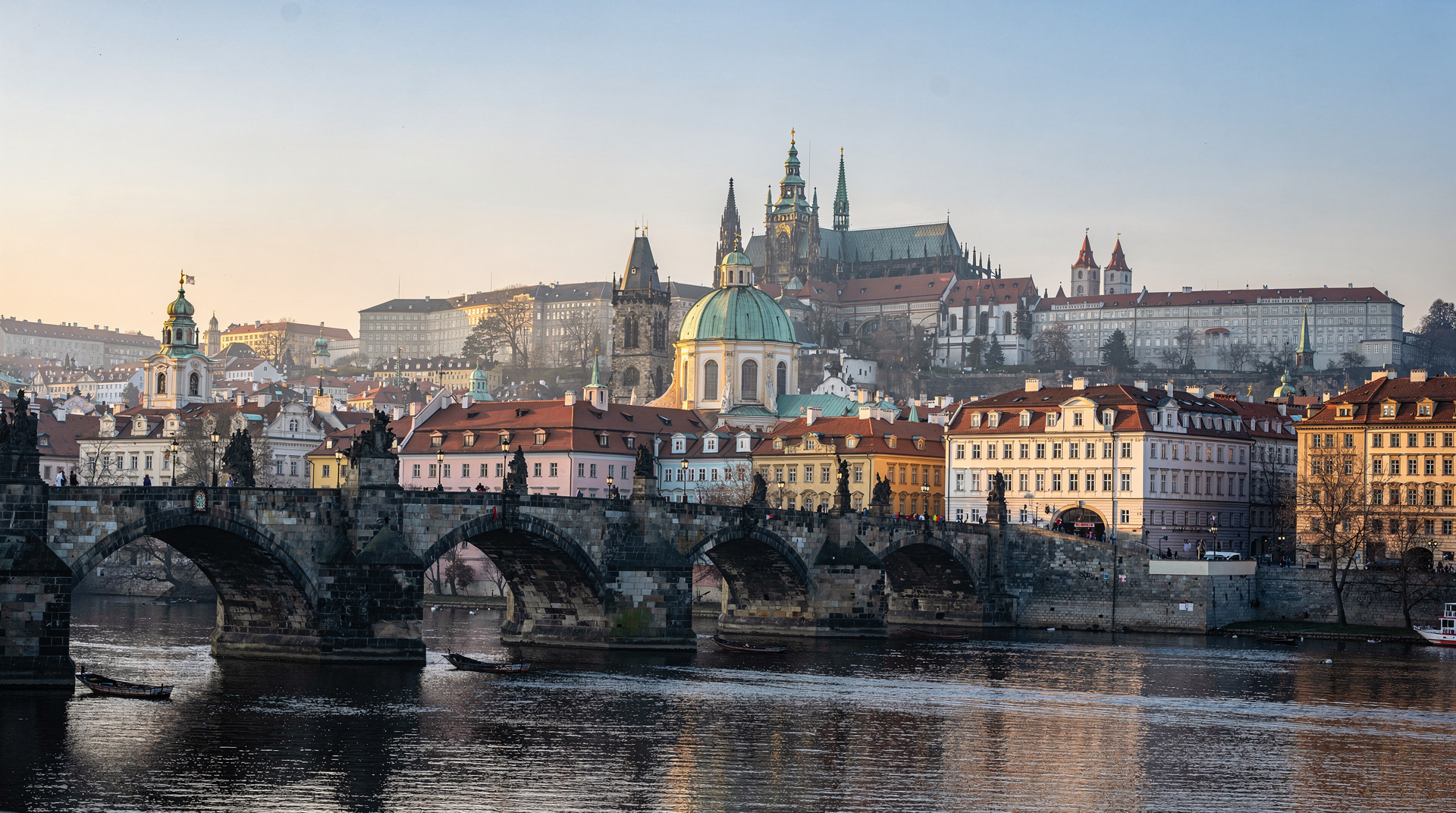
Prague is a medieval city that the 20th century largely left alone — first because the Habsburgs maintained it without radical rebuilding (unlike Vienna’s Ringstrasse transformation), then because Communist-era planning focused on outer districts. The result is an extraordinarily preserved old town of Gothic, Renaissance, and Baroque architecture, centred on the Vltava River and the dramatic castle hill. Walking from the Old Town Square across Charles Bridge to the castle district is one of the great urban walks in Europe.
The flip side: Prague’s success as a tourist destination has, in the Old Town at least, pushed out most of the authentic Viennese-style cultural life. The streets around Charles Bridge are saturated with tourist restaurants, souvenir shops, and the relentless pressure of a city that receives 10 million visitors annually in a core area that fits 10,000 people comfortably.
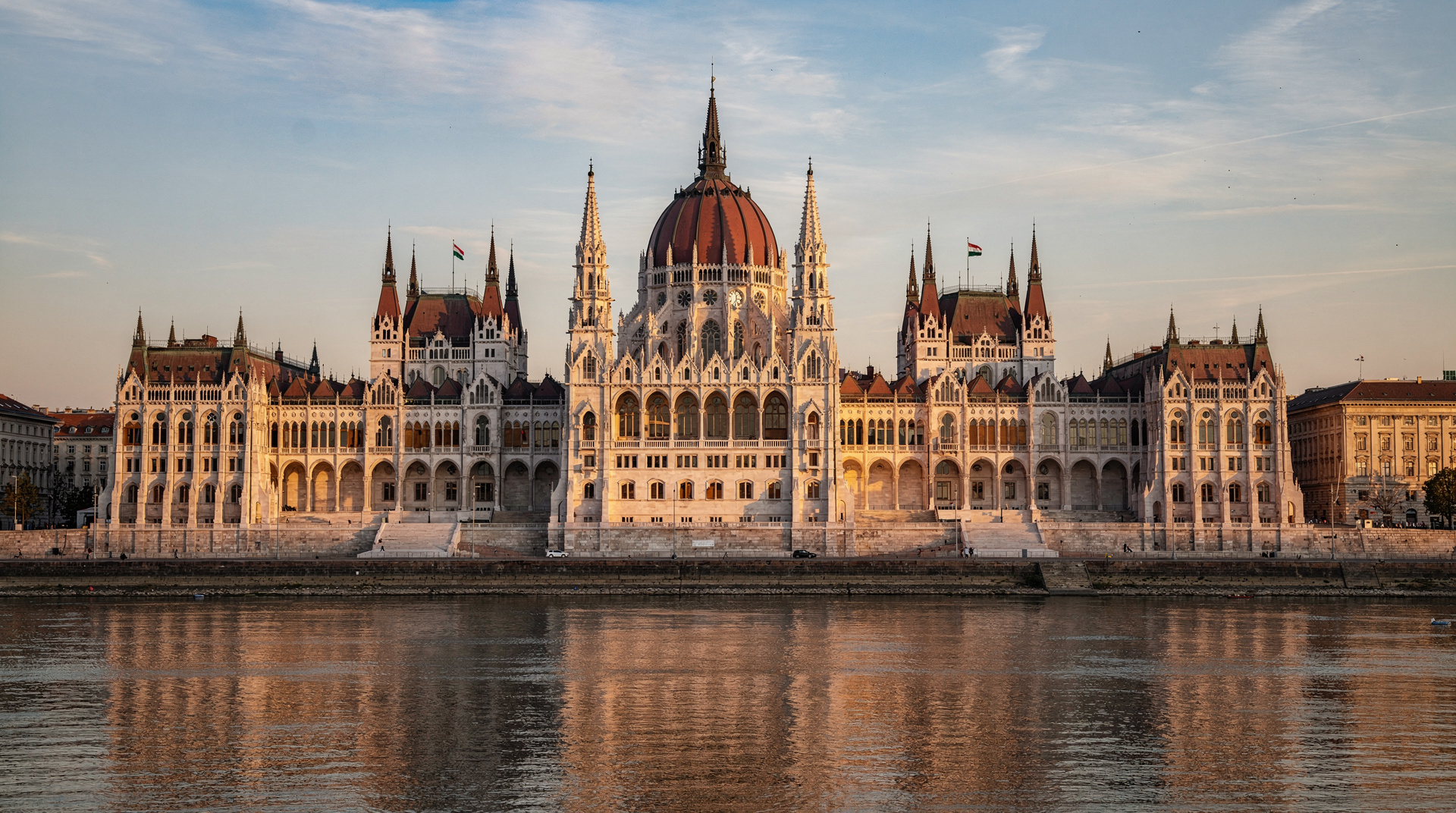
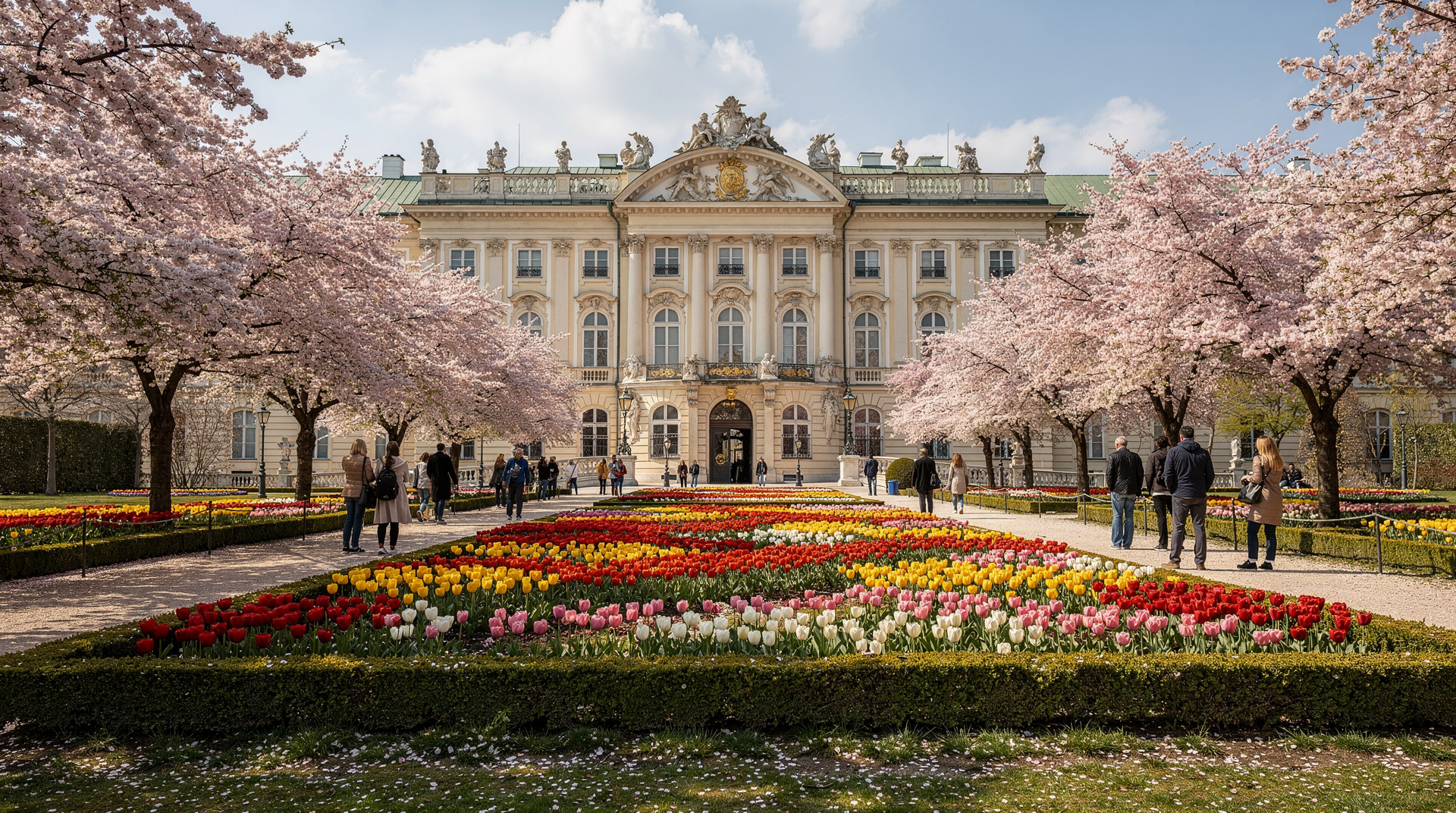
Vienna is a 19th-century city built on medieval foundations — the 1860s Ringstrasse redevelopment (Franz Joseph’s answer to Baron Haussmann in Paris) demolished much of the medieval fabric to create a showcase boulevard. The loss is real, but what replaced it — the Kunsthistorisches Museum, the State Opera, the Parliament, the Rathaus — is magnificent in its own right. Vienna’s culture is of the drawing room, the coffee house, the concert hall, and the palace. It is sophisticated rather than picturesque.
Cost: Prague wins
| Category | Prague | Vienna |
|---|---|---|
| Beer (0.5L pub) | €1.50–2.50 | €4–5 |
| Mid-range restaurant (per person) | €12–18 | €25–40 |
| 3-star hotel (central) | €60–90/night | €90–140/night |
| Major museum entry | €10–15 | €15–32 |
| Public transport (daily pass) | €3.50 | €5.80 |
Prague is approximately 30–40% cheaper than Vienna across most categories. Czech koruna (CZK) prices look unfamiliar — 1€ ≈ 25 CZK — but the value is clear. For budget travellers, Prague is the significantly stronger choice.
Architecture: different strengths
Prague’s medieval and baroque streetscapes are unsurpassed in Central Europe. The Old Town Square (Staroměstské náměstí) with the Astronomical Clock, the Týn Church’s gothic spires, and the 15th-century Town Hall is a genuinely extraordinary ensemble. Charles Bridge (Karlův most), flanked by 30 baroque statues, is the city’s iconic image. The Prague Castle complex (Hradčany) — with St. Vitus Cathedral, the Royal Palace, and Golden Lane — covers a hilltop that dominates both banks.
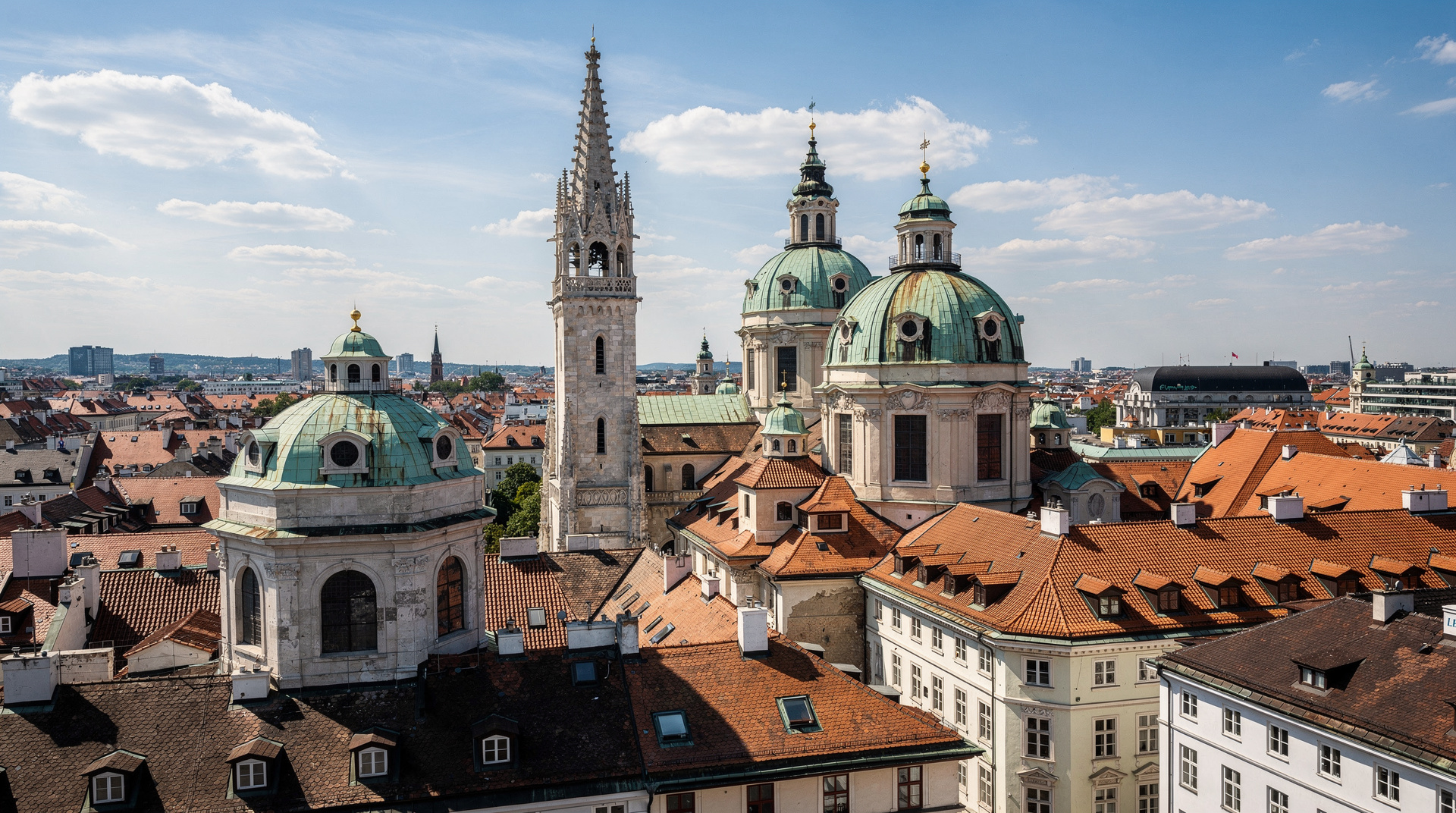
Vienna’s Ringstrasse and palace system is a different aesthetic register: the monumental neo-historical buildings of the 1870s–1890s (Parliament in Greek Revival, Rathaus in neo-Gothic, Kunsthistorisches Museum in neo-Renaissance) and the baroque palace complexes (Schönbrunn, Hofburg, Belvedere) set in vast landscapes. Vienna also has substantial Art Nouveau (Jugendstil) heritage — the Secession building, the Postsparkasse by Otto Wagner, the Stadtbahn stations.
Verdict: Prague’s medieval ensemble is more visually concentrated and immediately arresting. Vienna’s architectural range across centuries is broader and ultimately more diverse.
Museums: Vienna wins convincingly
Vienna’s museum offer is one of the richest in Europe:
- Kunsthistorisches Museum: Rubens, Velázquez, Bruegel, Vermeer
- Belvedere: Klimt’s The Kiss, Schiele, the finest Austrian collection
- Albertina: Major prints, drawings, and photography
- Naturhistorisches Museum: World-class natural history
Prague’s museums are good but not comparable in depth:
- National Museum (Národní muzeum): Czech history and natural history
- Museum of Decorative Arts: Strong collections of Czech glass and ceramics
- Mucha Museum: Alfons Mucha’s Art Nouveau illustrations
For art-focused travellers, Vienna is the much stronger destination.
Classical music: Vienna wins
Vienna’s classical music culture is genuinely unique. The Musikverein’s Golden Hall with the Vienna Philharmonic, the Staatsoper, the Spanish Riding School, and the Vienna Boys’ Choir collectively represent an irreplaceable concentration of classical music heritage. Prague has the Czech Philharmonic (excellent, and plays in the beautiful Rudolfinum) and fine baroque church concerts, but it operates in a different tier.
For classical music as the central purpose of a trip, Vienna is the destination. See our Vienna classical concerts guide.
Beer and pub culture: Prague wins
Czech beer is among the world’s finest, and Prague is the world capital of Pilsner lager (Plzeň/Pilsen is 90 minutes southwest). A half-litre of draught Pilsner Urquell or Kozel in Prague costs €1.50–2.50 in a neighbourhood pub. The Prague pub culture — sitting with beer and conversation, no rush, no pressure — has its own character distinct from the Viennese coffee house.
Vienna has good beer (Austrian beer is underrated — try Ottakringer Zwickl or a Schwechater) but nothing comparable to Czech beer culture in quality or price.
Overtourism: both cities struggle, Prague worse
Prague’s Old Town in summer (June–August) is genuinely overtouristed. The area around Charles Bridge, Old Town Square, and the castle district is packed to the point of diminishing returns — the beauty is there but the experience of navigating it is exhausting. The city’s response has been to encourage visitors to explore beyond the tourist core, with some success.
Vienna’s tourist pressure is also significant (particularly Schönbrunn and Belvedere in summer) but the city’s scale absorbs it more comfortably. The coffee houses, the Naschmarkt, and the Ringstrasse districts are tourist-visited but not tourist-dominated.
In shoulder season (April–May, September–October), both cities are significantly more enjoyable. Prague in October — the crowds thinned, golden light on the Vltava, the castle hill in autumn colour — is magnificent.
Food, nightlife and daily rhythm
Vienna’s evenings lean towards the coffee house, the wine tavern and the concert hall rather than the pub crawl — see the Viennese coffee house guide for how the city actually spends its afternoons, and the Vienna food guide for what to eat between sights. Prague’s evenings are built around the beer hall, and pub culture there runs later and louder than in Vienna’s more restrained Innere Stadt.
If you would rather have the local dishes explained than guess from a menu, a guided tasting of typical Austrian food that ends in a traditional coffee house is an easy way to cover the city’s cooking and its café habit in a single outing.
Budget travellers should also weigh accommodation and daily costs beyond the headline beer-and-restaurant comparison: our Vienna on a budget guide breaks down realistic daily spend, useful context if you’re deciding how many nights to allocate to each city given a fixed total budget.
Which city suits a shorter trip
If you only have 3–4 days total and can’t do both cities properly, Vienna rewards a slightly longer stay because its sights (Schönbrunn, the Ringstrasse museums, an evening concert) are spread out and each needs planning time — see how many days in Vienna for a realistic breakdown. Prague’s compact Old Town works better as a shorter, walkable 2–3 night visit.
For a single Vienna weekend rather than the combined trip, the Vienna weekend itinerary is the tighter version of this same planning logic. And if the choice is genuinely between two Central European capitals rather than Vienna vs Prague specifically, our Vienna vs Budapest comparison covers the other common pairing.
Whichever city you pick, be aware both suffer from a handful of avoidable overpriced experiences — the Vienna tourist traps guide covers what to skip so the comparison above isn’t undone by a bad first evening.
Choosing by travel style
The sharpest way to decide is to ask what a good day looks like for you rather than which city has the bigger reputation.
If your ideal day is slow and cultural, Vienna fits. You start with a long coffee in one of the traditional houses, spend the late morning in a museum, and finish with a concert or a quiet dinner. The best coffee houses in Vienna and the best museums in Vienna are the natural starting points, and the Vienna classical music itinerary shows how a whole trip can be built around the evenings.
If your ideal day is spent outdoors, on foot, with a beer at the end of it, Prague fits. The city rewards wandering without a plan, crossing bridges, climbing to viewpoints and stopping in pubs when you are tired. Vienna can do this too, particularly in the green belt around the city, but it is not the reason most people go.
If you travel with history in mind, the two cities are complementary rather than competing. Vienna is the place to understand the Habsburg court, and our Habsburg history for travellers and Ringstrasse architecture walk make the story concrete. Prague gives you the older, medieval layer that came before and alongside it.
If you travel with children, Vienna is easier to manage because its attractions are varied and its parks and zoo give families somewhere to unwind. See Vienna with kids for how that plays out in practice.
If you travel on a tight budget, Prague stretches money further, as the cost table above shows. That said, Vienna is not impossible on a small budget, and the Vienna City Card review is worth reading before you pay full price for transport and entries.
What each city does quietly well
Some of the best reasons to choose a city never make it into a headline comparison.
Vienna’s strength is consistency. A mediocre afternoon is rare because the standard of its cafés, bakeries and public spaces is high even away from the famous sights. Wandering the Naschmarkt area or the streets around the Museumsquartier tends to produce good surprises, and the wine taverns on the edge of town, described in the Heuriger guide, give an evening that has no real equivalent in Prague.
Prague’s strength is atmosphere. Even travellers who dislike crowds tend to remember the first view of the castle hill, and the city is at its best at dawn or after dark, when the streets belong more to residents than to tour groups.
Neither city is a bad choice. The mistake is expecting one to deliver what the other does best.
Combining Vienna and Prague: the right approach
The cities are 330km apart — 4 hours by Railjet, or 8–10 hours via the recommended Vienna–Český Krumlov–Prague route.
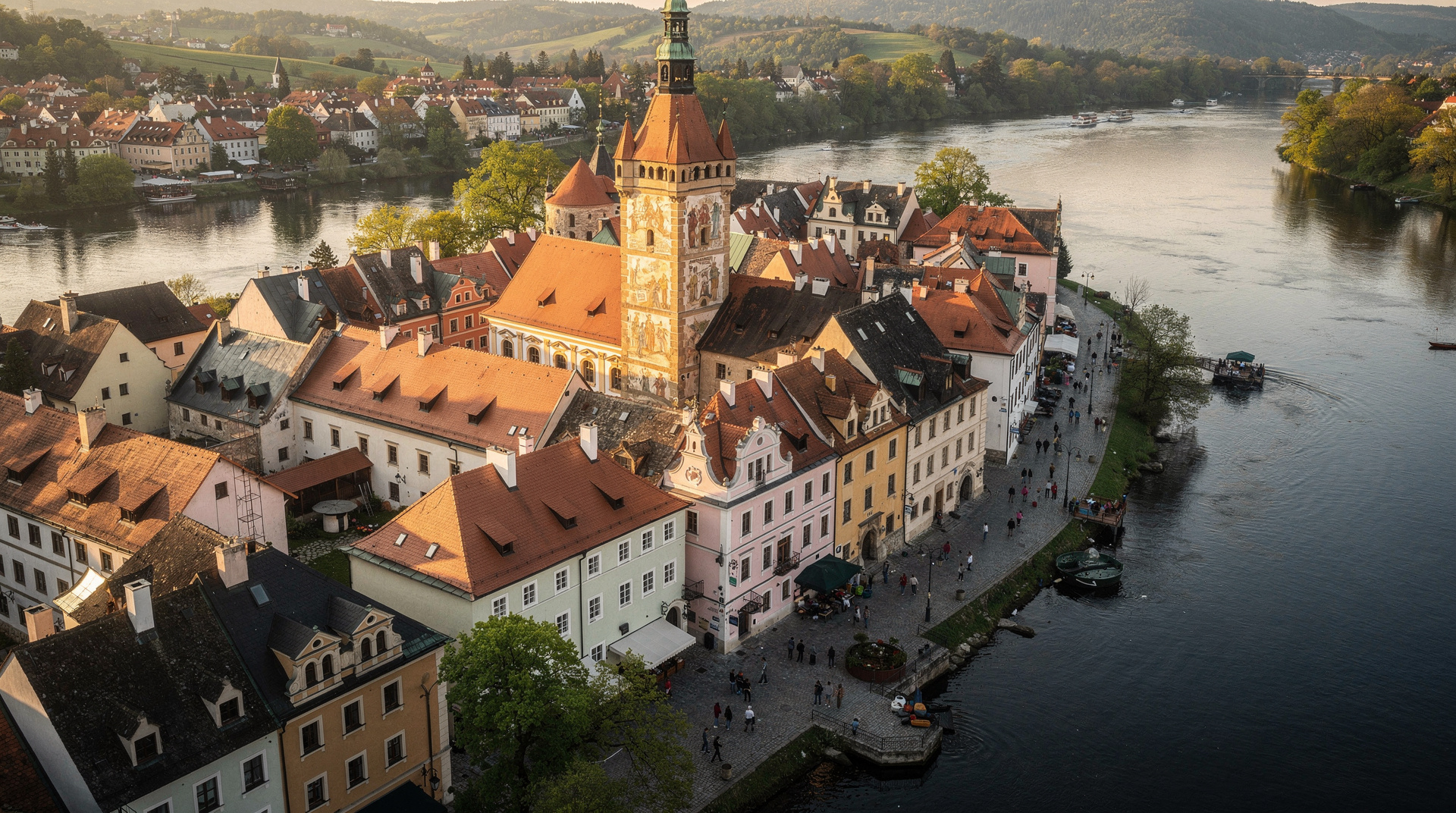
Vienna: transfer to Prague via fabulous Český KrumlovThe Český Krumlov route is strongly recommended for travellers doing the Vienna–Prague transit. Český Krumlov is a UNESCO-listed medieval castle town in southern Bohemia — a 13th-century castle above a dramatic Vltava bend, a perfectly preserved old town of medieval streets, and an atmosphere that the tourist development of Prague’s centre has largely lost. Stopping for 4–5 hours en route converts an otherwise unremarkable transit into a memorable destination.
See our Vienna to Prague options guide for transport details.
Suggested combined itinerary (7–8 days):
- Vienna: 3–4 nights
- Transfer day via Český Krumlov (half-day stop)
- Prague: 3 nights
Making the transfer day work
Treat the move between the two cities as part of the trip rather than a gap in it. If you take the direct train, the journey is simple and you arrive with the afternoon free. If you take the Český Krumlov route, plan for a full day, travel light, and decide in advance what you want from the town so the stop does not dissolve into aimless wandering. The Vienna to Prague via Český Krumlov guide and the overland itinerary lay out the sequence, and the Český Krumlov destination page helps you decide what to prioritise once you are there.
Leave Vienna with your sightseeing finished rather than half done. The city’s big palaces and museums take longer than visitors expect, so use the Vienna 3-day itinerary or the 4-day version to finish cleanly before you go.
If you are thinking even bigger, the three capitals itinerary shows how Vienna links with its other neighbours, and the best day trips from Vienna is useful if you would rather keep Vienna as a base and skip Prague altogether. A neighbouring capital is the simplest example of that approach: a day trip to Bratislava with a local-style approach to the city lets you sleep in the same Vienna bed each night.
Frequently asked questions about Vienna vs Prague
Is Prague cheaper than Vienna?
Yes — significantly. Prague is 30–40% cheaper across most categories. Beer costs €1.50–2.50 vs €4–5 in Vienna. Mid-range restaurants cost €12–18 vs €25–40.
Which city has better architecture?
Different eras. Prague’s medieval old town is more visually concentrated. Vienna’s Ringstrasse and palace system shows greater architectural range across centuries.
Which city is more overcrowded?
Prague’s Old Town is more severely overtouristed than Vienna. Both benefit significantly from shoulder season visits (April–May, September–October).
Which city is better for classical music?
Vienna — not even close. The Musikverein, Staatsoper, and Vienna Philharmonic represent a unique global concentration of classical music culture.
How do I combine Vienna and Prague in one trip?
Direct Railjet: 4 hours. The recommended option: Vienna–Český Krumlov–Prague transfer (8–10 hours including a half-day stop in one of Europe’s best medieval towns).
Top experiences
Bookable activities with verified prices and instant confirmation on GetYourGuide.