Vienna to Prague: all transport options with honest comparison
Vienna: Transfer to Prague via fabulous Cesky Krumlov
What is the best way to get from Vienna to Prague?
The direct ÖBB Railjet (4 hours, €39 advance booking) is the fastest and most comfortable. The FlixBus/RegioJet bus (4 hours, €15–25) is cheaper. The most memorable route is Vienna–Český Krumlov–Prague with an overnight or half-day stop in one of Europe's finest medieval towns (8–10 hours total). Choose by how much your journey matters versus just arriving.
Vienna to Prague: your options
Prague is approximately 330 kilometres north of Vienna — further than Budapest or Bratislava, but still well within overland travel range. The direct train takes 4 hours; the bus takes the same. The most interesting route — via Český Krumlov — takes 8–10 hours but adds one of Europe’s finest medieval towns to your itinerary at minimal extra cost.
This guide covers all options honestly.
| Where | Wien Hbf to Prague Hlavní nádraží (direct); via Český Krumlov for the scenic route |
| Cost | €15–30 bus; €39–80 train; €30–55 scenic transfer with Český Krumlov stop |
| Time needed | 4h direct; 8–10h via Český Krumlov |
| Best for | Direct train for speed; Český Krumlov route for an extra destination |
| Booking | Book train 4–8 weeks ahead for cheapest Sparschiene fares |
Option 1: Direct train (ÖBB Railjet)
Cost: From €39 advance; standard €60–80 Journey time: ~4 hours Departure: Wien Hbf (Vienna main station) Arrival: Prague Hlavní nádraží (Prague main station) Frequency: Several trains per day
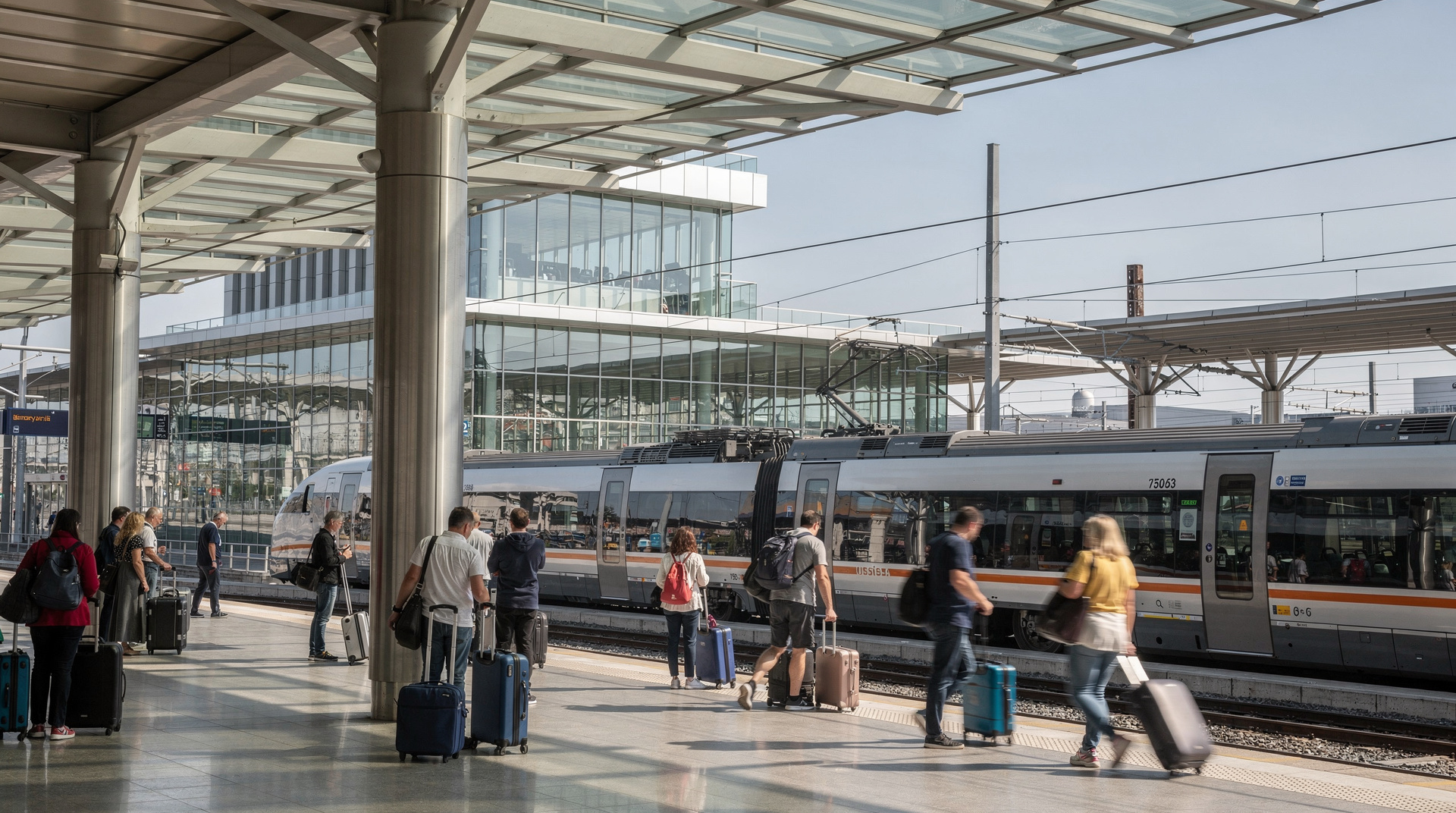
The ÖBB Railjet runs direct between Wien Hbf and Prague Hlavní nádraží — no changes, comfortable seating, café-bistro car, Wi-Fi. This is the fastest and most comfortable overland option.
Book at: oebb.at or Czech Rail (cd.cz). Book 4–8 weeks in advance for the cheapest Sparschiene fares (from €39 each way). Last-minute standard fares can reach €80+.
Class: Second class is comfortable for 4 hours. First class adds quieter carriages and more legroom for approximately €15–20 more.
At Prague: The main station (Hlavní nádraží) is in the New Town (Nové Město), 10 minutes’ walk from Wenceslas Square and the city centre. Metro line C connects to the Old Town Square area (Náměstí Republiky, 2 stops).
Option 2: Bus (RegioJet, FlixBus)
Cost: €15–30 (RegioJet advance); FlixBus similar Journey time: 4–4.5 hours Departure: Wien Hbf area or nearby bus stations Arrival: Prague Florence bus station (central)
RegioJet is the recommended bus option: modern coaches with large windows, free Wi-Fi, free drinks, and on-board attendants. Significantly more comfortable than a standard FlixBus. Book at regiojet.com. Prices from €15 advance booking.
FlixBus is cheaper on some routes but basic by comparison. The Vienna–Prague route is well-served; check flixbus.com for current prices.
Why choose bus over train? The bus is 40–60% cheaper than the cheapest train ticket and nearly the same journey time. If budget is the priority and you’re comfortable with coach travel, RegioJet is an excellent choice for this route.
Option 3: Via Český Krumlov (the scenic recommendation)
Cost: €30–55 per person for organised transfer including Český Krumlov stop Journey time: 8–10 hours Vienna to Prague including 4–5 hour stop Best for: Travellers who want to turn the Vienna–Prague transit into an additional destination
This is the route we recommend for most travellers doing the Vienna–Prague leg of a Central European trip.
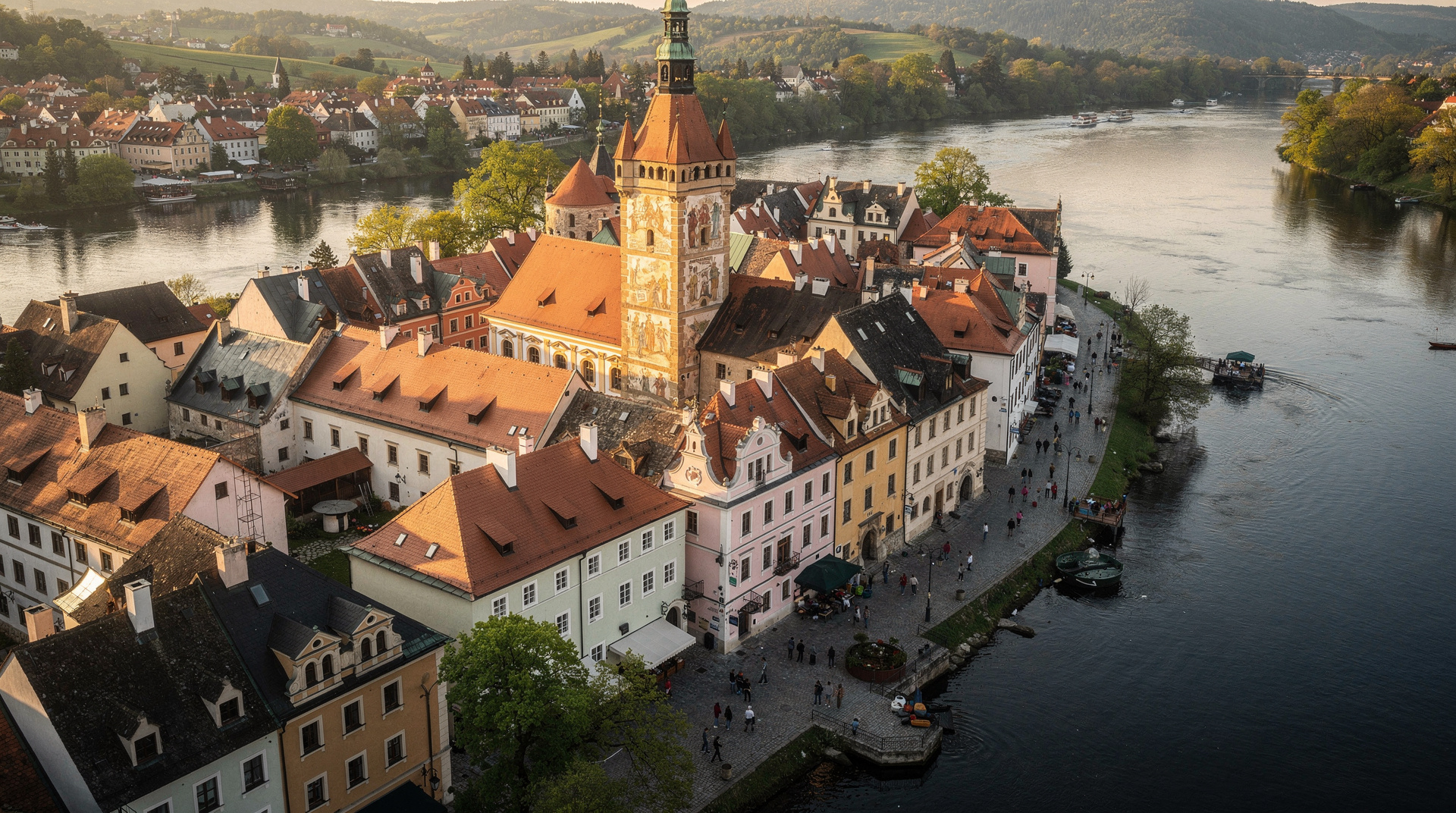
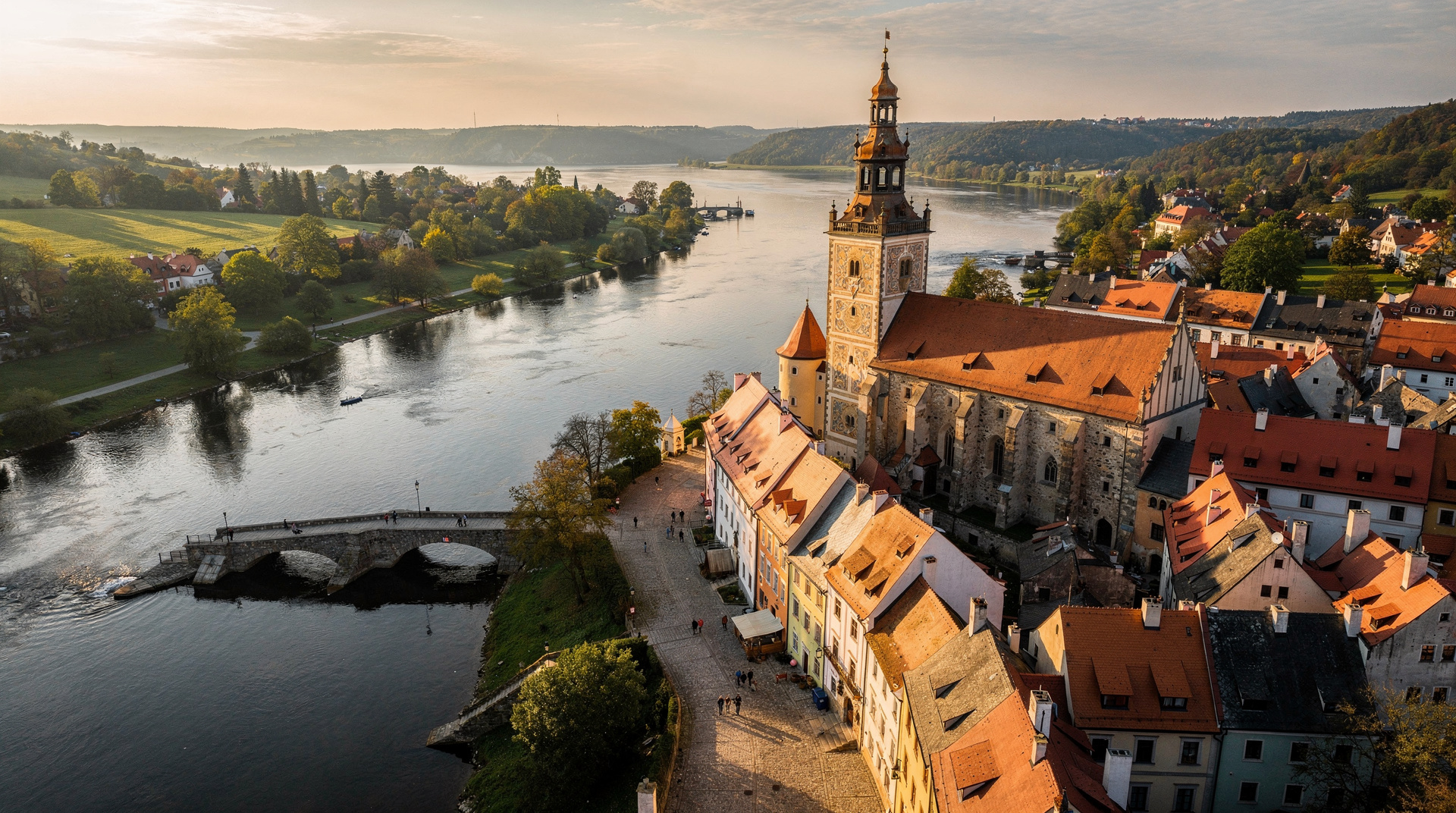
Český Krumlov is a small UNESCO-listed town in southern Bohemia, 3–4 hours from Vienna and 2–3 hours from Prague. The medieval castle dominates a dramatic bend in the Vltava River, the old town is almost entirely pedestrianised and historic, and the town has not been modernised in the way most comparable Central European towns have. It is one of the most complete medieval townscapes in Europe.
Vienna: transfer to Prague via fabulous Český KrumlovThe organised transfer picks up in Vienna, drives to Český Krumlov for a 4–5 hour stop (time to visit the castle, walk the old town, have lunch), then continues to Prague with arrival by evening. The price is comparable to a train ticket and turns a transit into a highlight.
If you prefer a version built around the visit itself, there is also a sightseeing transfer that treats the Český Krumlov stop as the main event on the way north. It suits travellers who would rather not plan the stop on their own.
Self-organised alternative: FlixBus Vienna–Český Krumlov (approximately 3.5 hours, €15–20), then Český Krumlov–Prague by bus or student agency bus (2.5 hours, €10–15). This is cheaper but requires independent navigation between services.
Overnight option: Stay one night in Český Krumlov and continue to Prague by morning bus. A night here — when day-trippers have left — is genuinely atmospheric. The town goes quiet after 7 pm and the castle lit at night is extraordinary.
Option 4: Flying
Cost: €50–150 (Vienna to Prague, including taxes and fees) Journey time: 1 hour in the air; 3.5–4 hours door-to-door Airlines: Austrian Airlines, Eurowings, Czech Airlines
For city-centre to city-centre, the plane is not significantly faster than the train once airport transfers are counted. Check-in at VIE takes 90 minutes ahead of departure; Prague Václav Havel Airport is 30 minutes from the city centre. The train is door-to-door competitive.
When flying makes sense: If the train is fully booked at reasonable prices and you cannot change the date. For a one-way journey with checked luggage, the cost comparison depends heavily on airline fees. As a general rule, the train is preferred for environmental and convenience reasons.
The Vienna–Bratislava–Prague routing
Some travellers do the circuit: Vienna → Bratislava (1 hour) → Budapest (2.5 hours) → Vienna (or continue north to Brno and Prague). Alternatively: Vienna → Bratislava → Brno → Prague by train (approximately 4–5 hours total, multiple changes).
The more common routing is Vienna → Český Krumlov → Prague → Bratislava or Budapest → Vienna. The direction depends on your flight connections.
Prague logistics on arrival
Prague main station (Hlavní nádraží):
- Metro C (red line): 2 stops to Náměstí Republiky (Old Town); 3 stops to Museum/Wenceslas Square
- Tram: several lines from Hlavní nádraží to the city
- Taxi: approximately 150–250 CZK to Old Town Square (~€6–10)
Currency: Czech koruna (CZK). 1€ ≈ 25 CZK. Withdraw from ATMs at the main station; avoid airport and city-centre exchange kiosks which charge poor rates. Many Prague tourist venues accept Euro but at unfavourable exchange rates — pay in CZK.
Public transport: Prague’s metro and tram network is excellent and cheap. A 24h pass costs 120 CZK (~€5). The tram network is particularly useful for getting around the Old Town (where the metro doesn’t penetrate the historic centre).
Getting to the station or stop in Vienna
Whichever option you pick, the journey starts before the train or coach leaves. Allow generous time to reach Wien Hbf, especially if you are coming from the airport or from a hotel on the far side of the city. The Vienna public transport guide explains how the metro, trams and S-Bahn fit together, and the airport to city guide covers the arrival side if you are landing in Vienna and heading north soon after. If you are arriving by air and want to avoid a rushed transfer, the CAT vs Railjet vs bus comparison helps you pick the calmest route into town.
Arrive at the platform or bus stop early enough to find your carriage or boarding point without stress. Seat reservations, where available, are worth taking on a journey this long, and having your ticket downloaded to your phone before you leave the hotel avoids relying on a station connection.
How to choose between the options
The right choice depends on what you value most on the day.
- If you want the least effort: the direct Railjet. You board once, sit down, and get off in Prague. There is nothing to coordinate and no connection to miss.
- If you want to spend as little as possible: the bus, preferably RegioJet. You give up very little in time and keep more of your budget for Prague itself. Our Vienna on a budget guide has more ideas for stretching a Central European trip.
- If you want a trip with a highlight in the middle: the Český Krumlov route. It is the only option that adds a destination rather than just moving you between two cities.
- If you are short of options on the date: flying, as a fallback rather than a first choice.
Travellers with limited mobility or heavy luggage should think about the number of changes more than the headline price. The direct train and the organised transfer involve the fewest transitions, while the self-organised bus-and-bus route means handling bags at an extra stop. For wider advice on getting around with specific needs, see the accessible Vienna guide.
Making the Český Krumlov stop work
The stopover is only as good as your plan for it. With a few hours in town, it helps to decide in advance what matters most: the castle complex, the winding lanes of the old town, a long lunch, or a walk along the river bend. Trying to do everything in a short window is a common mistake, and the town rewards slow wandering more than ticking off sights.
If the stop is your whole reason for choosing this route, read the Český Krumlov day trip from Vienna guide first, and the dedicated Vienna to Prague via Český Krumlov guide for the step-by-step version of this journey. The Český Krumlov destination page gives a sense of the town itself, and the Vienna to Prague overland itinerary shows how the leg can sit inside a longer trip.
If you would rather return to Vienna than continue to Prague, a guided small-group day trip to Český Krumlov covers the same town without any onward connection to manage.
Bring comfortable shoes with good grip, since the old town is cobbled and hilly. Carry a small amount of local currency for cafés and small shops, and keep your main luggage light, because you will be moving through the town on foot between the stop and the onward departure.
Planning the bigger trip around Prague
Prague rarely stands alone in a Central European itinerary. Many travellers link it with other cities, and the order in which you visit them changes which transport option makes sense. If Vienna is your base for several days, the Vienna 5-day itinerary and 7-day itinerary show how much the city can fill before you leave. If you would like to see several capitals in one trip, the three capitals itinerary covers Vienna, Budapest and Bratislava, and you can read the Vienna vs Prague comparison to decide how to split your time between the two. The blog also has a candid Vienna vs Prague real talk if you want a more personal view.
A sensible rule is to match the transport to the role the leg plays in your trip. When the journey is purely a transfer between two fixed bookings, take the direct train and arrive fresh. When you have a day to spare, let the journey become part of the experience.
Comparing all options
| Option | Cost | Time | Comfort |
|---|---|---|---|
| ÖBB Railjet (direct) | €39–80 | 4h | Excellent |
| RegioJet bus | €15–30 | 4–4.5h | Good |
| FlixBus | €10–20 | 4–5h | Basic |
| Via Český Krumlov (transfer) | €30–55 | 8–10h with stop | Good + extra destination |
| Flight | €50–150 | 3.5–4h door-to-door | Depends |
How Prague compares to Vienna’s other cross-border options
Prague is the longest of Vienna’s three classic cross-border day-trip-or-longer destinations, alongside Bratislava (1 hour) and Budapest (2h30). At 4 hours direct, Prague works better as a multi-night stop than a day trip — see the Český Krumlov day trip from Vienna guide if you’d rather stop partway rather than continue all the way to Prague. If you’re planning a broader Central European loop, the best day trips from Vienna guide helps you weigh Prague against shorter, easier options.
For onward planning once you’ve decided on the route, the Prague via Český Krumlov destination overview covers what to expect on the ground, and how many days in Vienna helps you decide how much of your total trip to devote to the Vienna leg before heading north.
Frequently asked questions about Vienna to Prague
How long does it take to get from Vienna to Prague by train?
The direct ÖBB Railjet takes approximately 4 hours from Wien Hbf to Prague Hlavní nádraží. Several trains run daily.
Is it better to fly or take the train from Vienna to Prague?
The train is generally preferable. The 4-hour Railjet is door-to-door competitive with flying when airport transfers are counted, cheaper with advance booking, and more comfortable without luggage restrictions.
What is the Vienna–Český Krumlov–Prague route?
A transfer service that stops in the UNESCO-listed medieval town of Český Krumlov for 4–5 hours before continuing to Prague. One of the best ways to turn a transit into an additional highlight.
How much does it cost to get from Vienna to Prague?
Train: €39 advance to €80 standard. Bus: €15–30. Via Český Krumlov transfer: €30–55.
Which bus is best from Vienna to Prague?
RegioJet — comfortable coaches with free Wi-Fi, drinks, and on-board attendants. Significantly better than FlixBus for a 4-hour journey.
Top experiences
Bookable activities with verified prices and instant confirmation on GetYourGuide.