Bratislava day trip from Vienna: train, hydrofoil and what to see
From Vienna: Guided Tour to Bratislava with Speed Boat Ride
How do you get from Vienna to Bratislava?
By train (RegioJet or ÖBB from Wien Hauptbahnhof): 1 hour, around €15 one-way. By Twin City Liner hydrofoil (from Schwedenplatz pier): 75 minutes, around €37 one-way. The train is faster and cheaper; the hydrofoil is more scenic and fun. Both are excellent options.
The world’s closest capital pair — and why that matters
Bratislava and Vienna are 65 km apart — the shortest distance between any two capital cities on Earth. This proximity makes Bratislava the easiest international day trip from Vienna, and in many ways the most rewarding. The Slovak capital does not compete with Vienna for imperial grandeur; it offers something different: a medieval old town, a hilltop castle with views over three countries, brutalist architecture from the communist era, a lively craft beer scene and prices roughly 40% lower than Vienna’s.
Most visitors to Vienna who make the trip to Bratislava come back pleasantly surprised. This guide gives you everything needed to plan the day without wasting time on logistics.
| Where | Bratislava old town, 65km east of Vienna |
| Cost | Around €15 train / €37–44 hydrofoil, one-way |
| Time needed | Full day (6–8 hours including transport) |
| Getting there | Train from Wien Hbf (1h) or Twin City Liner hydrofoil (75min, Apr–Oct) |
| Best time | Spring or autumn for walking; avoid Mondays (castle closed) |
Bratislava vs Budapest: which day trip first?
Both are common pairings with a Vienna base, but they suit different travellers. Bratislava is closer, faster to reach, and easily done independently without a guide — ideal if you have one spare day and want a low-effort taste of another country. Budapest is a genuinely major city with far more to see, but it needs a longer day and a more structured plan.
| Bratislava | Budapest | |
|---|---|---|
| Travel time from Vienna | 1h train / 75min hydrofoil | 2.5h train |
| Best for | Short, easy half-to-full day | Full day, arguably a stay of its own |
| Cost level | Noticeably cheaper than Vienna | Cheaper than Vienna, similar to Bratislava |
| Independent or guided | Easy independently | Guided helps for a single day |
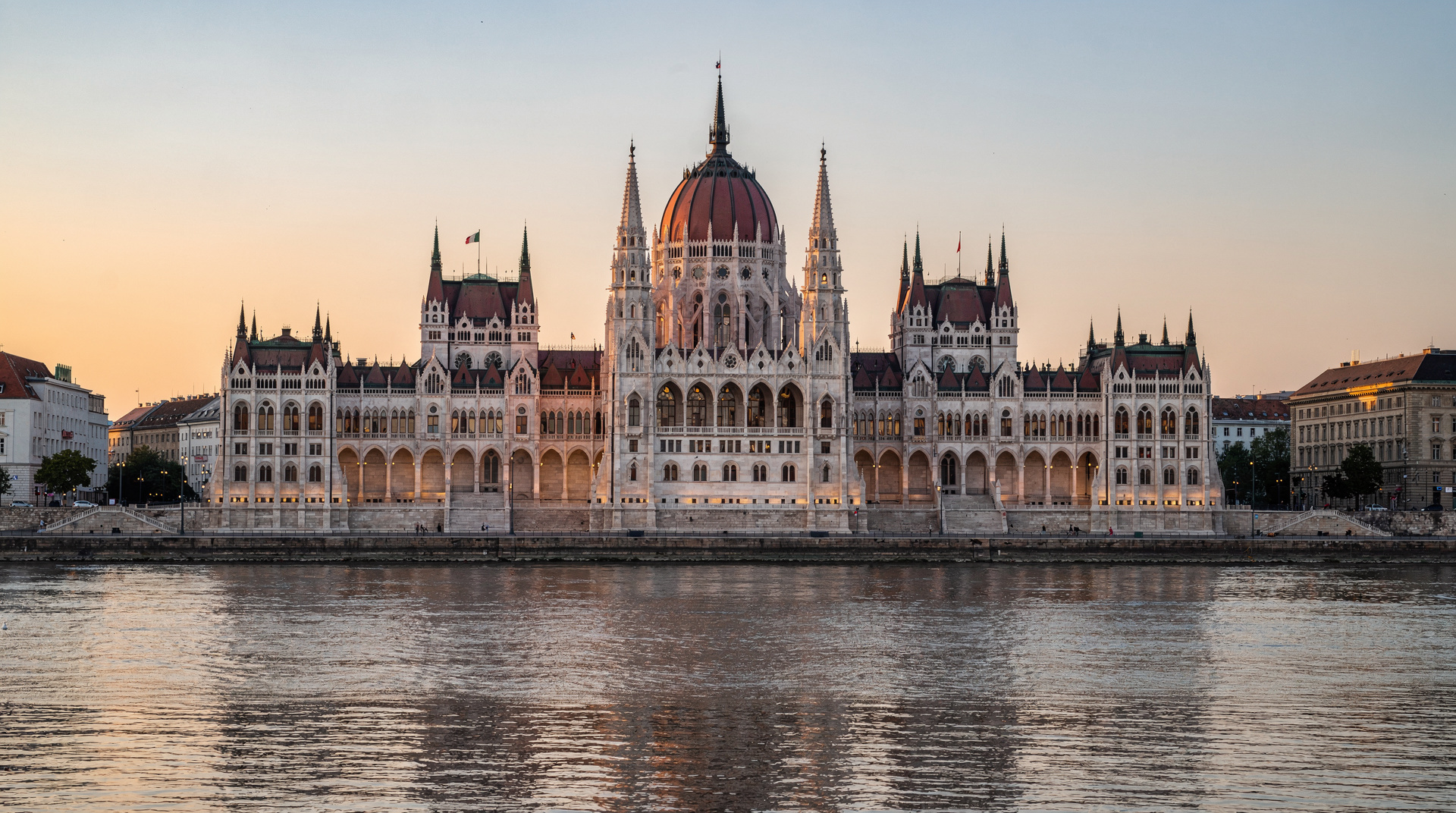
| Standout sight | Bratislava Castle + Devín Castle | Buda Castle, Parliament, thermal baths |
If you can only fit one, see the Budapest day trip guide for the fuller comparison, or the 3-capitals itinerary if you want both without rushing either.
How to get from Vienna to Bratislava
By train (recommended — 1 hour, €15)
The fastest and cheapest route is by train from Wien Hauptbahnhof. RegioJet runs multiple daily services (Vienna Hbf → Bratislava Hlavná stanica, 1h05, from €9–15). ÖBB also runs services on the same route. Book online at regiojet.com or oebb.at at least a few days ahead to secure the best fares.
The Bratislava train station (Hlavná stanica) is a 20-minute walk or €5 taxi ride from the old town. Several buses also connect the station to the centre.
By hydrofoil Twin City Liner (scenic — 75 minutes, €37–44)
The Twin City Liner high-speed catamaran runs from Vienna’s Schwedenplatz pier (U1/U4) to Bratislava’s SNP Bridge pier, right in the centre of the Slovak capital. The journey takes 75 minutes on the Danube and offers an unusual perspective on the two cities’ river settings. The service runs April to October and costs approximately €37 one-way or €67 return. Book at twincityliner.com.
The hydrofoil is slower and more expensive than the train, but considerably more memorable — arriving by river is a genuinely different experience of Bratislava.
By organised tour
Organised day tours from Vienna combine bus transport (or bus + speedboat) with a local guide who provides historical context and manages the logistics. This is particularly useful for first-time visitors or those who prefer a structured itinerary.
From Vienna: guided tour to Bratislava with speed boat ride From Vienna: Bratislava city highlights day tripBratislava’s old town is small enough to exhaust in two hours, and what fills the rest of the day is the part no map marks: a Bratislava day trip like a local spends its time in the neighbourhoods rather than circling the same three squares.
What to see in Bratislava
Bratislava Castle
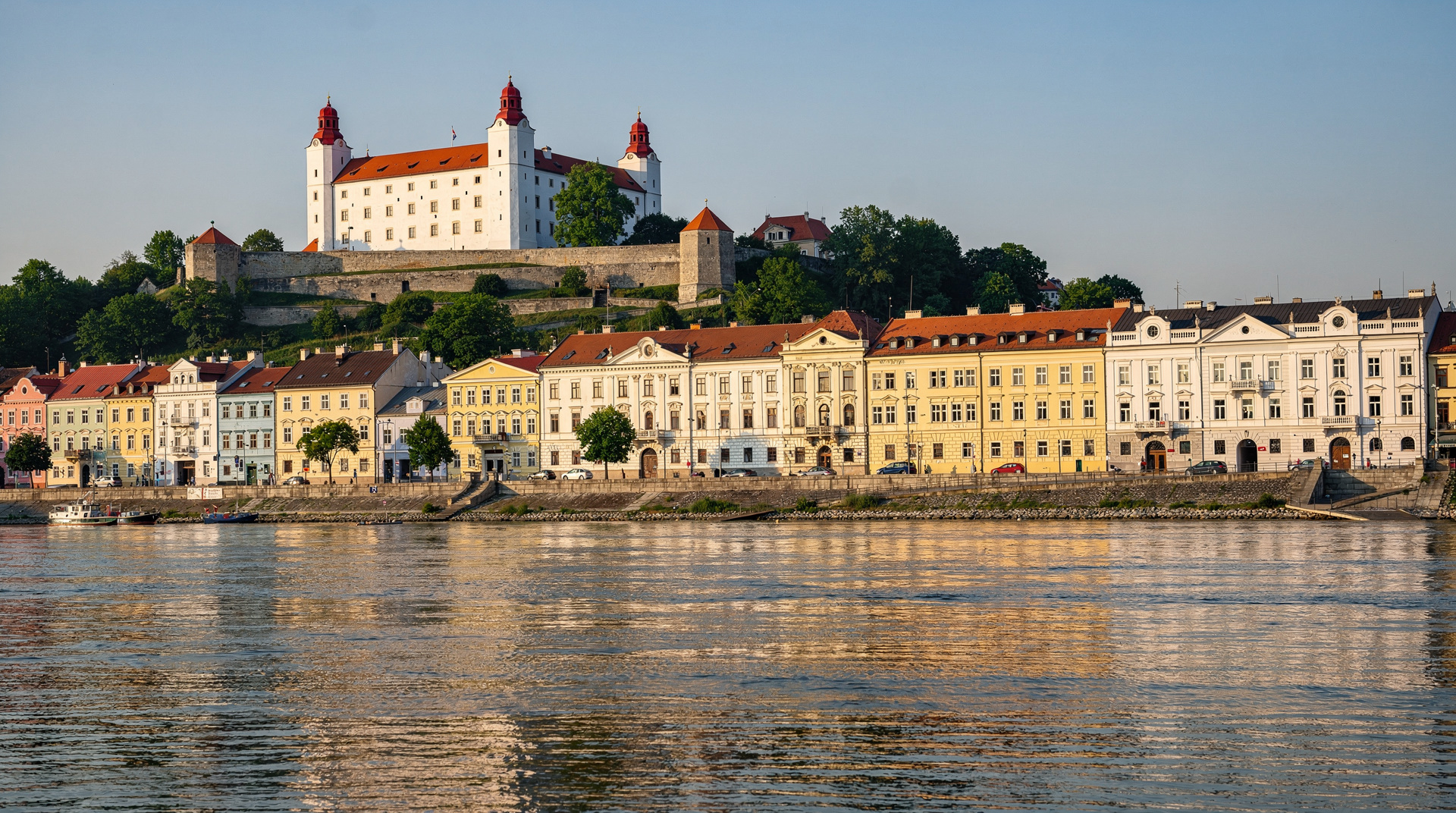
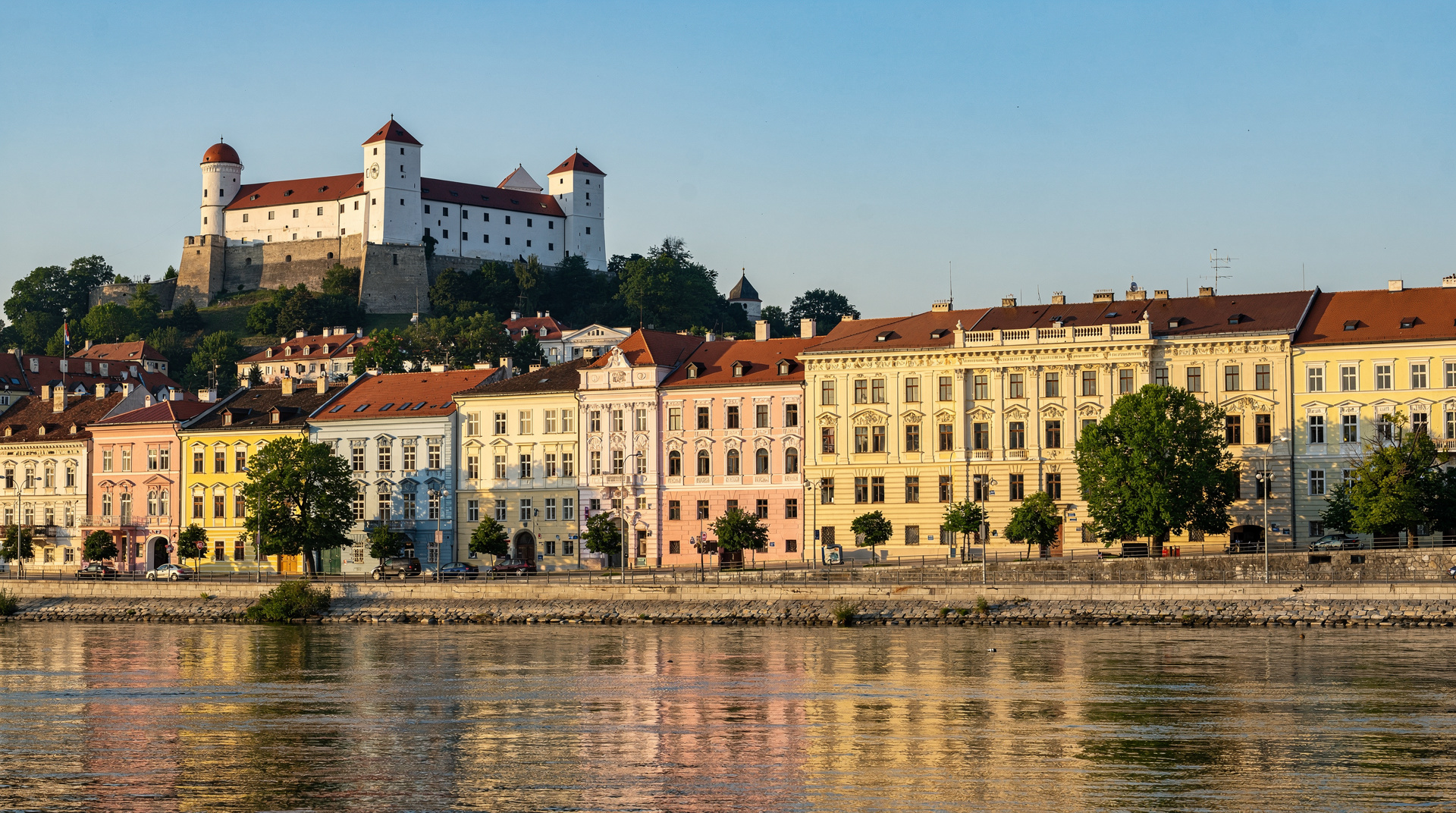
The castle on the hill above the Danube is the defining image of Bratislava — four white towers on a rectangular platform, clearly visible from the river and from neighbouring Austria. The steep walk up from the old town takes about 20 minutes; alternatively, bus 203 runs from the old town to the castle gate.
Inside, the Slovak National Museum occupies the main castle building with excellent permanent exhibitions on the history of the Carpathian Basin from prehistoric settlement through the Habsburg period. The castle terrace offers one of Central Europe’s great panoramas: the Danube below, the old town, the UFO Bridge, and on clear days the Low Tatras mountains to the north and the Austrian plains to the west. Allow 1.5–2 hours for the castle and museum.
The old town
Bratislava’s old town is compact — easily walked in 2 hours — and concentrated around a few key squares. Start at Michael’s Gate (Michalská brána), the last surviving medieval city gate, which has a military museum and a balcony viewpoint. Walk south along Michalská Street to the Main Square (Hlavné námestie), which has several good coffee houses and the Roland Fountain.
Continue to Primaciálne Square and the Primate’s Palace — a Neoclassical building that hosted the signing of the Peace of Pressburg in 1805 after Napoleon defeated the Austrian and Russian armies at Austerlitz. The Hall of Mirrors where the peace treaty was signed is open to visitors.
St. Martin’s Cathedral, just below Michael’s Gate, was the coronation church of Hungarian kings from 1563 to 1830 (when Budapest was Ottoman-controlled, Bratislava served as the Hungarian capital, then called Pressburg). The building is not as grand as St. Stephen’s in Vienna, but the historical context makes it worth 20 minutes inside.
The UFO Bridge (Most SNP)
The SNP Bridge is Bratislava’s most controversial piece of architecture — a 1970s cable-stayed bridge with a flying-saucer observation platform at the top. The UFO restaurant operates a viewing deck and café with panoramic views. The lift to the top costs €10; the views across the city and towards Vienna are excellent in clear conditions. Worth 30 minutes if you are not troubled by heights or brutalist aesthetics.
Devín Castle ruins (optional, strongly recommended)
Devín Castle stands on a dramatic rock promontory at the confluence of the Danube and Morava rivers, about 9 km west of Bratislava’s old town. It was a fortification from Celtic times through to the Napoleonic era (when French troops blew up the towers in 1809). Today the ruins include a reconstructed section of the towers, a museum in the gatehouse and some of the most dramatic riverside scenery in Central Europe.
Getting there: bus 28 or 29 from the Nový Most bus stop near the UFO Bridge (€1.50, 30 minutes). Entry to the castle ruins: €10. Allow 1.5 hours for the visit, plus 1 hour travel. This is the single best extension to a Bratislava day trip for visitors who enjoy fortification history and dramatic landscapes.
Where to eat and drink
Bratislava is noticeably cheaper than Vienna. A full lunch with beer at a local restaurant costs €10–15 per person — roughly half the Vienna equivalent.
Slovak Pub (Obchodná Street): a multi-room traditional pub with Slovak specialities — haluški (potato dumplings with sheep cheese and bacon), kapustnica (sauerkraut soup), svíčková. Touristy but excellent value.
Shtoor (Zámočnícka Street): craft beers from Slovak microbreweries in a relaxed setting near Michael’s Gate. Good food menu alongside.
Café Roland (Main Square): a reliable coffee house for people-watching in the old town square.
Slovak craft beer: Slovakia has a growing microbrewery scene. Several bars on Obchodná Street and around the old town serve local IPAs and lagers at €3–4 per glass.
Practical information
Opening times: Most Bratislava museums open 10 am–5 pm Tuesday to Sunday. The castle is closed on Mondays.
Language: Slovak, but English is widely spoken in the tourist areas and by younger Bratislavans.
Currency: Euro (€) — no exchange needed from Vienna.
Mobile data: Austria is EU, Slovakia is EU — EU roaming rules apply to most phone plans.
Distance from old town to castle: 20 minutes on foot (uphill), or bus 203.
Distance from old town to Devín Castle: 30 minutes by bus (28 or 29) from Nový Most.
For a deeper look at the Devín Castle site itself and at Bratislava beyond a single day, our destination pages cover both in more depth than fits here. If you want to compare every transport option side by side, the Vienna to Bratislava transport guide breaks down train, bus and hydrofoil pricing month by month.
When to go
Bratislava is pleasant year-round. Spring (April–May) and autumn (September–October) have the best weather for walking. Summer is warm and the riverside terraces are lively. December brings a Christmas market in the Main Square that is smaller and less crowded than Vienna’s.
Avoid visiting on a Monday if you plan to visit the castle museum (closed Mondays). The UFO Bridge observation deck is open daily.
Honest tips
Ignore the touts: Some organised “tours” in the old town are overpriced given how easy Bratislava is to navigate independently. If you’re comfortable with a map, the old town is very walkable without a guide.
Try Slovak food: Haluški, bryndzové halušky (with sheep cheese), kapustnica soup and lokše (potato pancakes) are all worth trying. They are very different from Austrian cuisine.
The views reward effort: The castle terrace view and Devín Castle are both considerably better than anything at ground level in the old town. Build in the uphill walks.
Combine with Budapest: If you are considering both Bratislava and Budapest, the Vienna–Budapest–Bratislava 3-capitals itinerary covers both in an efficient 8-day trip. See also the Budapest day trip guide.
Budget angle: Bratislava is one of the cheapest add-ons to a Vienna trip precisely because prices there run 30–40% below Vienna’s. If cost is the main driver of your whole itinerary, our Vienna on a budget guide has more ways to stretch a Central Europe trip further.
Frequently asked questions about the Bratislava day trip from Vienna
How far is Bratislava from Vienna?
Just 65 km by road — the two capitals are the closest pair of national capitals in the world. By train the journey takes about 1 hour.
Do I need a visa to visit Bratislava from Vienna?
Slovakia is a Schengen member, so there are no border controls for EU citizens or for visitors already holding a valid Schengen visa or entry stamp. Your Vienna visa covers Bratislava.
What currency does Bratislava use?
Slovakia uses the euro (€), so no currency exchange is needed when coming from Vienna.
How much time do you need in Bratislava?
The old town is walkable in 3–4 hours. Add Bratislava Castle (1.5h with the historical museum), Devín Castle ruins (30min bus ride, 1.5h visit) and lunch, and a full day is well spent.
Is Bratislava worth visiting for a day?
Absolutely. It is one of the most accessible and underrated day trips from Vienna — compact, architecturally interesting, historically distinct from Vienna, and noticeably cheaper. It is not a second-rate Vienna; it is a different city with its own character.
What is the Twin City Liner?
The Twin City Liner is a high-speed hydrofoil connecting Vienna’s Schwedenplatz pier with Bratislava’s city centre pier in 75 minutes. It runs April to October and costs €37–44 one-way. It is the most scenic and enjoyable way to travel between the cities.
Is Bratislava or Budapest the better day trip from Vienna?
Bratislava is faster, cheaper and easier to do independently, making it the better choice for a spare half-to-full day. Budapest is a bigger city with more to see but needs a longer day and more planning. If you have time for only one, choose based on whether you want a light add-on (Bratislava) or a fuller city experience (Budapest); with more time, the 3-capitals itinerary covers both.
Top experiences
Bookable activities with verified prices and instant confirmation on GetYourGuide.