Vienna to Bratislava: all transport options compared
From Vienna: Guided Tour to Bratislava with Speed Boat Ride
What is the best way to get from Vienna to Bratislava?
The train (RegioJet or ÖBB, 1 hour, €10–15) is the fastest and cheapest option for most travellers. The Twin City Liner hydrofoil (75 minutes, €37) is the most scenic and is a genuinely special experience for those who want to arrive by river. The Slovak Lines bus (€10, 75 minutes) is cheapest. All three are easy.
Vienna to Bratislava: the short crossing
Bratislava is one of Vienna’s closest European neighbours — only 60 kilometres east by road, the two capitals are the nearest national capitals to each other in the world. The journey by train takes exactly 1 hour, making it one of the easiest international crossings in Europe. Slovakia uses the Euro, is in the Schengen zone, and the Slovak capital has a well-preserved old town that rewards a full day.
This guide compares all transport options so you make the right choice.
| Where | Wien Hbf to Bratislava hlavná stanica or Schwedenplatz to Bratislava port |
| Cost | Around €10 (train/bus) to €37 (Twin City Liner hydrofoil) |
| Time needed | 1–1h15 each way; a full day trip runs 8 hours door-to-door |
| Best time | Any day — no seasonal closures except the seasonal hydrofoil (Apr–Oct) |
| Booking | Advance booking saves on RegioJet trains; hydrofoil should be booked ahead in summer |
Option 1: Train (direct, Wien Hbf to Bratislava hlavná stanica)
Cost: €10–15 (RegioJet advance booking ~€10; ÖBB standard ~€15) Journey time: 1 hour Frequency: Approximately every 30–60 minutes throughout the day
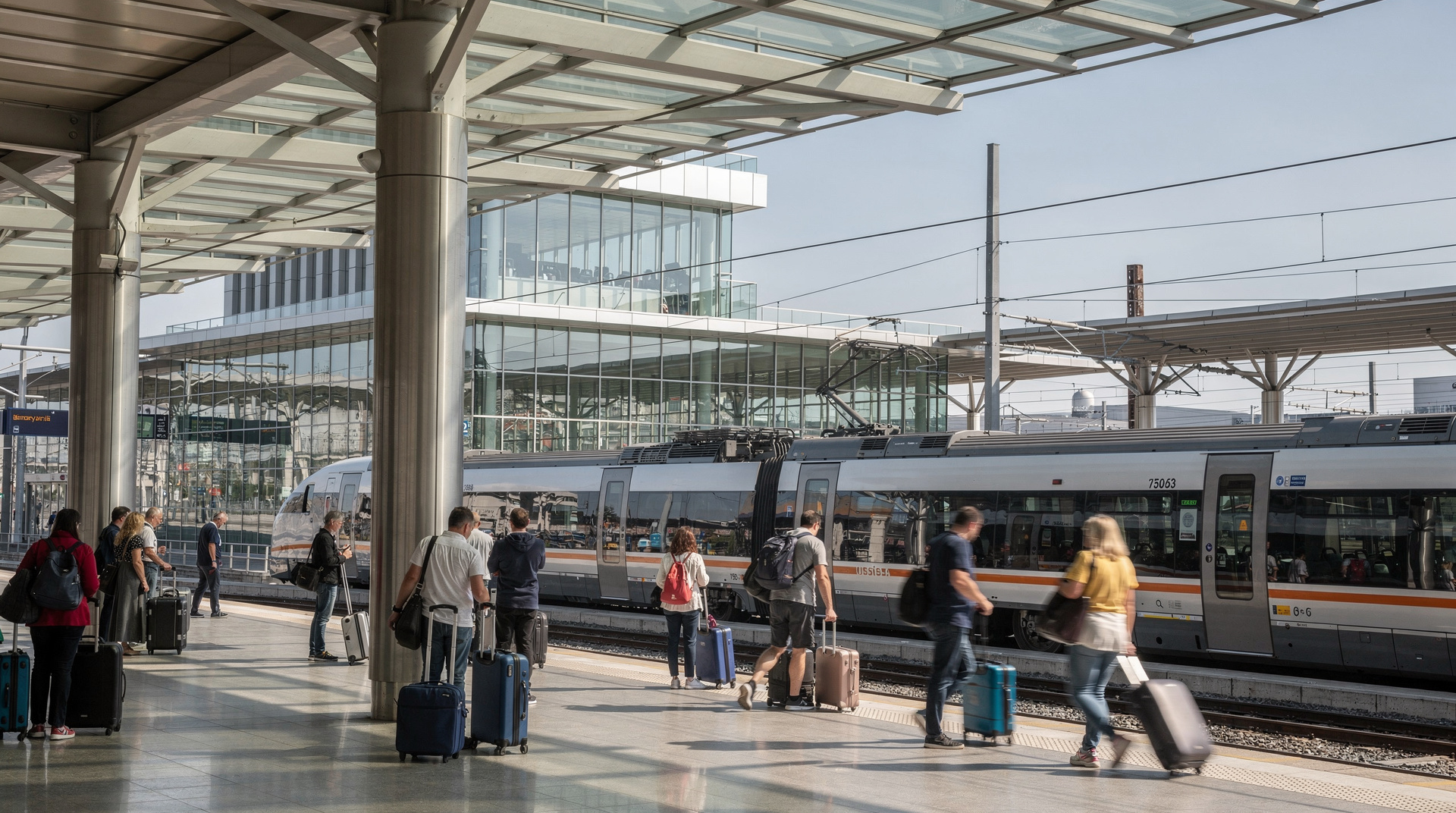
The direct train is the default choice for most travellers. Two operators serve this route:
RegioJet: A Czech-Slovak private rail operator known for comfortable, modern trains and competitive prices. Advance booking (regiojet.com) can bring tickets to €7–10. The trains include free Wi-Fi and an on-board attendant service with drinks.
ÖBB: Austria’s national rail operator runs regular IC trains on the same route. Tickets available at any ÖBB machine or oebb.at. Standard fare approximately €15.
Departure: Wien Hbf (Vienna main station). Direct U1 connection from Stephansplatz (4 stops) or airport Railjet termination.
Arrival: Bratislava hlavná stanica (Bratislava central station). The old town is approximately 1 kilometre from the station — a 15-minute walk or short tram ride to the centre.
Our recommendation: Book RegioJet in advance for the best price. For same-day or flexible travel, ÖBB machines at Wien Hbf work perfectly.
Option 2: Twin City Liner hydrofoil (the scenic river crossing)
Cost: €37 one-way, €59 return Journey time: 75 minutes Departure: Vienna Schwedenplatz (U1/U4 junction, central) Arrival: Bratislava port (centrally located on the Danube, 5 min walk to old town) Frequency: 2–4 departures daily (seasonal; check twincityliner.com)
The Twin City Liner is a high-speed hydrofoil — a boat that lifts out of the water on hydrofoils at speed — that covers the 60km Danube route between Vienna and Bratislava at approximately 80 km/h. The departure point at Schwedenplatz is central (U1/U4 junction); the Bratislava arrival is equally well-located near the old town.
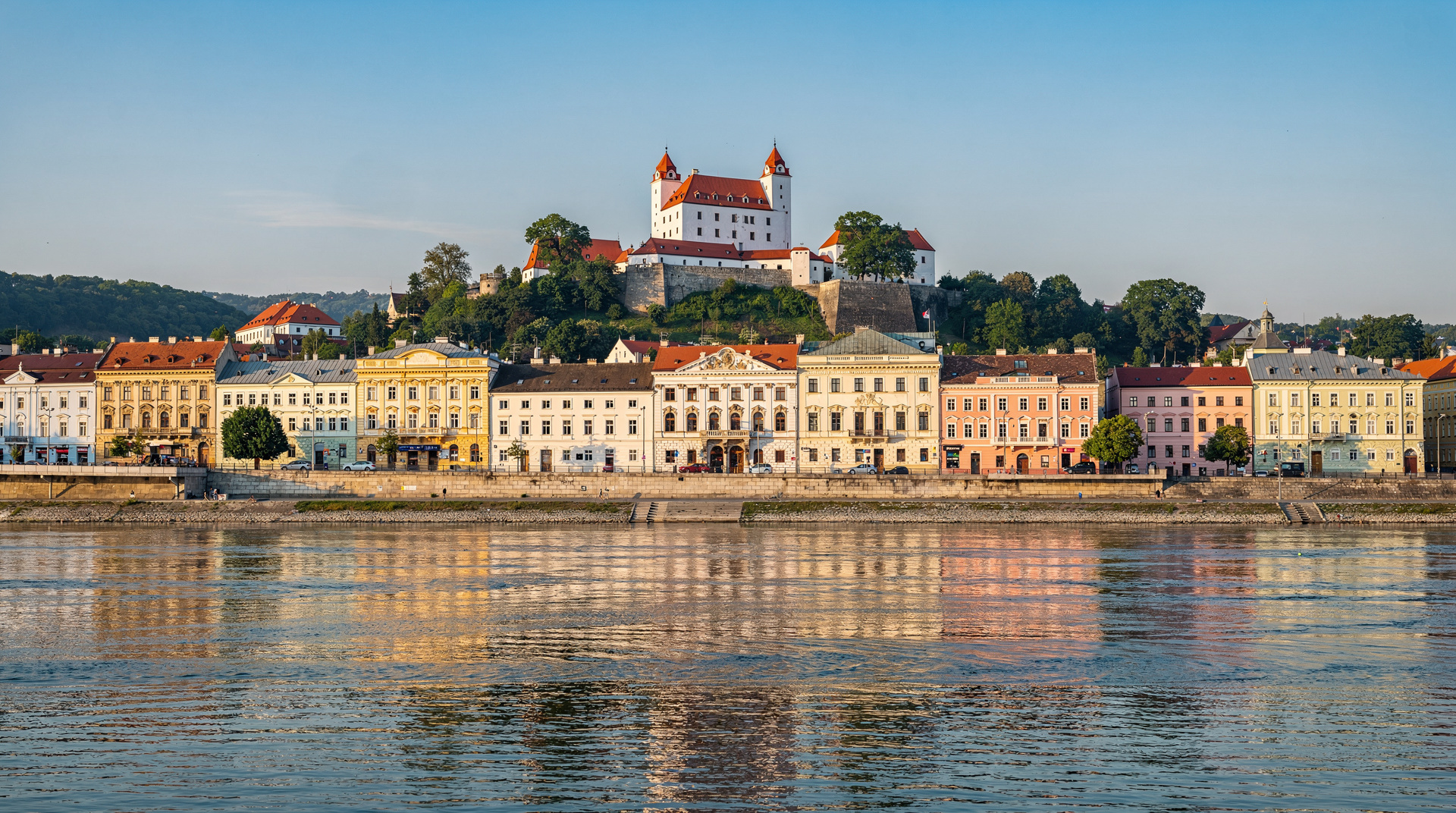
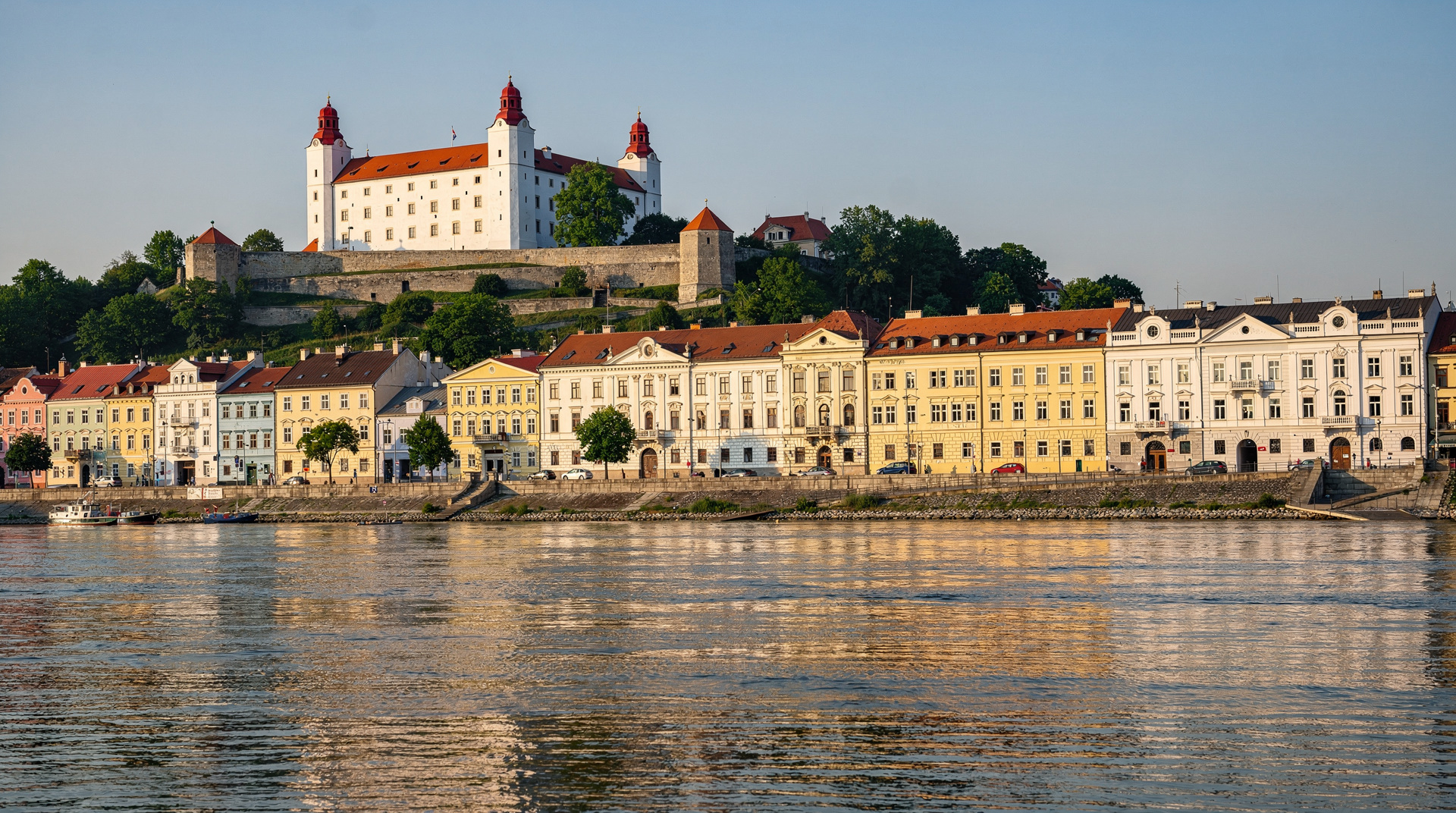
Is it worth the premium? The river crossing itself is genuinely scenic — the approach to Bratislava Castle visible from the Danube, the passage through the Petrzalka bridge area — and the hydrofoil is an unusual mode of transport. For a day trip where the journey is part of the experience, the €37 is justified. For pure efficiency, take the train.
Practical notes: The Twin City Liner operates seasonally (typically April–October). Check current schedules on twincityliner.com — service is suspended in winter. The return journey by boat can be combined with an outward train journey for variety.
Option 3: Bus (Slovak Lines / FlixBus)
Cost: €10–12 (Slovak Lines); FlixBus similar pricing Journey time: 70–90 minutes (depending on traffic and border stop patterns) Departure: Wien Hbf bus station Arrival: Bratislava bus station (Most SNP or Autobusová stanica Mlynské nivy)
Slovak Lines operates a regular coach service between Vienna and Bratislava. The bus is the cheapest option and competitive in journey time with the train. The disadvantage is that bus schedules are slightly less frequent than trains, and the bus station in Bratislava (Mlynské nivy) requires an additional short journey to the old town.
FlixBus also serves this route but reliability and scheduling vary more than Slovak Lines.
When to take the bus: If price is the absolute priority and you don’t mind the slightly less convenient departure and arrival points.
Option 4: Guided day trip with transport
For visitors who prefer not to self-navigate the journey, guided day trips from Vienna to Bratislava include transport (typically bus) and a guided tour of Bratislava’s highlights. Prices typically €40–65 per person including transport, guide, and selected entrance fees.
From Vienna: guided tour to Bratislava with speed boat rideThe boat-and-bus combination tour is the most popular format: bus to Bratislava in the morning, city tour, hydrofoil return on the Danube. This gives you the scenic river crossing without having to organise it independently.
From Vienna: Bratislava city highlights day tripA simpler guided day trip with bus transport and a walking tour of the old town — the Bratislava Castle, the Blue Church, the Kamzík tower, and the pedestrian Michalská ulica — for visitors who want structure without self-organisation.
What to do in Bratislava once there
Bratislava’s old town is compact — you can cover the main sights in 4–5 hours on foot:
Bratislava Castle: The dominant hilltop fortress with views over the Danube into both Slovakia and Austria. The castle museum covers Slovak history. 20-minute walk from the old town or cable car.
St. Martin’s Cathedral: Gothic cathedral on the edge of the old town where Hungarian kings were crowned from 1563 to 1830. Free to enter the nave.
Main Square (Hlavné námestie): The pedestrianised old town square with the Old Town Hall and the Roland Fountain. The bronze Man at Work (Čumil) statue emerging from a manhole cover near Laurinská street is the city’s most photographed object.
Blue Church (Church of St. Elizabeth): A striking Art Nouveau church in Budapest Secession style, entirely decorated in blue and white. 10-minute walk from the main square.
Kamzík TV Tower: A hillside tower above the city with views over Bratislava and — on clear days — Vienna in the distance. Access by tourist bus or cable car from the forest.
Practical: Bratislava uses the Euro, is safe, and English is spoken at tourist locations. The old town is entirely walkable. Cards accepted widely.
Summary comparison
| Option | Price | Time | Best for |
|---|---|---|---|
| Train (RegioJet/ÖBB) | €10–15 | 1h | Most travellers |
| Twin City Liner | €37 | 75min | Scenic/experience focus |
| Bus | €10 | 75min | Lowest budget |
| Guided tour | €40–65 | All day | No-hassle day trip |
Practical planning notes
Border crossing: No passport control or customs checks — you are moving between two Schengen zone countries. A valid passport or EU ID card is all that’s needed.
Currency: Slovakia uses the Euro. No currency exchange required from Vienna.
Timing: A 9 am departure from Wien Hbf gets you to Bratislava by 10 am. Last practical return trains depart Bratislava around 9–10 pm (check current timetables). A comfortable day allows 8 hours in the city.
Luggage storage: Available at Bratislava central station (€3–5/locker per day).
Language: Slovak is the official language; German is widely understood (historical connection). English is spoken at tourist venues, restaurants, and hotels throughout the old town.
Fitting Bratislava into a longer Central European trip
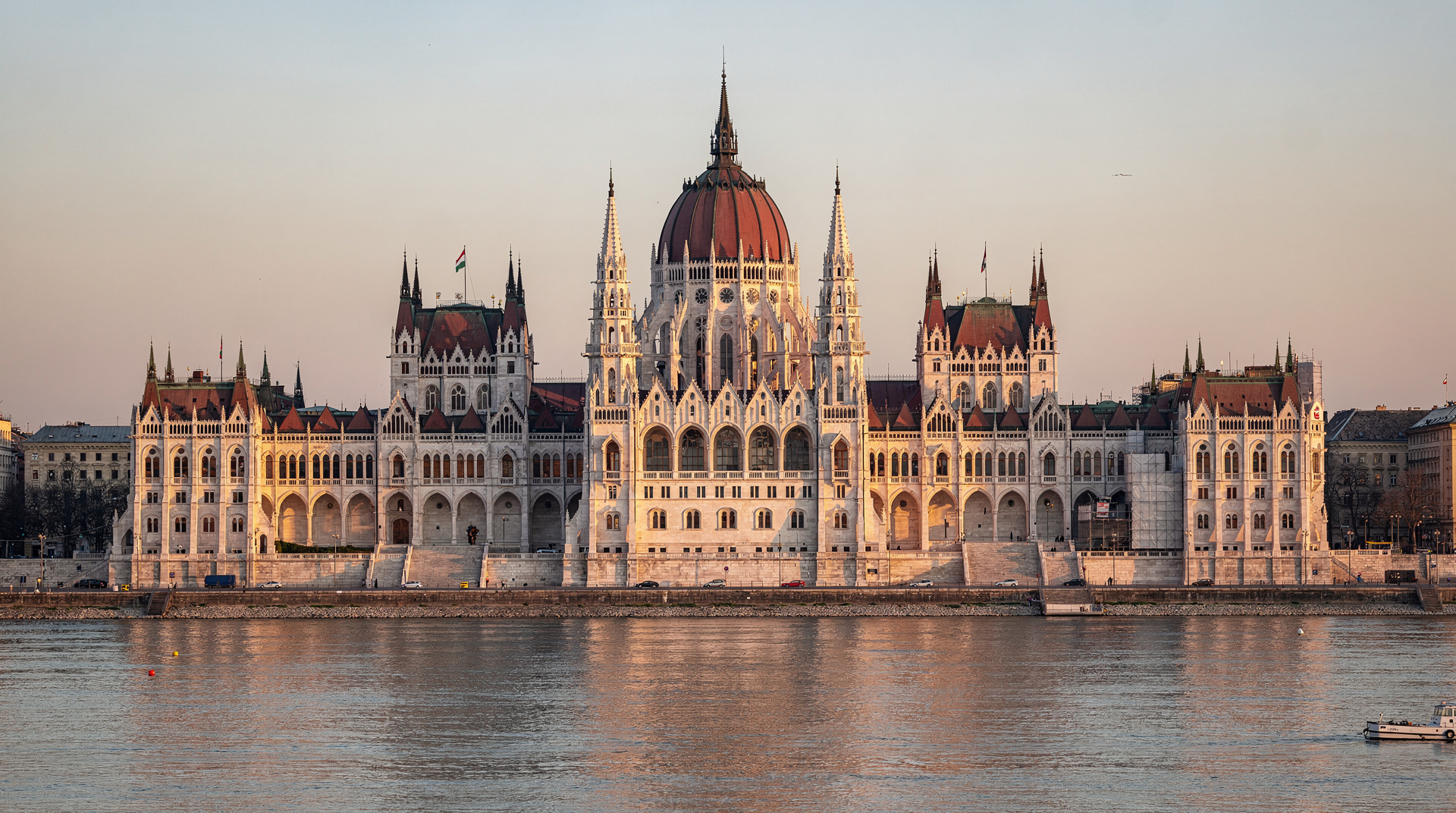
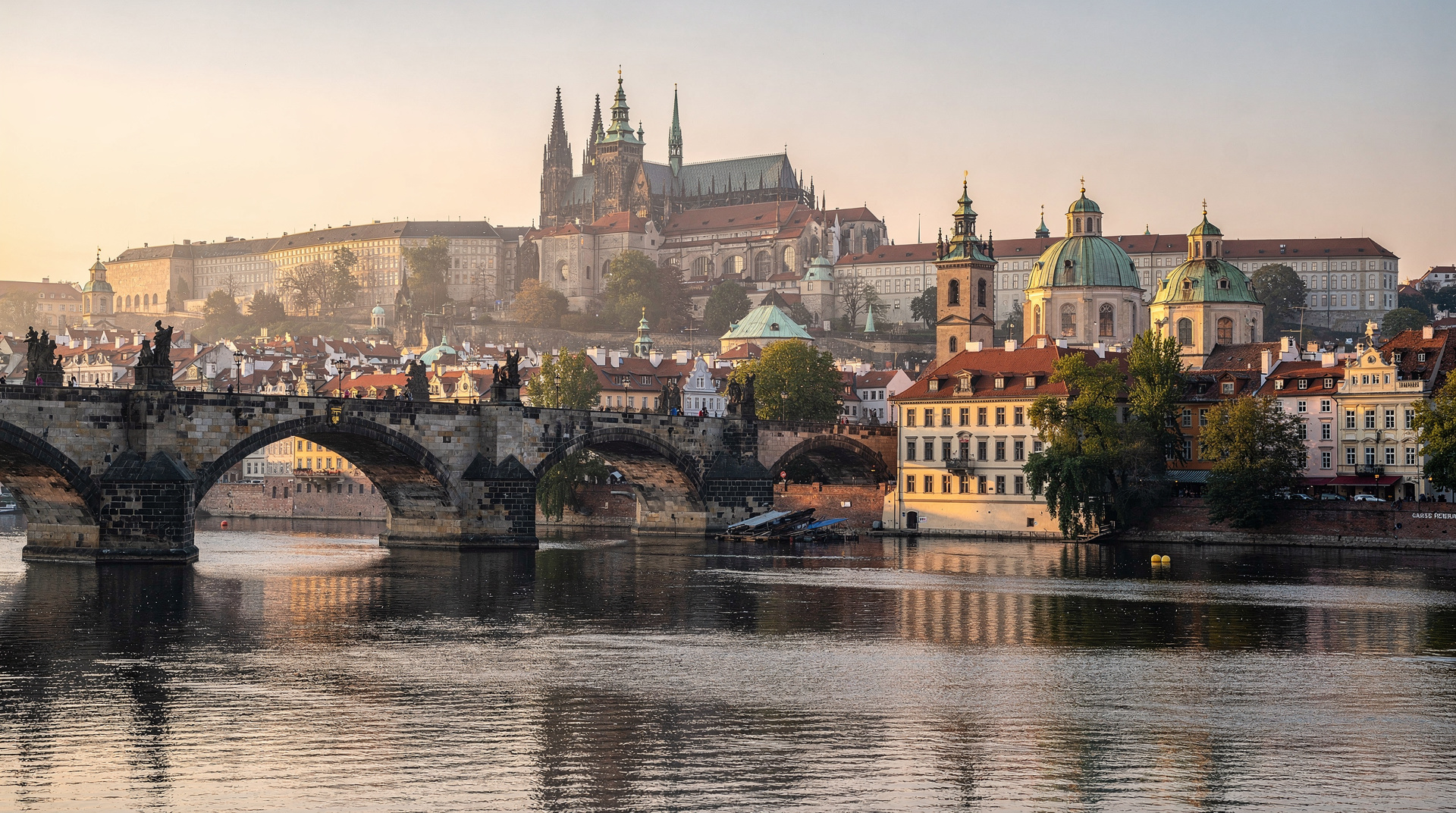
Bratislava works well as a standalone day trip, but it also slots naturally into a broader itinerary. Many visitors combine it with the Vienna to Budapest train journey — Bratislava sits almost exactly on the direct route between the two capitals, so a half-day stop adds little detour. Others treat it as a lighter counterpart to a Vienna to Prague trip, since Bratislava requires far less time investment than Prague or Český Krumlov.
If you’re still deciding how many days to allocate across Vienna itself before heading onward, the how many days in Vienna guide and the Vienna airport to city guide both help sequence a trip that includes at least one cross-border day. For context on Bratislava itself beyond the transport logistics, see the Bratislava destination overview.
Choosing by travel style
The right option depends less on the timetable than on what kind of day you want. If you like to wander without a fixed plan, the train gives you the most freedom: frequent departures mean a missed connection costs you very little, and you can decide on the spot whether to stay for dinner. If you are travelling as a family, the train also has room to move around, which matters with restless children; the Vienna with kids guide has more on pacing days out with younger travellers.
Couples and anyone marking a special occasion tend to enjoy the hydrofoil most. Arriving by river feels like a small event in itself, and it pairs well with the slower rhythm described in the Vienna honeymoon guide. Solo travellers often prefer the train for its simplicity and its easy chatting with other passengers; our solo travel in Vienna guide covers the wider picture of getting around alone and safely.
Budget-minded visitors should look at the bus and at advance train fares before anything else. Cross-border days are one of the best ways to see a second capital without a large bill, and the Vienna on a budget guide shows where else the savings add up.
Getting around Vienna before you leave
Your journey really starts at your Vienna accommodation, so it is worth planning the first leg. Wien Hbf is well connected to the rest of the city, and the Vienna public transport guide explains how tickets and zones work, so you arrive at the platform without fumbling at a machine. If you are using a visitor card, check what it covers before assuming the ride to the station is included; the Vienna City Card review compares what each pass actually gives you.
For the hydrofoil, remember that Schwedenplatz sits on the edge of the old centre, which makes it an easy start if you are staying in the Innere Stadt. Allow a relaxed margin to reach the pier, because a rushed start takes away much of the pleasure of the river crossing.
Making a longer trip of it
Bratislava also works as one stop in a bigger loop. Travellers who want to see three capitals in one trip can follow the Vienna, Budapest and Bratislava three-capitals itinerary, which strings the cities together without doubling back. If you would rather keep Vienna as your base and take only single-day excursions, the best day trips from Vienna guide helps you compare Bratislava with the Wachau, Salzburg and others so you spend your free days well.
For a fuller picture of what the city offers once you arrive, the dedicated Bratislava day trip from Vienna guide walks through a full day on the ground, and a personal account of the trip can be found in the Bratislava quick getaway diary. If the idea of a river arrival appeals, the Danube river cruise guide explains other ways to enjoy the water around Vienna.
A few tips for a smooth day
Pack light. A small bag keeps you mobile on a walking day and removes the need for storage. Bring a refillable bottle and a light layer, since the weather by the river can feel different from the weather in the city. Decide in advance which two or three sights matter most to you, then let the rest of the day stay loose; Bratislava rewards slow wandering through its lanes more than a checklist.
Keep your return plan simple. Note the time of the train or boat you intend to take, and aim to be near the station or pier well before it leaves. That small habit is what turns a good day trip into a relaxed one.
Frequently asked questions about Vienna to Bratislava transport
How long does the train from Vienna to Bratislava take?
The direct train takes approximately 1 hour from Wien Hbf to Bratislava hlavná stanica. RegioJet and ÖBB both serve this route.
How much does it cost to get from Vienna to Bratislava?
Train: €10–15. Twin City Liner hydrofoil: €37 one-way. Bus: €10. Guided day trip: €40–65.
What is the Twin City Liner and is it worth it?
A high-speed hydrofoil on the Danube, 75 minutes, €37 one-way. More expensive and scenic than the train. Worth it if the river experience matters; take the train for efficiency.
Can I do Bratislava as a day trip from Vienna?
Yes, easily. Bratislava’s old town is walkable from the station. A 9 am departure returns by 7 pm — a very comfortable day.
Do I need a visa to enter Slovakia from Austria?
No. Slovakia is Schengen. EU/EEA citizens need an ID card; others with Schengen visa-free access need only a valid passport.
Top experiences
Bookable activities with verified prices and instant confirmation on GetYourGuide.