Vienna photography spots: the best locations and when to shoot
Vienna: Guided Walking Tour of City Center Highlights
What are the best photography spots in Vienna?
The top Vienna photography spots are: the Gloriette at Schönbrunn (palace vista at golden hour), the Upper Belvedere garden axis (Klimt building reflected in the pool), Stephansdom south tower at dawn, Naschmarkt Saturday market, the Ringstrasse at blue hour, and the Riesenrad at night for Prater skyline. All are freely accessible.
Vienna’s visual character: what you’re photographing
Vienna’s photography appeal is architectural and atmospheric rather than dramatic-landscape. This is a city of large horizontal compositions: the Ringstrasse boulevard lined with monumental 19th-century buildings, the baroque palace complexes set against formal gardens, the coffee-house interiors with amber light and marble surfaces. The challenge for photographers is not finding beautiful subjects but managing the tourist crowds that have the same ideas you do.
This guide covers the best locations, the practical timing to get fewer people in frame, and the light conditions that make each spot work. It includes both the iconic shots and the less-photographed alternatives that distinguish a thoughtful Vienna portfolio from a postcard collection.
| Where | Schönbrunn, Belvedere, Ringstrasse, Stephansdom, Naschmarkt, Prater |
| Best time | Golden hour (1hr before sunset) or dawn (before 8am) for empty frames |
| Cost | Free at most locations; Stephansdom tower €6, Riesenrad ride extra |
| Gear note | Wide-angle for palace axes, tripod for blue-hour Ringstrasse shots |
| Best season | Autumn — lower crowds, golden light, warm facade tones |
The Schönbrunn complex
The Gloriette viewpoint (above the palace)
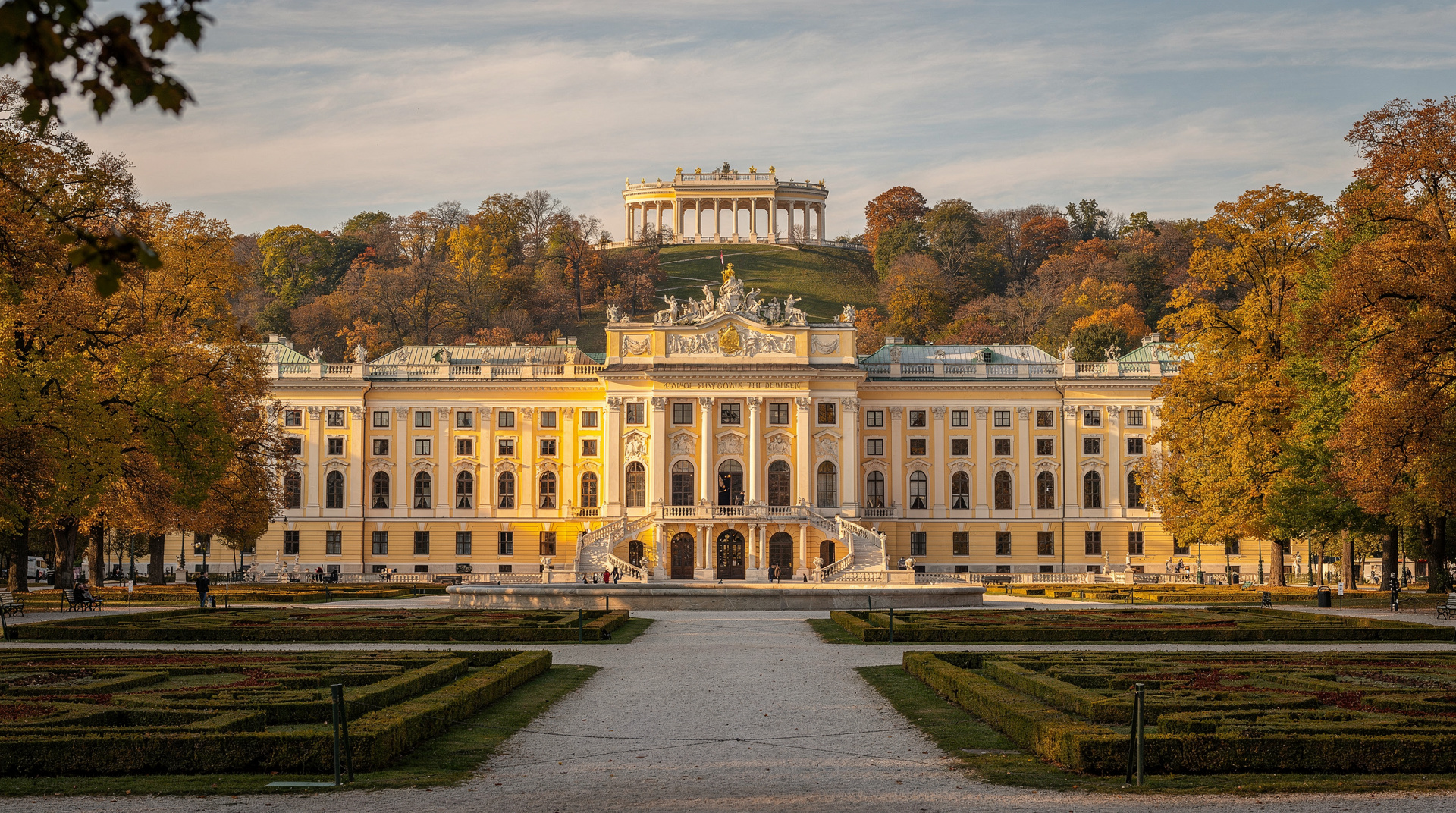
The classic Vienna palace photograph is shot from the Gloriette — a colonnaded folly on the hilltop 750 metres south of the palace facade — looking back over the formal gardens to the palace and the city beyond. The vista includes the palace, the formal parterre, and Vienna’s skyline (including Stephansdom) on the horizon.
Best timing: One hour before sunset. The low western light hits the Schönbrunner Gelb (the palace’s distinctive warm yellow colour) directly and the shadows from the garden geometry deepen. The Gloriette faces southeast, so it catches both eastern-morning and western-evening light.
Avoiding crowds: The Gloriette is less visited than the palace in the early morning. Being at the hilltop by 8 am means near-empty gardens and excellent light if shooting in summer. Most tourist photographers arrive after 10 am.
Lens guidance: A wide-angle (24mm or equivalent) captures the full palace-to-Gloriette axis from the Neptune Fountain. A short telephoto (85–135mm) from the Gloriette compresses the garden perspective towards the palace.
The palace facade at ground level
The iconic close-up shot of the Schönbrunn facade is from the main courtyard (Ehrenhof) — symmetrical yellow facade with the central gateway. The crowds here are densest between 10 am and 3 pm in summer. Dawn shooting (before 7 am) gives you near-empty courtyards with golden light on the facade.
Inside: Photography is permitted in the state rooms without flash. The Great Gallery (43 metres long, ceiling frescoes) is the most photogenic interior. Ask a guard which interior shots are currently permitted as restrictions occasionally change.
The Belvedere
Upper Belvedere garden axis
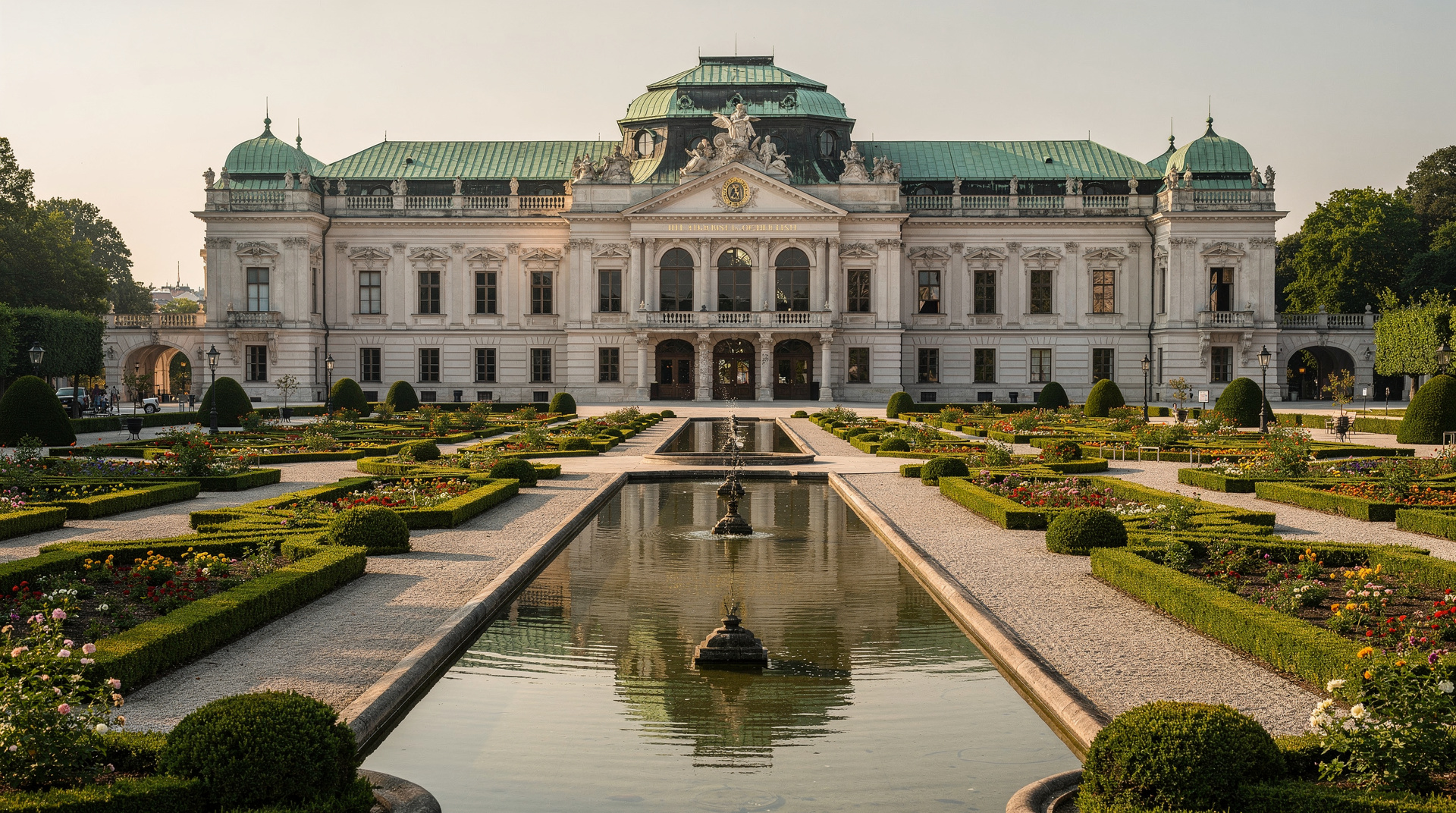
The Upper Belvedere shot that works: stand at the central garden axis (the mid-point between Upper and Lower Belvedere) with the Upper Belvedere building on one side and the reflecting pool and cascade between you and the Lower Belvedere. The palace reflection in the upper pool at golden hour creates an almost perfectly symmetrical image.
Best timing: Either golden hour morning (light on the Upper Belvedere’s east face) or early afternoon in winter (low southern light). Summer midday creates harsh shadows and reflections less defined.
Ground level: The garden parterres on either side of the central axis offer less-obvious compositions — the baroque topiary, the sphinx statues, the cascade terraces.
Inside: Klimt’s The Kiss
Photography in the Belvedere permanent collection is permitted. Klimt’s The Kiss (1907–08, 180 cm × 180 cm) is magnificent in person. The challenge is crowd management — peak photography time is any day after 11 am. Arrive at opening (10 am) for the fewest people and best light through the gallery windows.
Vienna: Upper Belvedere and permanent collection entry ticketThe Ringstrasse
Blue hour on the Ring
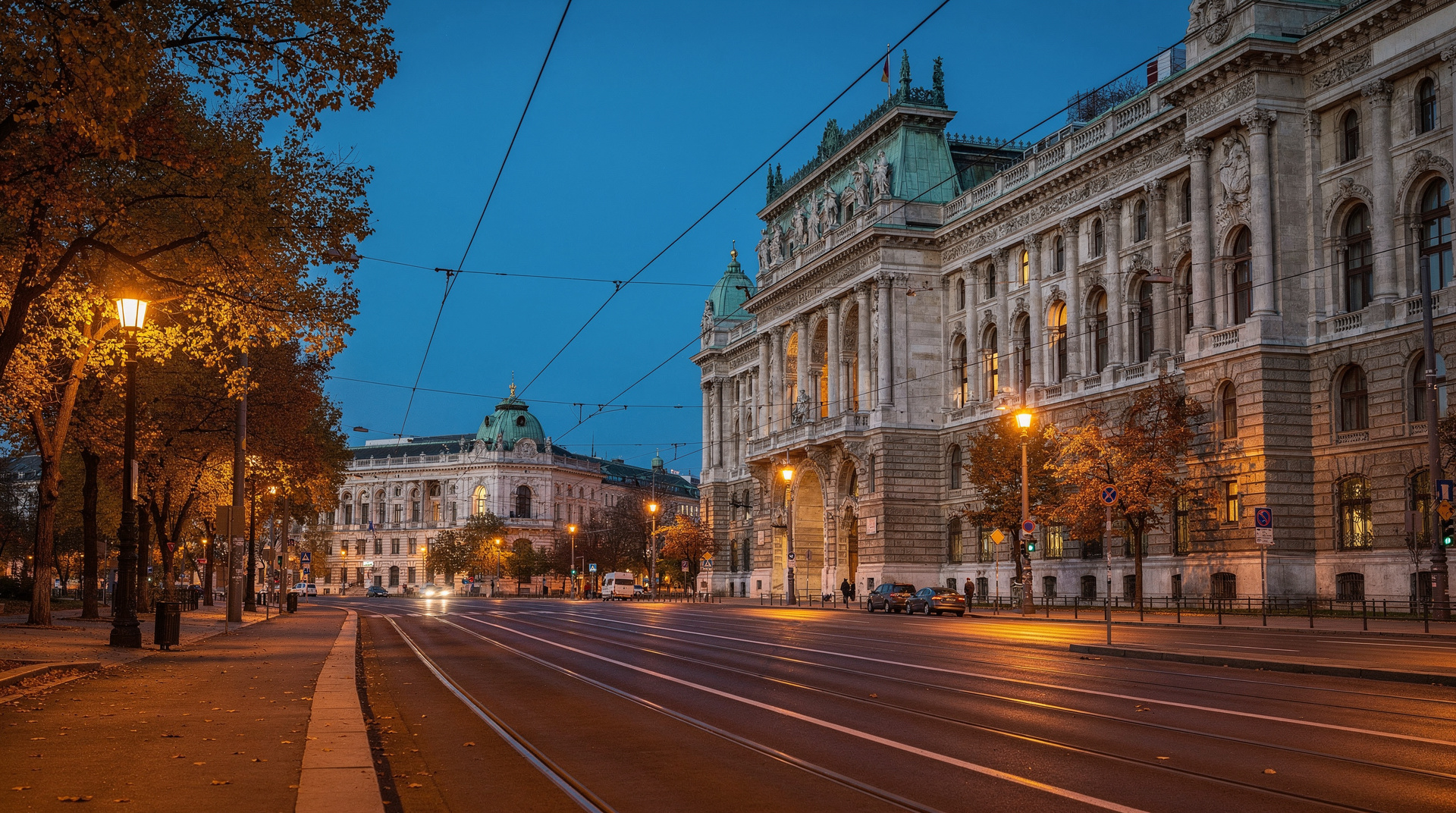
The Ringstrasse at blue hour (20–30 minutes after sunset) offers Vienna’s most atmospheric architectural photography. The massive public buildings — Kunsthistorisches Museum, Parliament, Burgtheater, Rathaus, State Opera, Musikverein — are lit internally, their facades glow against a deep blue sky, and the street’s wide format allows long compositions.
Best positions:
- Parliament building: from the Volksgarten corner, with the Pallas Athene fountain in foreground
- Rathaus: from the Rathausplatz, wide facade with the park in foreground
- Kunsthistorisches Museum: from Maria-Theresien-Platz with the Maria Theresa statue in foreground
- State Opera: Opernring / Kärntner Ring corner, elevation available
A tripod is necessary for blue-hour shooting; street surface is flat and stable.
Timing: Blue hour lasts 15–25 minutes in Vienna, depending on season. In summer it falls at 9:30–10 pm; in December at 4:45–5:10 pm (which means daytime accessibility without a late night).
Stephansdom and the Innere Stadt
Stephansdom south tower and rooftop
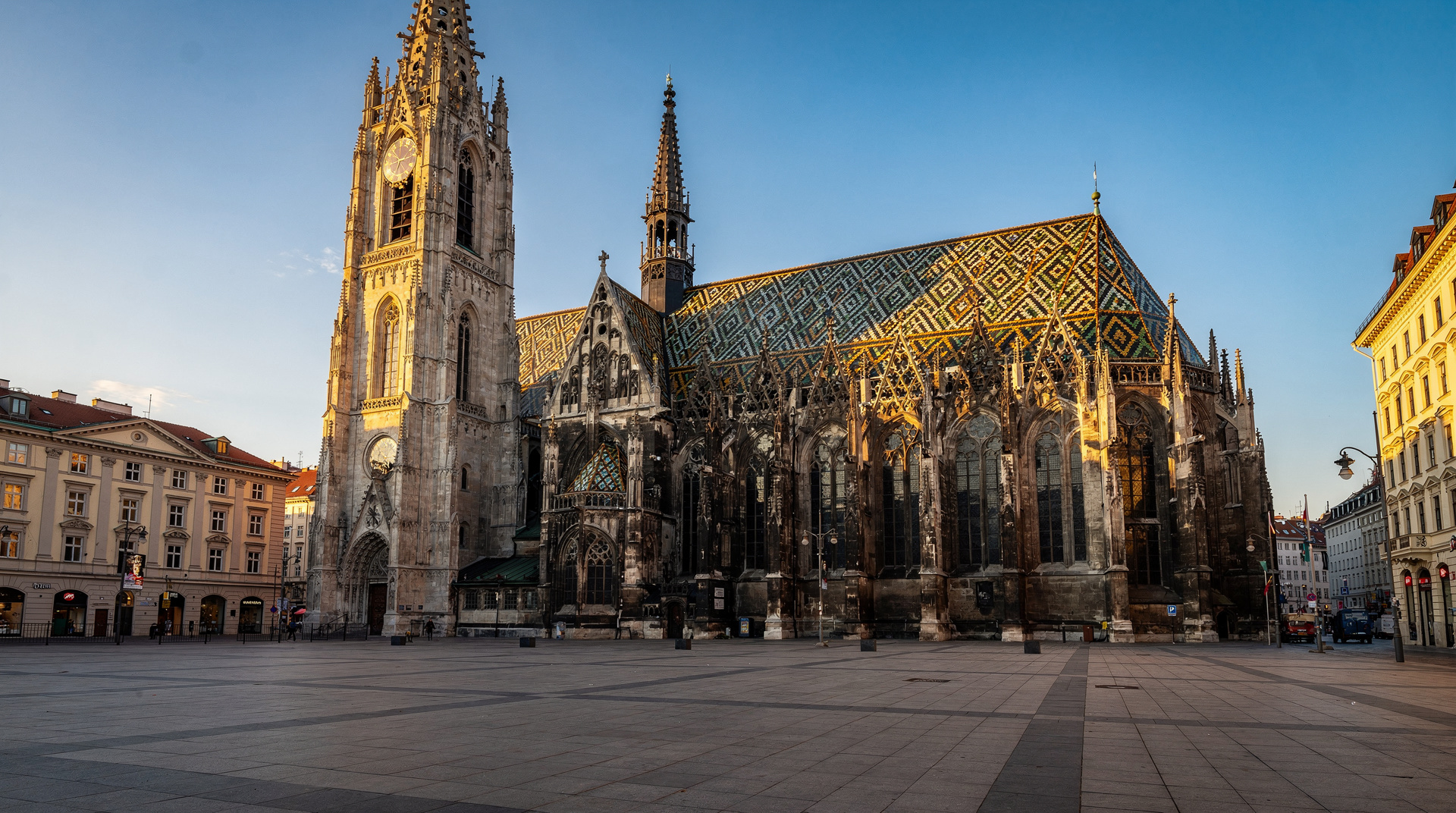
The south tower (Südturm) of St. Stephen’s Cathedral is the best elevated viewpoint in the city centre. At 75 metres height (136 steps), it offers a 360-degree view over Vienna’s 1st district rooftops, the Ringstrasse, and on clear days to the Vienna Woods. The Gothic rooftile pattern of the cathedral is particularly striking from this angle — you are level with it.
Best timing: Clear morning in autumn or spring for best visibility. Summer haze reduces the view range. Avoid midday in summer when the stone heats to extreme temperatures.
Cathedral facade: The mosaic tile roof (a late 19th-century reconstruction) is best photographed from the Stephansplatz side in late afternoon light. The Habsburg double eagle in the roof tiles is visible clearly from the Graben lookout.
The Graben and Kohlmarkt
Vienna’s pedestrian shopping streets offer classic architectural photography: the Graben is anchored by the Pestsäule (Plague Column), an extraordinary baroque monument that photographs well against the street’s shop facades. The Kohlmarkt leads to the Michaelerplatz and the curved facade of the Hofburg’s Michaelertrakt.
Early morning: Both streets are pedestrianised and largely empty before 8 am in non-peak season. The quality of light on the baroque stucco is best in low-angle morning sun.
The Naschmarkt
Saturday market photography
The Naschmarkt is one of Europe’s premier street photography markets. Saturday mornings from 6 am see the densest vendor activity: Turkish delicatessen stalls, Austrian cheese and charcuterie vendors, flower sellers, and the weekly farmers’ market extending the full length of the market. The interaction between vendors calling out, customers haggling, and the profusion of colour and texture provides rich material.
Practical ethics: Ask vendors before photographing them directly — most are fine with it and some actively enjoy the attention. The Turkish and Middle Eastern vendors in the central section are the most visually interesting but also the most likely to decline.
Light: The Naschmarkt runs east-west. Morning light (until 10 am) comes in from the east side. Shooting into the light from the west end gives backlit market stall silhouettes. Overcast days are excellent for even light.
The Prater
Riesenrad at night
The Riesenrad (Giant Ferris Wheel) is best photographed from two angles: close-up from the Praterstern approach (30mm equivalent, to include the entrance gates), or from 500 metres south along Prater Allee at night when the wheel is illuminated. The night shot from a distance gives a long exposure with the wheel’s red gondolas forming a light circle against the dark sky.
From inside: A ride on the Riesenrad gives you 20 minutes of rotating aerial views of Vienna, including the Stephansdom, Ringstrasse, and the Danube. The gondola windows are large enough for a reasonably clean shot (avoid midday when haze is heaviest).
Vienna: skip-the-cashier-line Riesenrad Giant Ferris Wheel ridePrater avenue
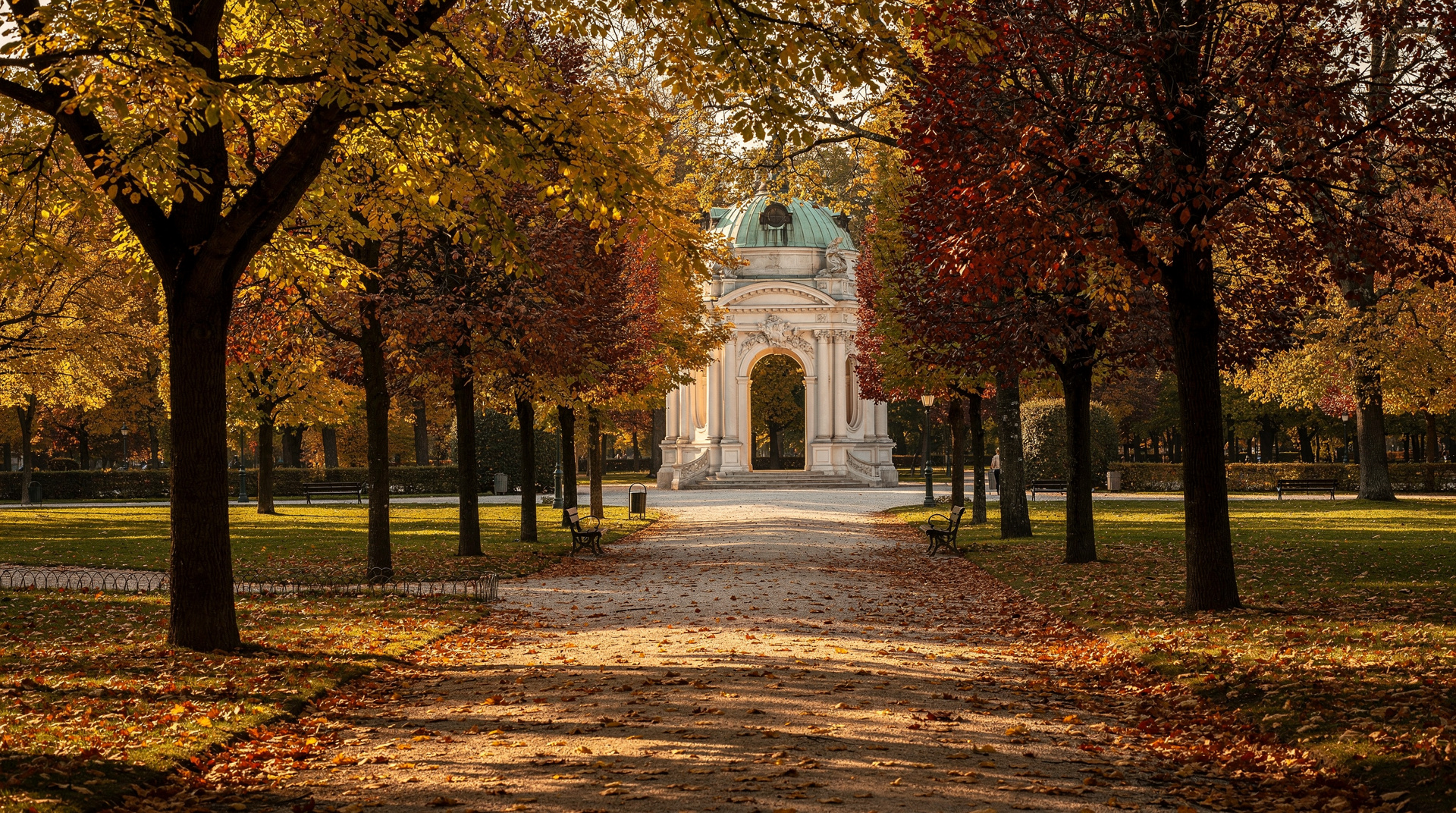
The Hauptallee (main avenue) through the Prater park is an extraordinary composition: a straight avenue lined with mature chestnut trees extending 4.5 kilometres to the horizon. In autumn, the canopy turns gold and the fallen leaves create a carpet effect. In spring, the chestnut blossom provides white punctuation against the green. In winter, bare branches create geometric patterns. This is Vienna’s most underrated photography location.
The coffee houses
Interior atmospheric photography
Vienna’s coffee houses — Café Hawelka (Dorotheergasse), Café Sperl (Gumpendorfer Strasse), Café Central (Herrengasse), Café Landtmann (Universitätsring) — are extraordinary interiors of amber light, dark wood, marble tables, and curved mirrors.
Photography etiquette: Photograph the room, not individuals without permission. The management at Hawelka is comfortable with photography in the quiet mid-afternoon hours (2–4 pm). Café Central is designed for it and tourists photograph freely. Sperl and Prückel are quieter and more respectful of regular customers — ask permission and be discreet.
Light: Interior coffee-house photography benefits from the warm tungsten-equivalent lighting characteristic of these rooms. A wide aperture (f/1.8–2.8) and ISO 1600–3200 typically eliminates the need for flash, which should never be used in these spaces.
Seasonal photography notes
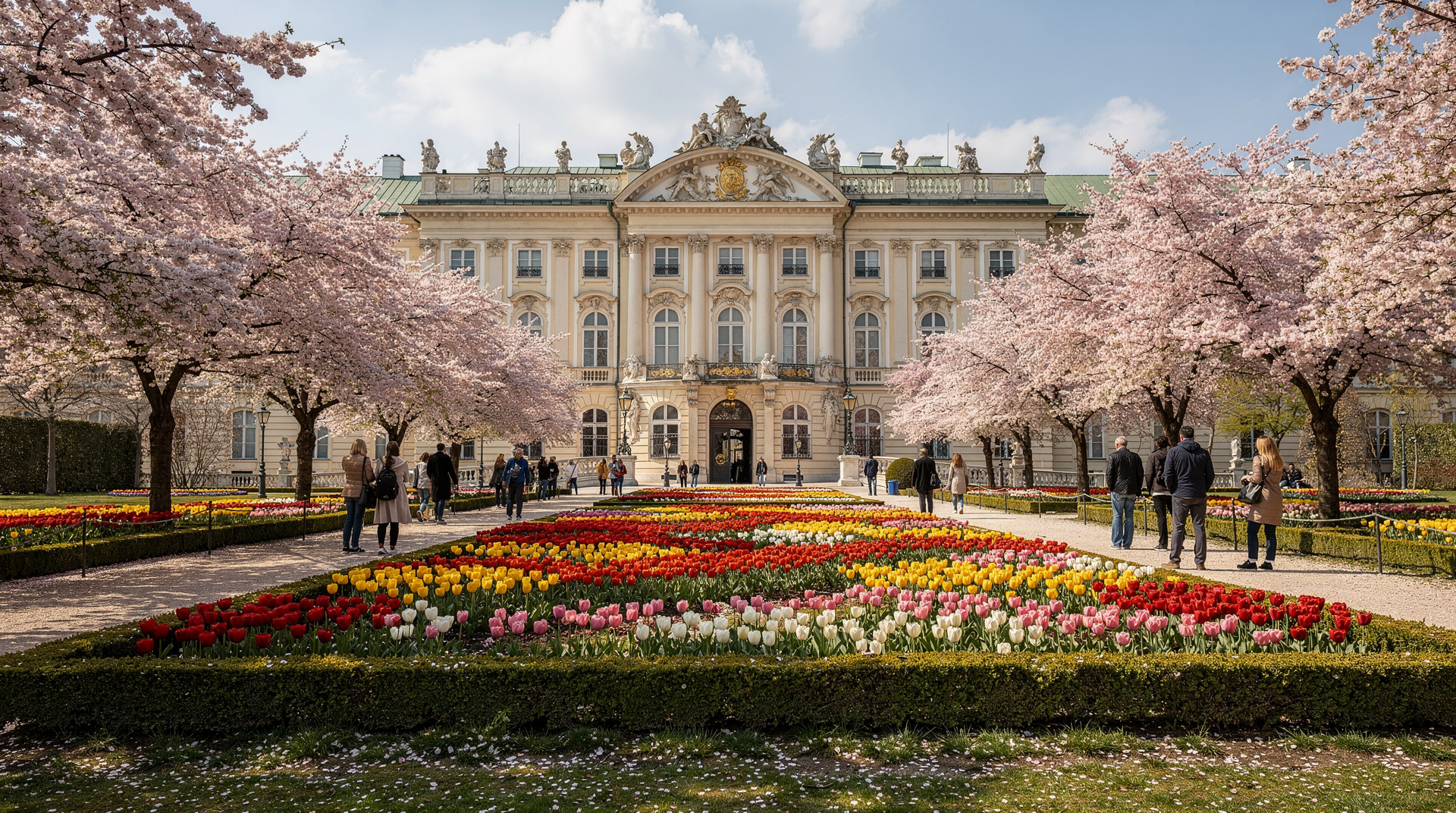
Spring (April–May): Schönbrunn gardens in tulip bloom, Prater chestnut blossom, relatively empty compared to summer. April morning light has a quality of soft diffusion that works well for palace photography.
Summer (June–August): Long days (sunset at 9 pm), but crowds are at their worst. Use the 5–7 am window at Schönbrunn for empty gardens. The Belvedere garden is sometimes less crowded in the late evening (7–9 pm) when day trippers have left.
Autumn (September–October): The single best photography season. Lower crowds, golden light, warm tones on the building facades. The Wachau valley (an hour from Vienna) in October harvest is extraordinary — vineyards, castles, autumn colour, Danube reflections.
Winter (December–January): Christmas market photography is one of Vienna’s most distinctive visual experiences. The Rathausplatz Christmas market, the Schönbrunn Christmas market, and the Stephansplatz market all photograph well in evening with Christmas lights and market canopy illumination. Snow on Schönbrunn’s roofline is rare but extraordinary when it happens — the palace is typically photographed within days of a snowfall by photographers who have been waiting.
Planning your photography walk around opening hours
Most of Vienna’s best photography locations reward planning your day around light rather than sights. The best time to visit Vienna guide breaks down month-by-month daylight and crowd patterns, which matters more for photography than for general sightseeing — a June trip means a 9:30pm blue hour and very early starts to beat crowds, while a December trip gives usable blue-hour light by 4:45pm. If your visit falls in the shoulder seasons, the Vienna in spring and Vienna in autumn guides both cover the specific light quality and bloom or foliage timing at Schönbrunn and the Prater.
For a practical shot list beyond the icons above, pair this guide with the Schönbrunn Palace guide and Belvedere Palace guide for opening times and the least-crowded entry slots, and the Stephansdom cathedral guide for south tower access details. Budget-conscious photographers should note that nearly every location in this guide is free — see the Vienna on a budget guide for how photography fits a low-cost itinerary, and the Vienna destination overview for how these spots sit within the wider city.
Frequently asked questions about Vienna photography spots
Where can I photograph the Schönbrunn Palace best?
The classic shot is from the Gloriette hilltop looking back towards the palace. Golden hour turns the warm yellow facade spectacular. For the reverse angle, shoot from the Neptune Fountain at sunrise.
What is the best time of day for photography in Vienna?
Golden hour before sunset for warm Habsburg architecture. Blue hour after sunset for the Ringstrasse buildings. Dawn for empty streets in the 1st district.
Can I photograph inside Vienna’s palaces?
Photography permitted inside Schönbrunn state rooms (no flash). Hofburg Imperial Apartments allow photography. Belvedere allows photography in most permanent collection rooms. Kunsthistorisches Museum prohibits photography in galleries.
Is the Naschmarkt good for street photography?
Yes — one of Europe’s best street photography markets. Saturday mornings from 6 am have the densest vendor activity. Ask vendors before photographing them directly.
Where are the best elevated viewpoints in Vienna?
The Gloriette at Schönbrunn (free). The Stephansdom south tower (75m, €6). The Riesenrad gondola (65m). The Kahlenberg hill viewpoint (free, panoramic, 30 minutes from city).
Top experiences
Bookable activities with verified prices and instant confirmation on GetYourGuide.