Schönbrunn vs Hofburg: which Habsburg palace to visit?
Vienna: Schönbrunn Palace & Gardens Skip-the-Line Tour
Should I visit Schönbrunn or Hofburg?
Visit both if you have 3+ days — they show different sides of Habsburg life. Schönbrunn is grander, more theatrical, with better gardens. Hofburg is more intimate, the Sisi Museum is emotionally compelling, and the treasury is one of Europe's greatest collections. For a single visit, Schönbrunn wins on visual spectacle; Hofburg wins on historical depth.
Two palaces, two visions of imperial power
The Habsburg dynasty built and inhabited both Schönbrunn and Hofburg for centuries, and each palace reflects a different face of imperial ambition. Schönbrunn is theatrical display — a palace designed to be seen from across a vast garden, to intimidate and inspire by scale. Hofburg is institutional power — an accretion of wings, courtyards, and administrative buildings that grew around the original 13th-century fortress until it became something between a palace and a capital.
Both are extraordinary. Both deserve a visit. The question is which to prioritise if time is limited — and this guide gives you an honest answer.
| Schönbrunn | 13th district, U4, around €32, gardens free |
| Hofburg | 1st district, central, around €18–20 for main sights |
| Time needed | 3–4 hours each; 3–5 hours for Hofburg with the Treasury |
| Best for | Schönbrunn = spectacle & families; Hofburg = history & the Sisi story |
| Both in a day | Possible but rushed — better across two half-days |
Schönbrunn: the summer palace
What it is
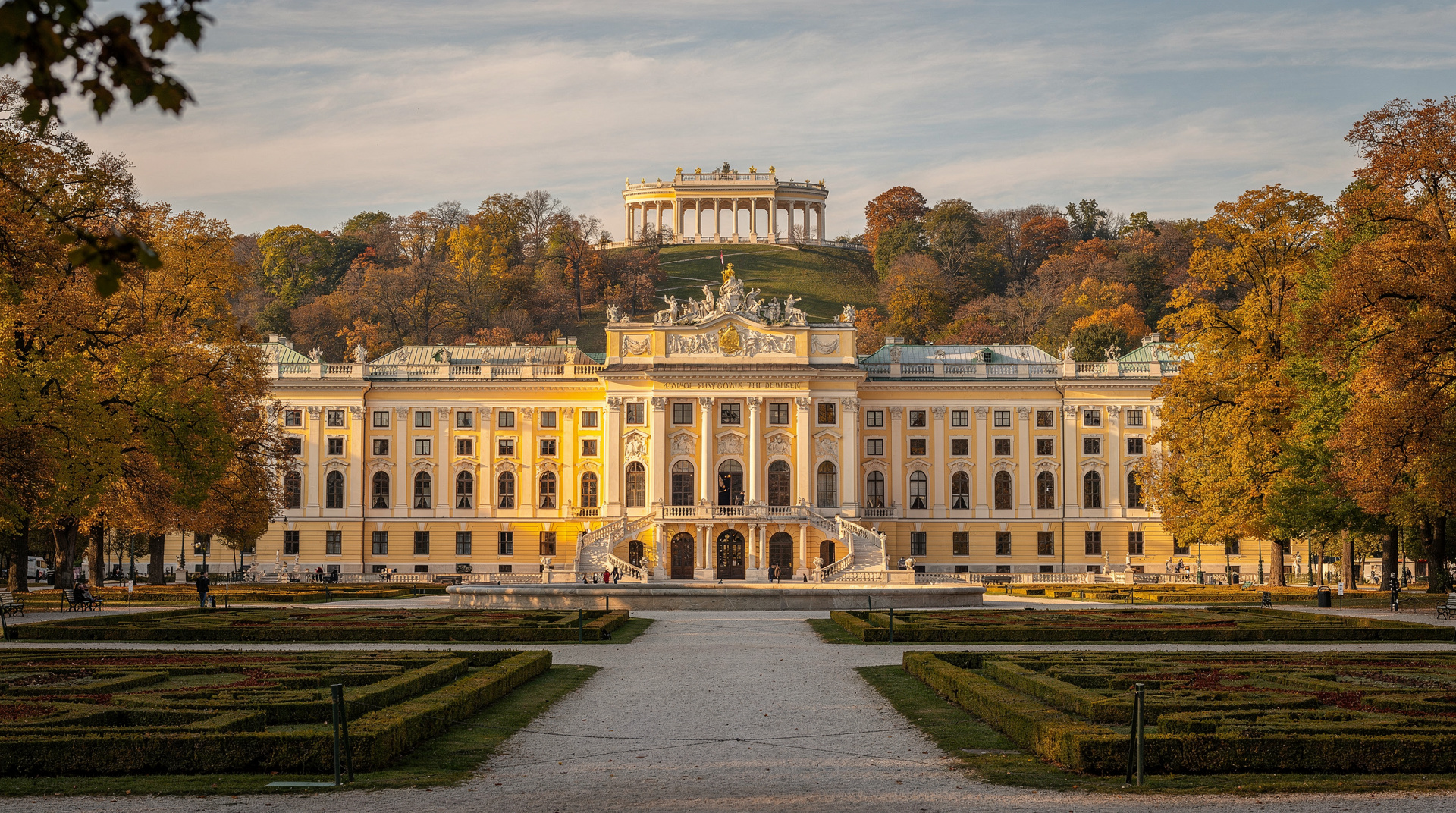
Schönbrunn Palace served as the summer residence of the Habsburg emperors from the 17th century until the fall of the monarchy in 1918. The current baroque structure (largely from the reign of Empress Maria Theresa, 1740–1780) has more than 1,400 rooms, 40 of which are open to visitors via the Grand Tour or Imperial Tour.
The palace sits 5 kilometres from the city centre in the 13th district, with 160 hectares of formal gardens rising behind it to the Gloriette hilltop colonnaded viewpoint.
What you actually experience
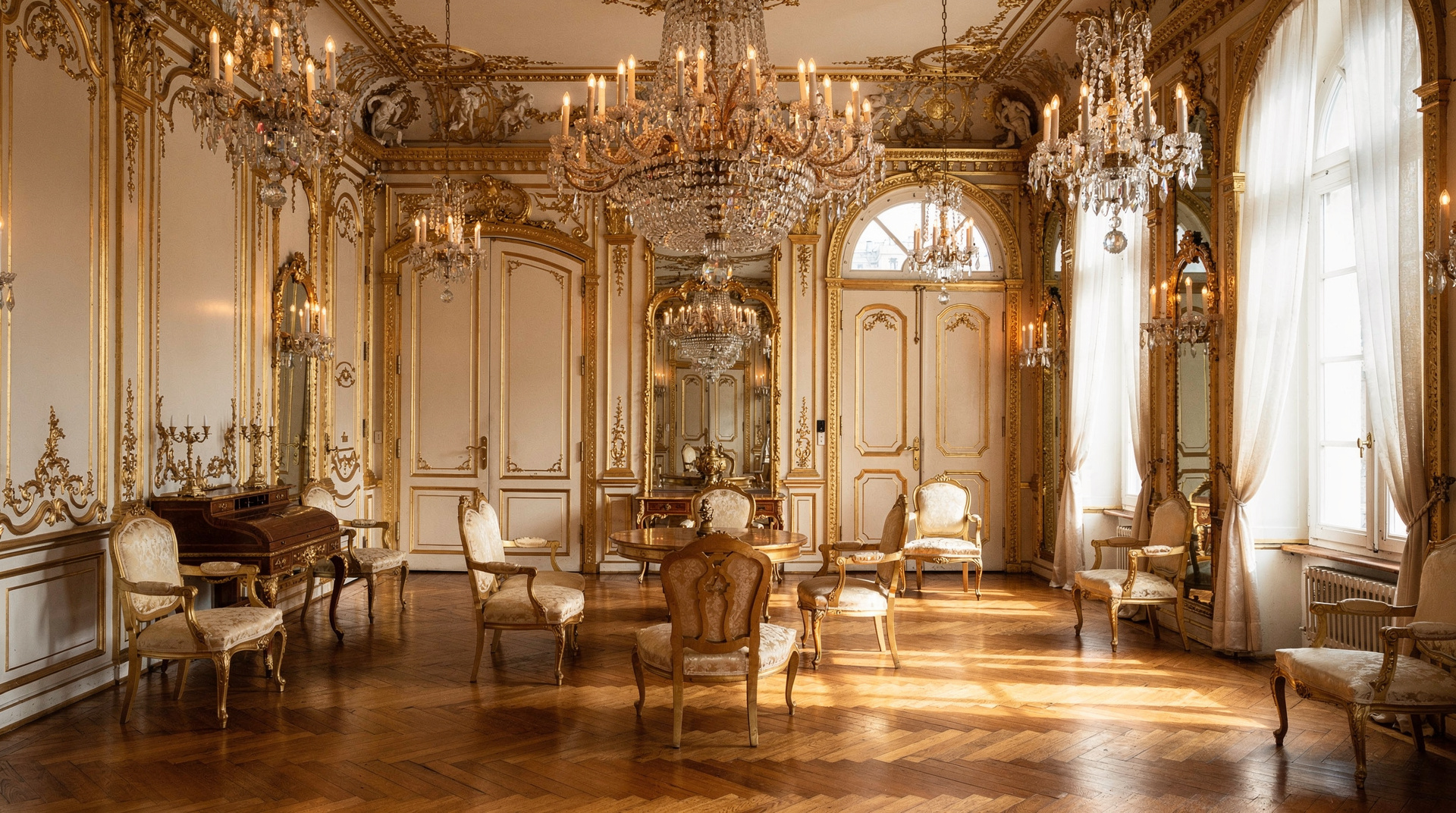
The Grand Tour (40 rooms, 2 hours, €32 including audio guide) takes you through the state rooms used by Franz Joseph I and Empress Elisabeth (Sisi), the Great Gallery where the Congress of Vienna’s 1815 final act was signed, the Napoleon Room where the French emperor slept, the Mirror Room where the 6-year-old Mozart performed for Maria Theresa, and the extraordinary Millions Room panelled with Indian miniatures set in gilded cartouches.
The state rooms are spectacular in their way — Maria Theresa’s Rococo sensibility produced rooms that are exuberantly decorative rather than austere. The Great Gallery is a genuinely theatrical space at 43 metres long with ceiling frescoes by Guglielmi.
After the interior, the gardens (free entry) extend the experience considerably. The central axis from the palace facade to the Gloriette on the hilltop is 750 metres of formal landscaping — fountain, parterre, seasonal flowers. The view from the Gloriette back over the palace and Vienna is among the best viewpoints in the city.
Vienna: Schönbrunn Palace and Gardens skip-the-line tourWhat Schönbrunn does best
- Visual spectacle: the baroque palace in its garden setting is unmatched
- The Gloriette viewpoint: free, extraordinary, best at golden hour
- Gardens: 160 hectares free to walk
- Children’s engagement: the Kindermuseum Schönbrunn, the Maze, the Zoo adjacent
Schönbrunn’s limitations
- 5km from the city centre (U4, 10 minutes from Karlsplatz)
- Crowds heaviest of any Vienna sight in summer
- The palace interior, while impressive, is less historically narrative than Hofburg
Hofburg: the winter palace and governmental complex
What it is
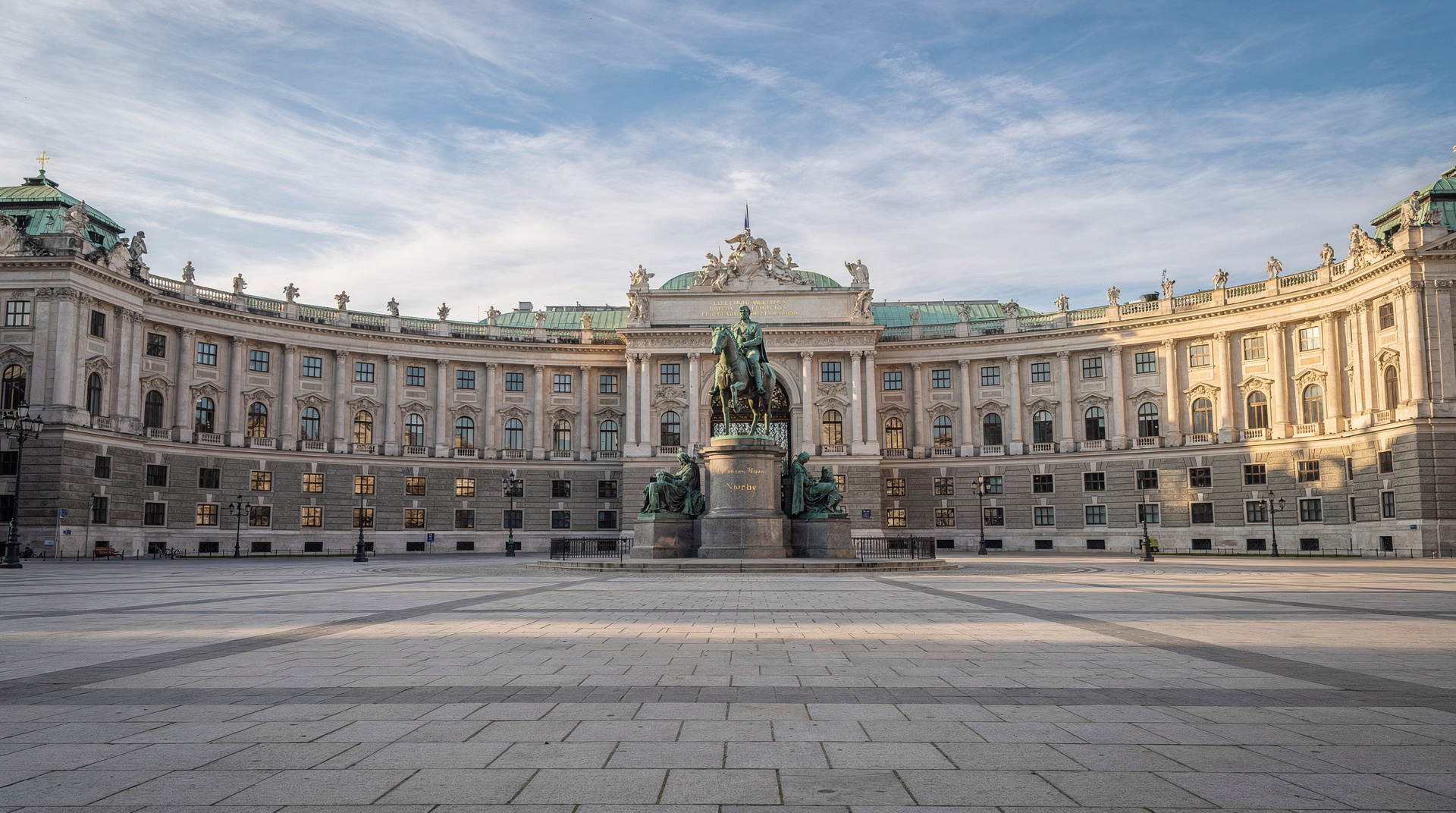
The Hofburg is not a single palace but a complex of 18 wings and 19 courtyards that accreted over seven centuries into an enormous architectural organism covering 240,000 square metres in the 1st district. The emperors lived here in winter; the Habsburg administrative apparatus operated here continuously; it was the seat of the Holy Roman Empire and later the Austro-Hungarian monarchy’s government.
Today the Hofburg contains: the Austrian Presidential offices (still in use), the Vienna Boys’ Choir Burgkapelle, the Spanish Riding School, the Sisi Museum, the Imperial Apartments, the Hofburg Treasury, the National Library (Prunksaal), the Augustinerkirche (where Habsburg hearts were buried), and the Burggarten park.
What you actually experience
The main visitor circuit consists of three sections:
Sisi Museum: The most emotionally engaging part of the Hofburg visit. Built around Empress Elisabeth’s personal effects — her gym equipment (she trained obsessively), her dresses (she maintained a 50cm waist into middle age), her poetry manuscripts, the correspondence surrounding her assassination in Geneva in 1898 — the museum tells the story of one of the 19th century’s most complex public figures. The contrast between the myth (the young, beautiful empress of postcards) and the reality (an anxious, driven, deeply unhappy woman who escaped palace life at every opportunity) is the museum’s central tension.
Imperial Apartments: The state rooms used by Franz Joseph I are notably plain compared to Schönbrunn’s Rococo exuberance — the emperor lived sparely, breakfasted at 5 am, and slept on an iron camp bed. The contrast between Franz Joseph’s austere personal choices and the imperial ceremonial spaces is striking.
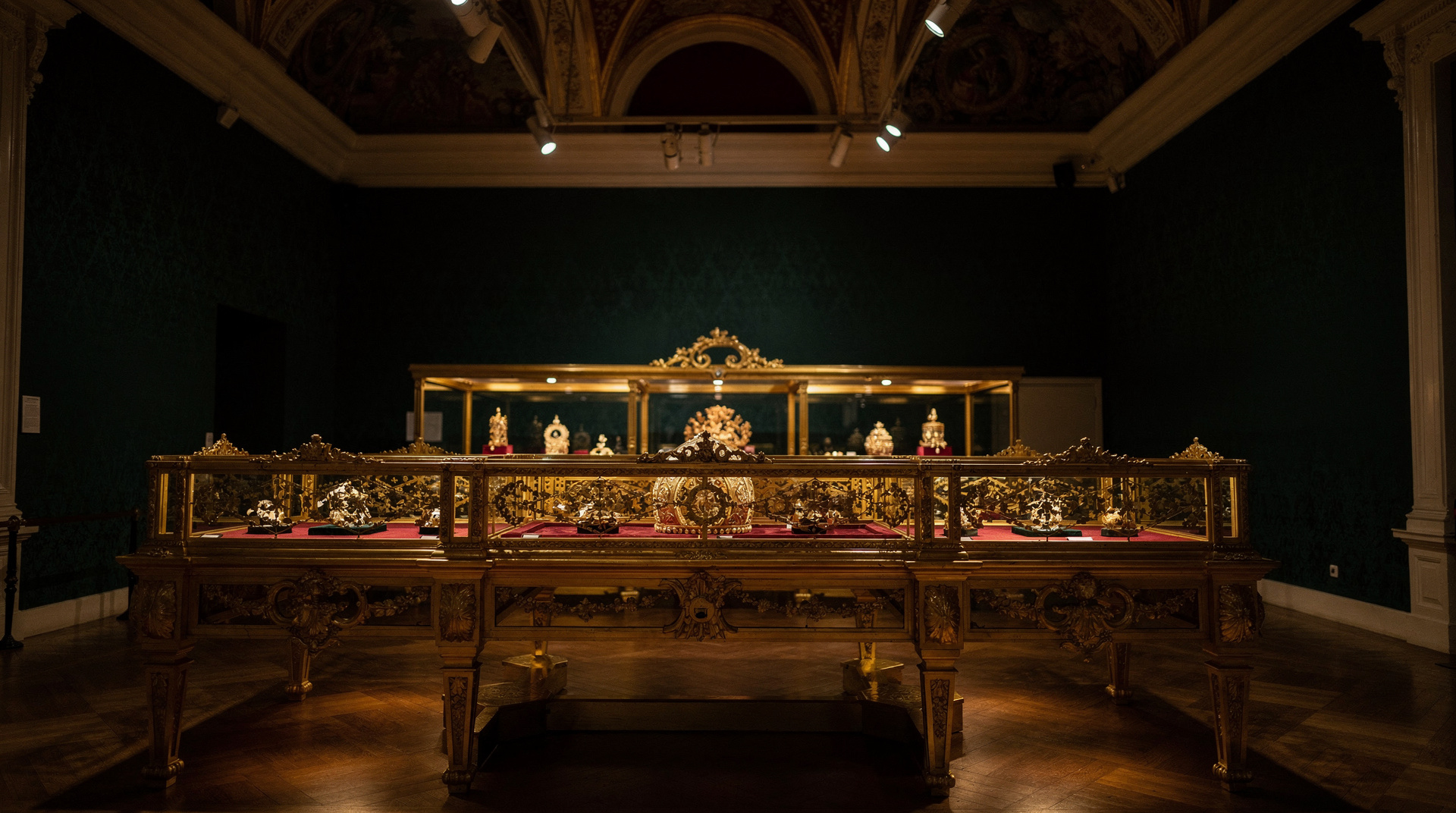
Hofburg Treasury: A separate ticket (€14) gets you the Habsburg crown jewels — the Imperial Crown of Austria, the crown of the Holy Roman Empire (10th century), the Holy Lance (the spear supposedly used at the Crucifixion), Charlemagne’s sword, and room after room of dynastic regalia. This is one of Europe’s greatest treasury collections and is often overlooked by visitors focused on the Sisi Museum.
Vienna: Hofburg and Empress Sisi Museum guided tourWhat Hofburg does best
- Historical depth: the Sisi Museum is among Europe’s finest biographical museums
- Location: in the heart of the 1st district, steps from the Graben and Kohlmarkt
- The Treasury: Crown Jewels and Holy Roman Empire regalia
- The Spanish Riding School (September–June): within the Hofburg complex
- The National Library Prunksaal: one of the world’s most beautiful baroque library halls
Hofburg’s limitations
- No gardens of comparable quality to Schönbrunn
- The complex is confusing to navigate — signage is not always intuitive
- The Sisi Museum ticket, Imperial Apartments, and Treasury require separate payments
The direct comparison
| Factor | Schönbrunn | Hofburg |
|---|---|---|
| Visual impact | Extraordinary (palace + gardens) | Impressive but complex |
| Historical narrative | Good | Excellent (Sisi Museum) |
| Gardens | 160ha, free | Burggarten (small, free) |
| Location | 13th district (U4) | 1st district (central) |
| Duration | 3–4 hours | 3–5 hours (all components) |
| Ticket cost | €32 (Grand Tour) | €18+ (variable) |
| Treasury | Not included | €14 separate |
| Best with kids | Yes (Zoo, Maze, Kindermuseum) | Not especially |
| Crowds | Highest in Vienna | High but more dispersed |
The practical recommendation
For a 2-day visit: Choose Schönbrunn for Day 1 (more immediately satisfying, gardens included). If you can only do one palace, Schönbrunn.
For a 3-day visit: Schönbrunn Day 1, Hofburg + Sisi Museum Day 2. The narrative of the same dynasty across both palaces — the theatrical Rococo summer retreat vs. the institutional winter complex — is genuinely illuminating when you do both.
For a museum-focused visit: Prioritise the Hofburg Treasury (often overlooked but extraordinary) and the Sisi Museum alongside the Imperial Apartments.
If children are with you: Schönbrunn first and strongest — the Zoo, Maze, Kindermuseum, and gardens are all superior for families.
If history is the priority: Hofburg provides the richer historical context. The Spanish Riding School and Boys’ Choir, both inside the Hofburg complex, are also only available here.
Combined ticket options
The Vienna PASS (€89/1 day, rising) includes both Schönbrunn Grand Tour and the Hofburg Imperial Apartments among its 85+ free admissions. If you are visiting both palaces plus Belvedere and the Kunsthistorisches Museum, the pass price breaks even rapidly.
See our Vienna PASS review for the break-even analysis. If you’d rather manage tickets individually, the Vienna City Card review covers a lighter-weight transport-plus-discounts alternative that suits a shorter trip.
Where Belvedere and the Ringstrasse fit in
Neither Schönbrunn nor Hofburg is the only Habsburg site worth your time. The Belvedere Palace, a short tram ride from the centre in the Belvedere district, was built as Prince Eugene of Savoy’s residence rather than an imperial one, and today houses Klimt’s The Kiss — a genuinely different experience from either Schönbrunn or Hofburg and worth a half-day of its own if you have a 4-day trip or longer.
The Ringstrasse, the grand boulevard that replaced Vienna’s city walls in the 1860s–1890s, links the historic centre (and the Hofburg) to the wider city and is worth walking or tramming at least once regardless of which palace you prioritise — it puts both Schönbrunn’s suburban setting and Hofburg’s central position into visual context. Inside the Hofburg itself, the Imperial Apartments are the section most directly comparable to Schönbrunn’s state rooms, since both show the same emperor’s daily life from two different angles.
Pairing each palace with the rest of your day
The two palaces sit in very different parts of the city, and that shapes how a day around them feels. A Schönbrunn visit is a self-contained excursion: you head out, give the palace and the gardens your attention, and then decide whether to extend into the Schönbrunn Zoo or the Schönbrunn evening concert. The full picture of the site, including how to structure the interior and the grounds, is in the Schönbrunn Palace guide and the wider Schönbrunn destination page. If you are travelling with younger visitors, the Schönbrunn Zoo family visit shows how to build the whole day around them.
The Hofburg works the other way round. Because it sits in the Innere Stadt, it slots easily between other things: a morning in the Sisi Museum can be followed by lunch nearby, a walk past St. Stephen’s Cathedral, or a coffee in one of the city’s famous cafés. The Hofburg Palace guide explains the layout, and the separate pages on the Sisi Museum and the Imperial Treasury help you decide which parts deserve your time. If the Habsburg story itself is what draws you, Habsburg history for travelers and Franz Joseph and Sisi give the background that makes the rooms in both palaces far easier to read.
Choosing by temperament
Some visitors want to be dazzled; others want to understand. If you enjoy big set pieces, long vistas and a day spent mostly outdoors, Schönbrunn will feel like the better use of your time. If you prefer small, detailed exhibits, personal objects and a story you can follow from room to room, the Hofburg tends to reward you more. Neither choice is wrong, and plenty of travellers find that the second palace changes how they remember the first, because the contrast between the two is the real lesson.
Fitting palaces into a longer stay
Palaces are rich but tiring, so it helps to spread them out rather than stacking them. The how many days in Vienna guide helps you judge how much room your trip really has, and the ready-made 3-day itinerary and 5-day itinerary show how other visitors have spaced the two palaces alongside museums, coffee houses and a day trip. If the weather is poor, the Hofburg is the more forgiving choice, since most of what you came for is indoors. If it is bright and clear, save Schönbrunn for that day and make the most of the gardens.
What locals notice that first-timers miss
Viennese residents rarely visit either palace’s interior more than once, but they use the grounds constantly: Schönbrunn’s gardens function as a public park for morning joggers and Sunday families, entirely free and separate from the ticketed palace experience. The Hofburg’s courtyards (Josefsplatz, In der Burg) are cut-through routes for locals walking between the Ring and Michaelerplatz, with most residents never setting foot in the Sisi Museum or Treasury after a school trip decades earlier. Knowing this helps calibrate expectations: the ticketed interiors are firmly tourist experiences, while the surrounding grounds and courtyards are where the city’s actual daily life continues around both palaces.
Frequently asked questions about Schönbrunn vs Hofburg
What is the difference between Schönbrunn and Hofburg?
Schönbrunn was the summer palace with 40 open rooms and 160-hectare gardens 5km from centre. Hofburg was the winter palace and government complex in the heart of the 1st district — a 240,000 sq metre compound with the Sisi Museum, Treasury, and Spanish Riding School.
Which is better for first-time visitors?
For visual impact: Schönbrunn. For historical understanding: Hofburg. Most first-timers find Schönbrunn more immediately satisfying.
How long does each palace take?
Schönbrunn Grand Tour + gardens: 3–4 hours. Hofburg (Sisi Museum + Imperial Apartments + Treasury): 3–5 hours.
Which palace is cheaper?
Schönbrunn Grand Tour: €32. Hofburg Sisi Museum + Imperial Apartments: approximately €18. Hofburg Treasury: €14 extra. Both are included in the Vienna PASS.
Can I visit both palaces in one day?
Yes — a full day. Better to give each palace its own half-day visit: Schönbrunn morning, Hofburg afternoon, or split across two days.
Top experiences
Bookable activities with verified prices and instant confirmation on GetYourGuide.