Sachertorte: the real thing vs tourist café versions
Vienna: Typical Austrian Food Tour with Coffee House Visit
Where can I get the real Sachertorte in Vienna?
Only two places serve what can legitimately be called the original Sachertorte: Hotel Sacher (the sealed 'Original Sacher-Torte', €9/slice at the café) and Demel (the rival original with a different recipe, €8/slice). Every other 'Sachertorte' in Vienna is technically just chocolate cake with apricot jam — good or bad, but not the original.
The Sachertorte story: why it matters
Vienna has given the world many culinary things — the Wiener Schnitzel, the Apfelstrudel, the Melange — but nothing has been as thoroughly mythologised, legally contested, and commercially exploited as the Sachertorte. Every tourist café in Vienna’s 1st district sells something labelled Sachertorte. Almost none of them are selling the real thing — a pattern that repeats across several of Vienna’s most marketed experiences, as our broader Vienna tourist traps guide explains.
Understanding why this matters, and where to get the genuine article, is the purpose of this guide.
| Where | Hotel Sacher (Philharmonikerstrasse 4) or Demel (Kohlmarkt 14) |
| Cost | €8–9 for a slice; €14.50 with coffee at Sacher |
| Time needed | 30–45 minutes including the likely queue |
| Getting there | Both in the 1st district, near Stephansplatz/Karlsplatz |
| Best time | 9–10am or after 4pm to avoid the worst queues |
The history: Franz Sacher, 1832
The Sachertorte was created by Franz Sacher in 1832 when, as a 16-year-old kitchen apprentice, he was instructed to create a new dessert for the guests of Prince Metternich. The recipe he developed — chocolate sponge, apricot jam, chocolate glaze — became over the following decades one of the most famous cakes in the world.
Sacher’s son Eduard later went to work at Demel (Vienna’s most prestigious confectioner) before leaving to open the Hotel Sacher in 1876. The dispute over which version was “original” — the hotel’s or Demel’s — simmered through the 19th and early 20th centuries before exploding into the Austrian courts in 1954.
The legal dispute: seven years in court
The “Süssigkeitenstreit” (Confectionery Dispute) was one of Austria’s most theatrical legal battles. Hotel Sacher claimed ownership of the “Original” title; Demel claimed Eduard Sacher had brought the genuine recipe with him. Seven years of litigation produced a 1963 settlement:
- Hotel Sacher: May call its cake the “Original Sacher-Torte.” Uses a round chocolate disc seal with the name.
- Demel: May call its version the “Eduard Sacher-Torte.” Uses a triangular seal.
Both versions are legally protected. Neither can use the other’s designation. Every other “Sachertorte” in Vienna is an unlicensed commercial approximation.
The two originals compared
Hotel Sacher: the sealed original
Location: Philharmonikerstrasse 4, 1st district. The Sacher Café is accessible from the street without a hotel reservation.
The cake: Dark chocolate sponge, apricot jam layer inside (between the two halves of the sponge — the jam is not visible from outside), then a second layer of jam under the chocolate glaze. The glaze is a firm, slightly bitter dark chocolate. The texture is drier and more structured than most chocolate cakes. Served with unsweetened whipped cream (Schlagobers) on the side — not negotiable, this is the correct accompaniment.
The taste: The apricot jam provides acidity that cuts through the chocolate. The dried-out texture (often noted by first-timers as unexpected) is intentional — the original recipe did not aim for moistness. The overall effect is elegant and restrained.
Price: €9 for a slice, plus coffee. A full Melange coffee (€5.50) makes for approximately €14.50 for the canonical Sacher Café experience.
Queue: 20–40 minutes at peak times (10 am–3 pm). Arrive at opening (9 am) or after 4 pm. The Café Sacher on the Philharmonikerstrasse side is separate from the hotel dining rooms — enter from the street.
Demel: the elegant rival
Location: Kohlmarkt 14, 1st district. One of Vienna’s great historic confectioners, established 1786, former Imperial and Royal Court Confectionery supplier.
The cake: The Demel version (Eduard Sacher-Torte) has the apricot jam between the outer glaze and the sponge — visible as a layer when sliced. The sponge is slightly more buttery and less dry than the Sacher version. The chocolate glaze has a shinier finish. The overall impression is slightly more refined, more pastry-chef in character.
The setting: Demel’s interior is one of Vienna’s most beautiful — a preserved Jugendstil (Art Nouveau) confectionery shop with glass-fronted display cases showing the day’s pastry production. The café is attached; seating is more comfortable and less crowded than the Sacher Café.
Price: €8 for a slice. The Demel experience also includes access to the full confectionery display — worth allowing time to browse even if you only order the Sachertorte.
Queue: Usually shorter than the Sacher. Demel is less explicitly marketed as the Sachertorte destination, so the queue management is better.
Our honest preference: Demel. The slightly more refined cake, the better café atmosphere, the shorter wait, and the context of the full confectionery display make it the more complete experience. Both are excellent.
How to taste the two originals properly
If you have the time, the most rewarding way to settle the Sacher-versus-Demel question is to try both on the same day, or at least on the same trip, and to do so without rushing. Order the cake with whipped cream and a Melange or a black coffee, and take the first bite plain, before the cream, so you can read the glaze, the jam and the crumb on their own. Then add cream to taste. The point of the exercise is not to crown a winner but to notice how two kitchens, working from a shared ancestor, ended up in genuinely different places.
A few things are worth paying attention to:
- The glaze. Look at how it breaks under the fork. A good glaze has a clean, slightly resistant surface rather than a sticky or rubbery one.
- The jam. Notice where it sits and how much acidity it brings. This is the clearest difference between the two recipes.
- The sponge. Dry and structured is a choice at one address and a flaw at another, so judge it against what that kitchen is aiming for.
- The seal. On a whole cake the chocolate seal is your proof of origin. At the table, the plate and the menu wording tell you which of the two legal names you are eating.
Going in with this kind of attention also makes it much easier to recognise a generic version when you meet one elsewhere. The difference is usually obvious on the first forkful, and it explains why the tourist café comparison below is less about snobbery than about knowing what you are paying for.
Tourist café “Sachertorte”: the honest assessment
The “Sachertorte” sold at tourist cafés on Kärntner Strasse, near Stephansdom, and in hotel buffets throughout the 1st district is legally permitted to use the name (there is no trademark on “Sachertorte” as a generic term, only on “Original Sacher-Torte” and “Eduard Sacher-Torte”). These cakes are typically:
- Made from standard commercial chocolate sponge with apricot jam and chocolate glaze
- Priced at €7–10, similar to Sacher/Demel
- Quality ranging from “acceptable” to “good commercial pastry”
- Not connected to either original recipe or either original producer
This is not fraud — it is generic category naming. But if you are visiting Vienna specifically to try the Sachertorte, a tourist café version is not the experience you came for.
The notable exceptions: Café Landtmann (Universitätsring, Freud’s favourite café) and Café Central (Herrengasse) serve their own Sachertorte recipes that are genuinely good — better than the average tourist café version — but still not the Sacher or Demel originals. Both feature in our wider Viennese coffee house guide as destinations worth visiting for reasons beyond just cake.
The four-way comparison
| Hotel Sacher | Demel | Landtmann/Central | Generic tourist café | |
|---|---|---|---|---|
| Legally “Original”? | Yes (sealed) | Yes, as “Eduard Sacher-Torte” | No | No |
| Price/slice | €9 | €8 | €8–10 | €7–10 |
| Quality | Excellent, drier texture | Excellent, more buttery | Good, own house recipe | Ranges from acceptable to poor |
| Queue | 20–40 min peak | Usually shorter | Rarely significant | None |
| Worth a special trip? | Yes | Yes | If already there for coffee | No |
Spotting the giveaways of a weak version is straightforward once you know what to look for — our Viennese coffee tourist traps guide covers the wider pattern of pricing and quality tricks used across the city’s café scene, not just for cake.
The Apfelstrudel alternative
While Sachertorte gets the international marketing, Vienna’s most widely eaten, most consistently excellent pastry is the Apfelstrudel. Thin pastry wrapped around cinnamon-spiced apple with raisins, served warm with vanilla sauce or Schlagobers. Available at virtually every traditional café and pastry shop.
The Apfelstrudel is more consistently good across venues than the Sachertorte. At Café Sperl, Landtmann, or Prückel, the Apfelstrudel is made fresh daily and is excellent. At tourist cafés, the Sachertorte is often pre-bought from commercial suppliers; the Apfelstrudel is more commonly made in-house.
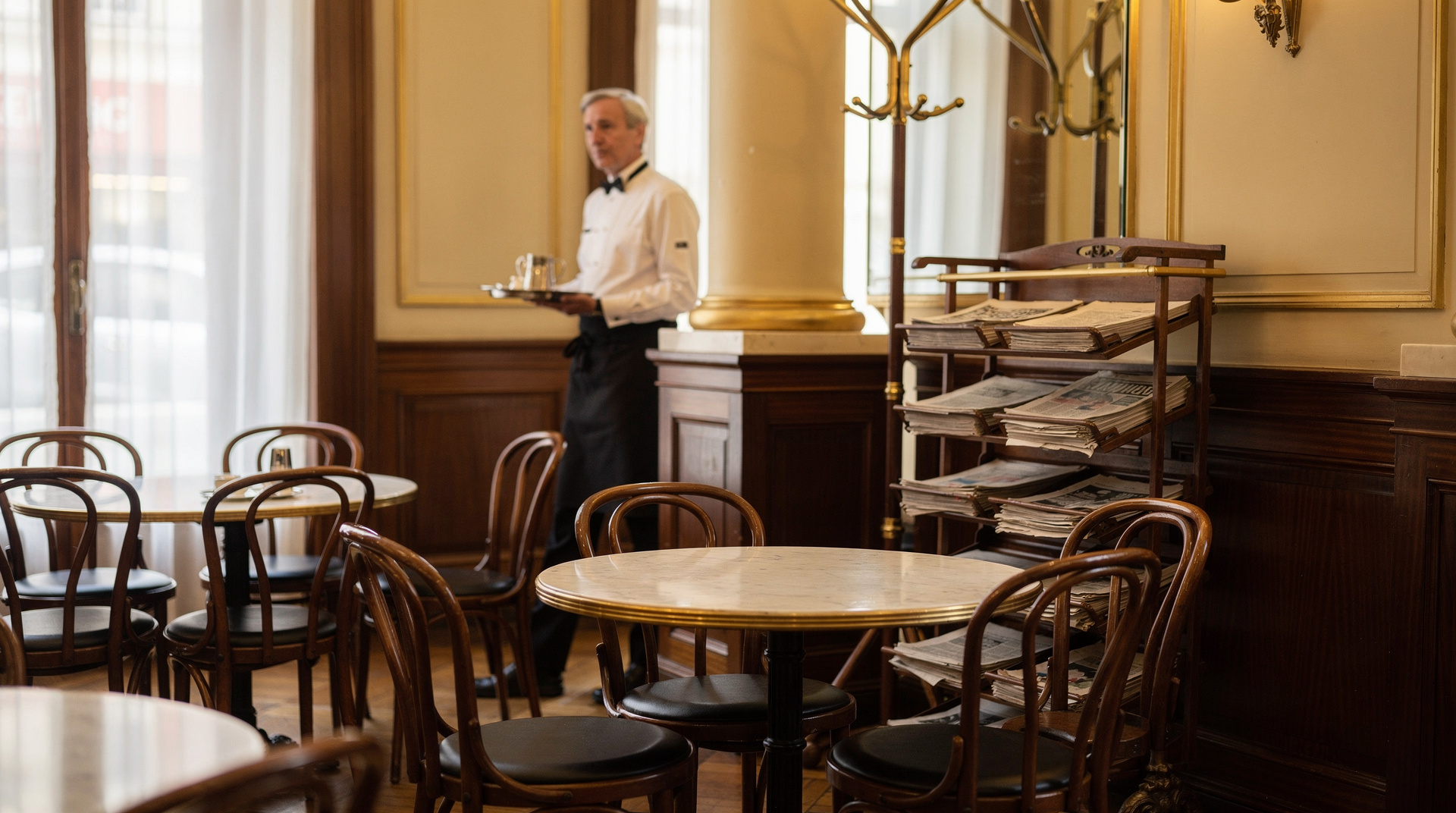
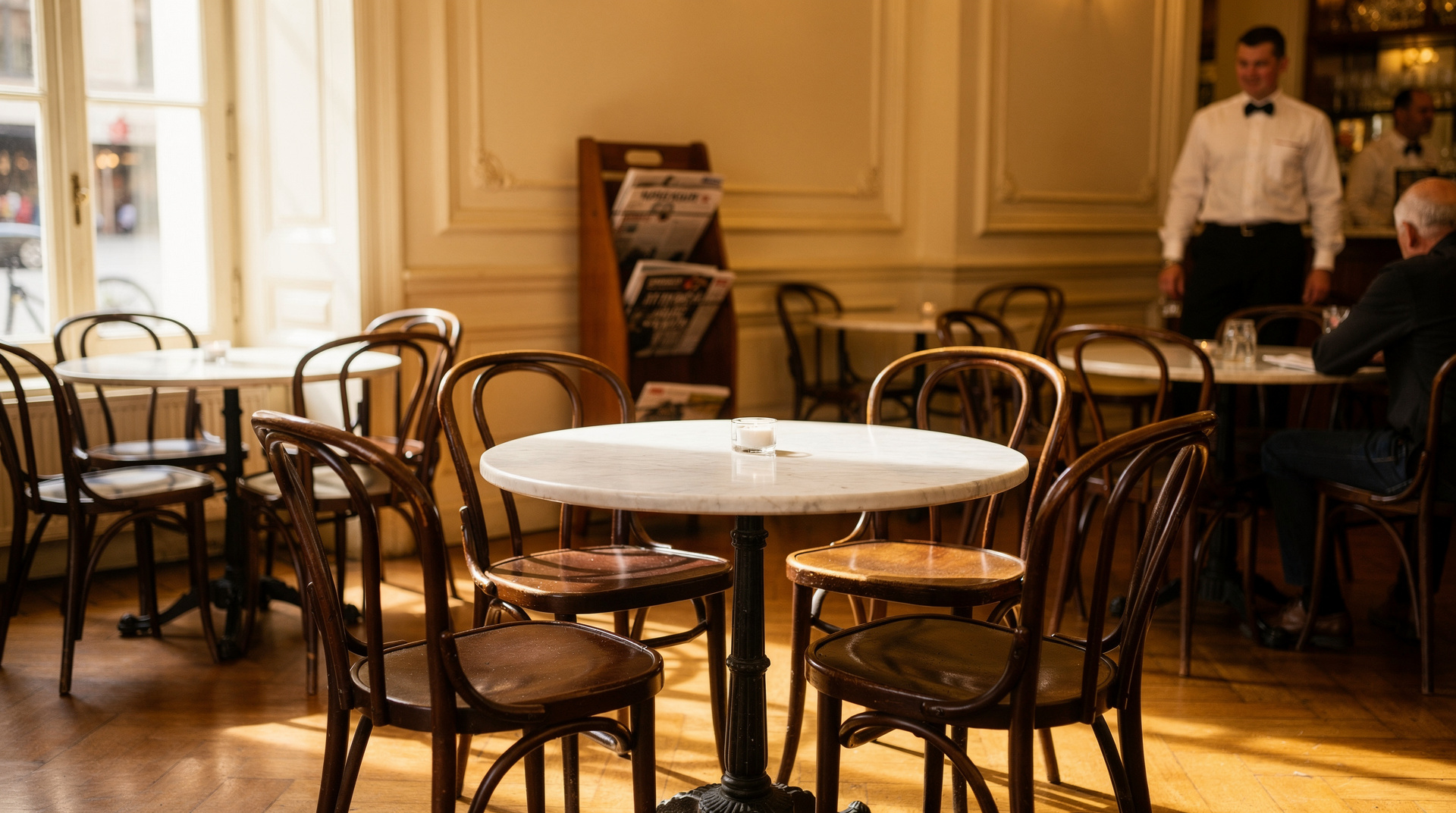
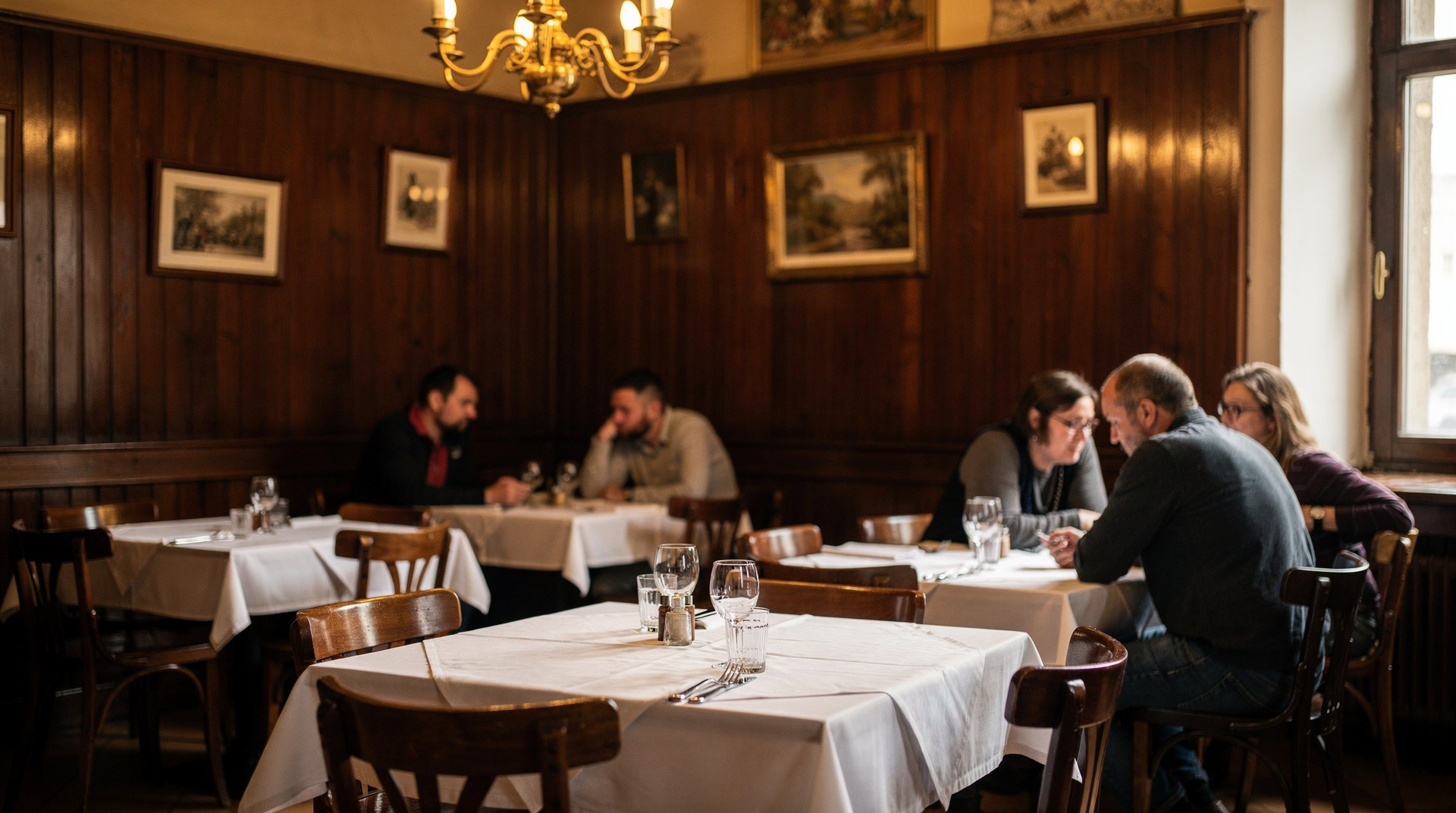
Vienna: typical Austrian food tour with coffee house visitA guided Austrian food tour visits the Naschmarkt, a traditional Beisl restaurant, and a coffee house — giving context to Vienna’s food culture that makes the individual Sachertorte experience more meaningful.
Fitting the cake into a wider Vienna day
A slice of Sachertorte works best as a deliberate pause rather than a box to tick between sights. Both originals sit in the compact historic centre, so they combine naturally with a walk through the Innere Stadt district, where the Hofburg, the cathedral and the pedestrian streets are all within easy reach of one another. If you are building a longer stay around the city’s food and coffee culture, our Vienna pastry tour guide shows how to string several sweet stops together without repeating yourself, and the coffee house etiquette guide explains how to order, how long you may sit, and why nobody will hurry you.
Planning matters most if your days are already full. Our three-day Vienna itinerary leaves room for exactly this kind of unhurried café stop, and treating the cake as a scheduled break rather than an afterthought is the easiest way to avoid joining the longest queue at the worst moment. For readers who like a personal account before committing, the Sachertorte pilgrimage blog post follows one visitor’s experience of comparing the two houses.
If you would rather have the cake as one stop among several, a guided best-of-Vienna food tour on foot lets you taste the city’s classic dishes with a local guide, so the Sachertorte becomes part of a broader picture rather than a solo mission. For a more cake-focused route, the Vienna food tours comparison helps you choose between formats, and the best coffee houses guide lists the rooms where a slow afternoon suits the cake best. If you are weighing the three famous cafés against each other, see Café Central vs Landtmann vs Sacher, and for the bigger picture of the Habsburg capital’s café tradition, our guide to Viennese coffee types explains what to order alongside your slice.
A final practical note: because both originals draw visitors who have travelled a long way specifically for the cake, expect the room to be full of people photographing their plates. That is part of the atmosphere. If you would rather linger quietly, choose the hours at the edges of the day, bring a book, and let the coffee house do what it was designed to do.
Taking Sachertorte home
Both Hotel Sacher and Demel ship their cakes internationally and sell packaged cakes for travel:
Hotel Sacher (sachertorte.at): The famous wooden box format. Small cake (14cm diameter) approximately €40. Large (22cm) approximately €70. Ships worldwide. Room temperature shelf life approximately 3 weeks.
Demel (demel.com): Similar packaging. Metal tins for some formats. Similar pricing. Also ships internationally.
These are among Vienna’s best food souvenirs — genuinely authentic, long shelf life for travel, and universally recognised as a distinctly Viennese gift.
The pattern behind Vienna’s most marketed experiences
The Sachertorte dispute is a useful case study for a wider truth about visiting Vienna: the most internationally famous version of an experience is not automatically the best one, and the crowds cluster around brand recognition rather than quality.
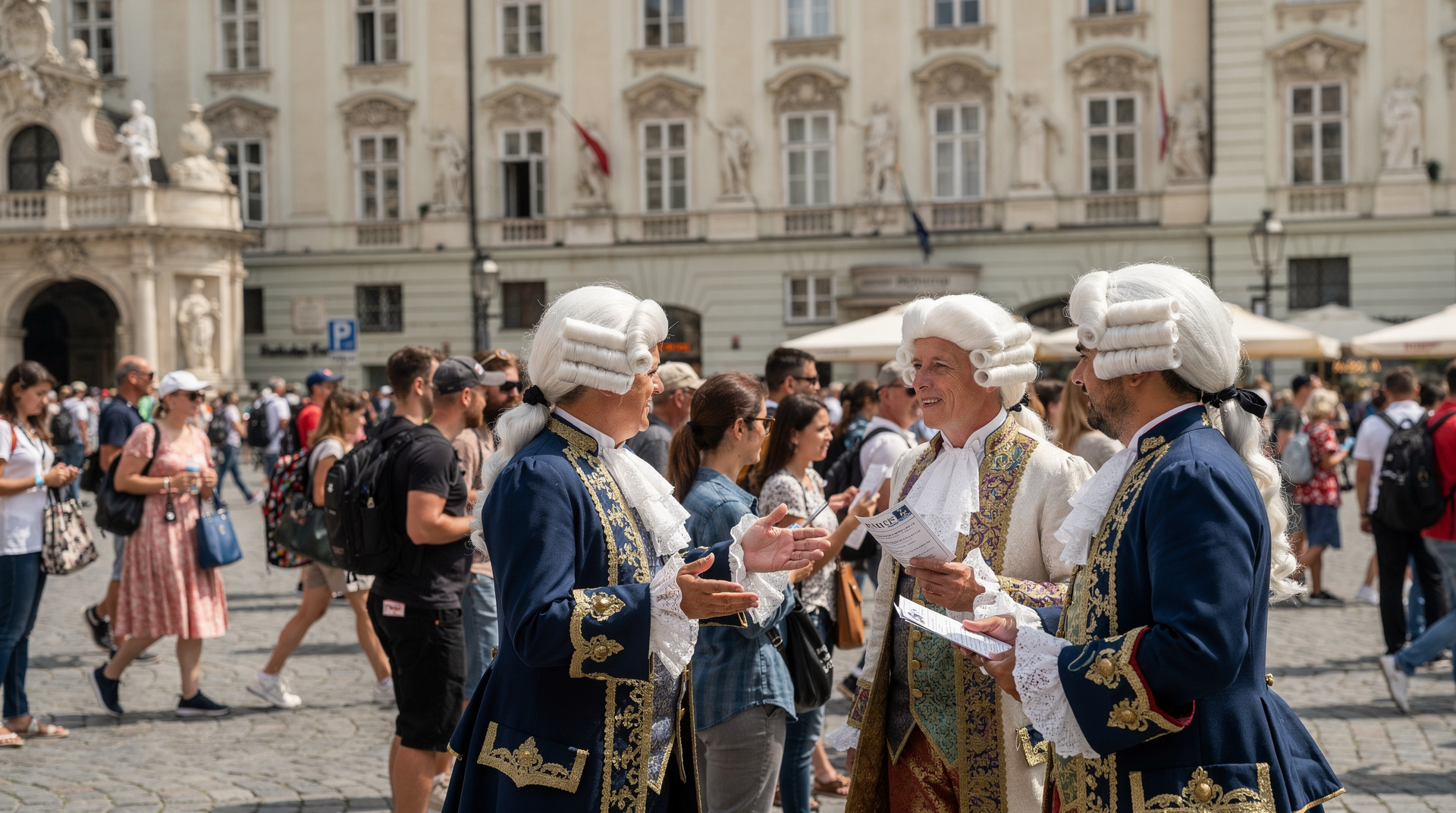
The same pattern shows up with Mozart-costume concert touts working the streets near Stephansdom, and with restaurants that trade on tourist footfall rather than food quality — see our Vienna food guide and best restaurants guide for where the genuinely good food actually is. Learning to read past the marketing (a legally protected seal, a specific address, a documented recipe) rather than the loudest signage is the single most useful skill for eating well in central Vienna.
Frequently asked questions about Sachertorte
Where can I get the real Sachertorte in Vienna?
Only Hotel Sacher (€9/slice) and Demel (€8/slice). Both are in the 1st district. Every other Sachertorte in Vienna is a commercial approximation.
What is the difference between the Sacher and Demel Sachertorte?
Sacher: apricot jam inside the sponge, drier texture, sealed with a round chocolate disc. Demel: jam between sponge and glaze, slightly more buttery, sealed with a triangular mark. Both are excellent.
Do I need to queue for the Sacher Café?
Usually 20–40 minutes at peak times. Arrive early (9–10 am) or after 4 pm. Demel typically has a shorter queue and is our preferred choice.
How much does a slice of Sachertorte cost?
Hotel Sacher: €9. Demel: €8. Tourist cafés: €7–10 for something not connected to either original.
Can I buy Sachertorte to take home?
Yes. Both Sacher and Demel sell whole cakes in wooden/metal boxes for travel and shipping. Shelf life approximately 3 weeks at room temperature.
Top experiences
Bookable activities with verified prices and instant confirmation on GetYourGuide.