Accessible Vienna: wheelchair and mobility guide for 2026
Vienna: Hop-On Hop-Off Sightseeing Bus Tour in 19 Languages
Is Vienna accessible for wheelchair users?
Vienna is reasonably accessible for wheelchair users — better than most comparable European cities of its age. The U-Bahn has lifts at most major stations, new tram lines are step-free, and several major museums including the Kunsthistorisches and Albertina are well adapted. The Hofburg and Schönbrunn state rooms have limitations due to their historic building status.
Vienna’s accessibility: better than expected, not perfect
Vienna is a city of baroque palaces, cobblestone streets, and 19th-century public buildings — which could suggest poor accessibility. The reality is more positive: Vienna has invested significantly in accessibility since the 1990s, and for a city of its age and architectural heritage, the results are genuinely reasonable.
The U-Bahn system has lifts at the majority of central stations. Low-floor trams cover most of the network. The major museums have been retrofitted with accessible entrances, lifts, and adapted facilities. Several of the iconic imperial palaces — including Schönbrunn and Belvedere — have worked to create accessible routes through their historic structures.
What Vienna cannot do is magic away 300 years of architectural history. The Hofburg’s cobblestone courtyards, Schönbrunn’s baroque grand staircases, and the narrow medieval passages of the Innere Stadt present genuine challenges. This guide gives you the honest assessment of what works and what doesn’t, so you can plan realistically.
| Best sights | Belvedere, Kunsthistorisches Museum, Haus der Musik |
| Trickiest sights | Hofburg courtyards, Innere Stadt cobblestones |
| Transport | U-Bahn lifts at most stations, ~80% low-floor trams |
| Booking | Call ahead for palace accessible routes |
| Best base | Ringstrasse or 1st–4th districts |
How Vienna compares site by site
Not every landmark is equally adapted, and knowing this before you plan your days in Vienna saves wasted detours.
| Site | Accessibility | Notes |
|---|---|---|
| Belvedere Palace | Very good | Lift access, accessible permanent collection |
| Kunsthistorisches Museum | Very good | Step-free entrance, lifts to all floors |
| Albertina Museum | Very good | Lift to all gallery floors |
| Haus der Musik | Very good | Lift throughout, converted flak tower |
| Schönbrunn Palace | Good, with limits | Ground floor via ramp, Gloriette hilltop inaccessible |
| Hofburg Palace | Fair | Cobblestone courtyards, lift to Imperial Apartments |
| Naschmarkt | Fair | Uneven surfaces in busiest stalls |
This kind of site-by-site read matters more in Vienna than in newer cities, because a single palace can have an accessible wing and an inaccessible one in the same building.
Public transport accessibility
U-Bahn
Vienna’s five U-Bahn lines (U1, U2, U3, U4, U6) have lift access at most central stations. The Wiener Linien website and app (wienerlinien.at) show current lift status — this matters because lift outages are common and checking in advance saves frustration.
Accessible U-Bahn stations include:
- Stephansplatz (U1, U3) — central landmark
- Karlsplatz (U1, U2, U4) — for Belvedere and Musikverein
- Schönbrunn (U4) — for the palace
- Wien Hbf (U1) — main railway station and airport connection
- Praterstern (U1, U2) — for the Prater
Gaps exist: some older stations on the U6 have not yet been retrofitted. Check the specific stations on your route at wienerlinien.at before travelling.
Trams
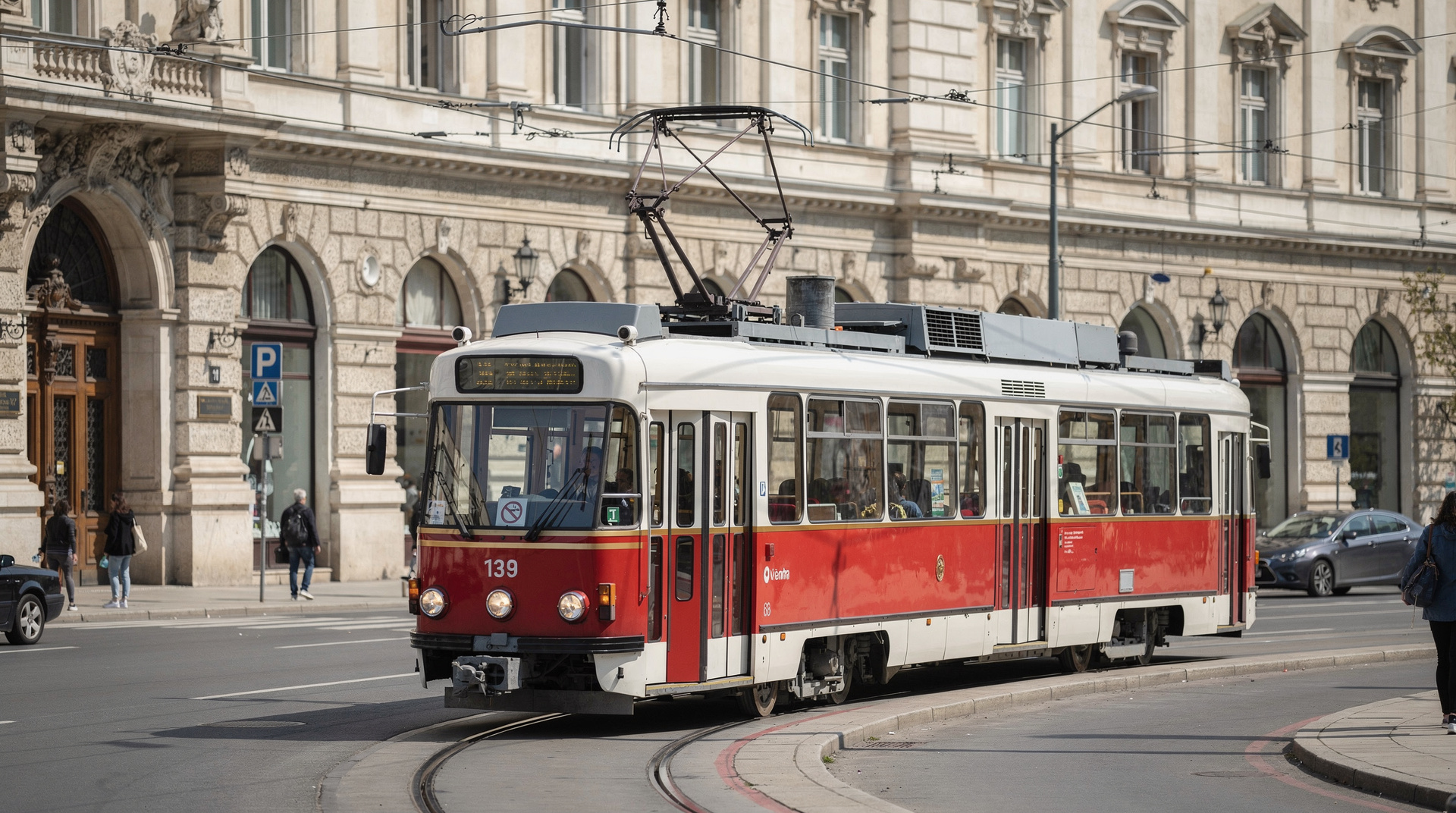
Vienna’s tram network has been progressively replaced with low-floor ULF (Ultra Low Floor) and Flexity vehicles. Approximately 80% of tram routes now operate low-floor vehicles. The boarding gap between platform and tram varies by stop; some older stops have a step that requires the driver to lower the ramp (push the accessibility button at the stop). For safety, tram routes on the Ringstrasse and major thoroughfares are generally more reliable for accessibility than older neighbourhood lines.
Buses
All Vienna city buses are low-floor. The driver can lower the ramp on request. Buses cover areas where trams and U-Bahn do not reach, including parts of the 19th district (wine villages, Grinzing).
Taxis and accessible vehicles
Taxi 31300 and Taxi 40100 both provide wheelchair accessible vehicles (WAV) — request explicitly when booking. Uber offers a Wheelchair Accessible option in the app. Pre-booking rather than street-hailing is advisable.
Major sights: accessibility assessment
Schönbrunn Palace
Ground floor: Accessible via ramp at the main entrance (Schlosstor). The carriage museum (Wagenburg) and several of the ground-floor state rooms are accessible. Contact the palace directly for the current accessible tour route — it varies by season and building work.
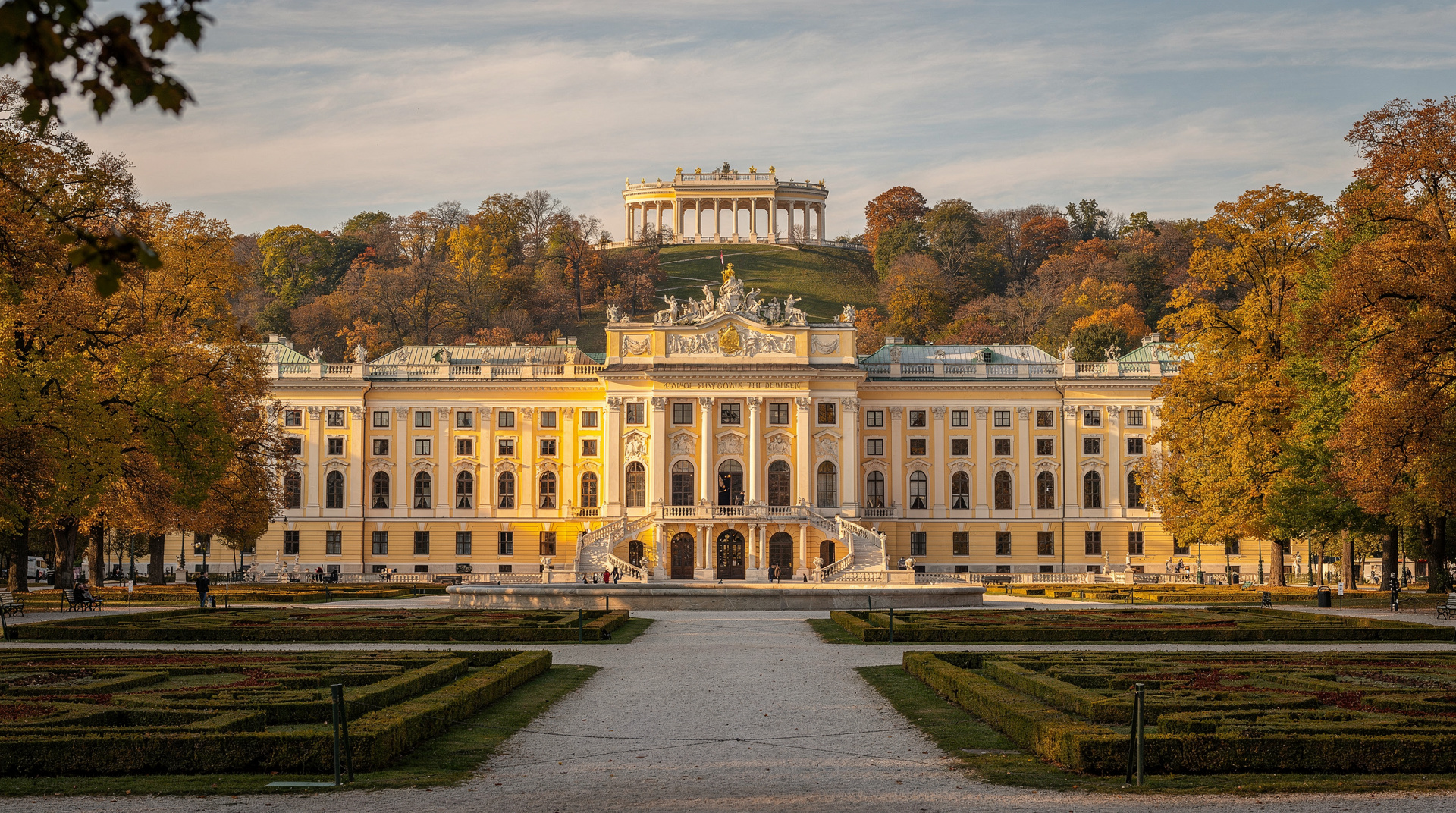
Gardens: Broadly accessible. The main parterre and central axis towards the Gloriette are wide gravel paths. The Gloriette hilltop cannot be accessed by wheelchair — the slope is steep and unpaved. The Neptune Fountain area and the lower garden sections are navigable. The Maze (Irrgarten) has gravel paths.
Practical note: Book the Grand Tour in advance (accessible slot if available) and call the palace at +43 1 811 13 239 for current accessibility specifics. The information on the palace website is not always current.
Hofburg Palace
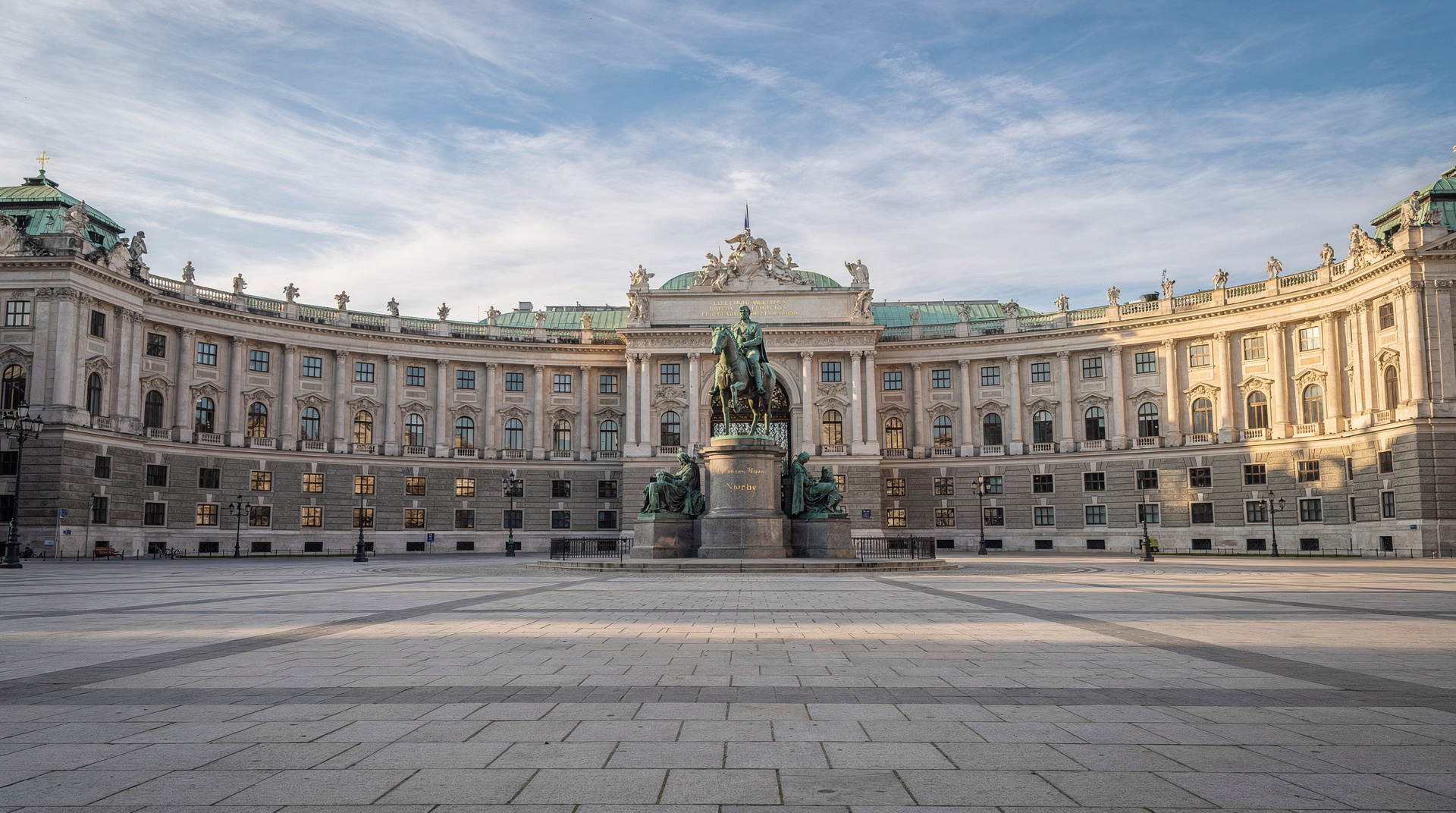
The Hofburg complex presents more challenges than Schönbrunn. The historic courtyards have rough cobblestone surfaces that are difficult for wheelchairs. The main Imperial Apartments and Sisi Museum are accessed via lift within the Kaiserliche Hofburg section — the accessible entrance is on Michaelerplatz. Call ahead: +43 1 533 75 70.
The Hofburg Imperial Chapel (Burgkapelle), where the Vienna Boys’ Choir performs, is one of the less accessible sections — multiple steps, limited space for wheelchairs.
Vienna: Schönbrunn Palace and Gardens skip-the-line guided tourBelvedere Palace
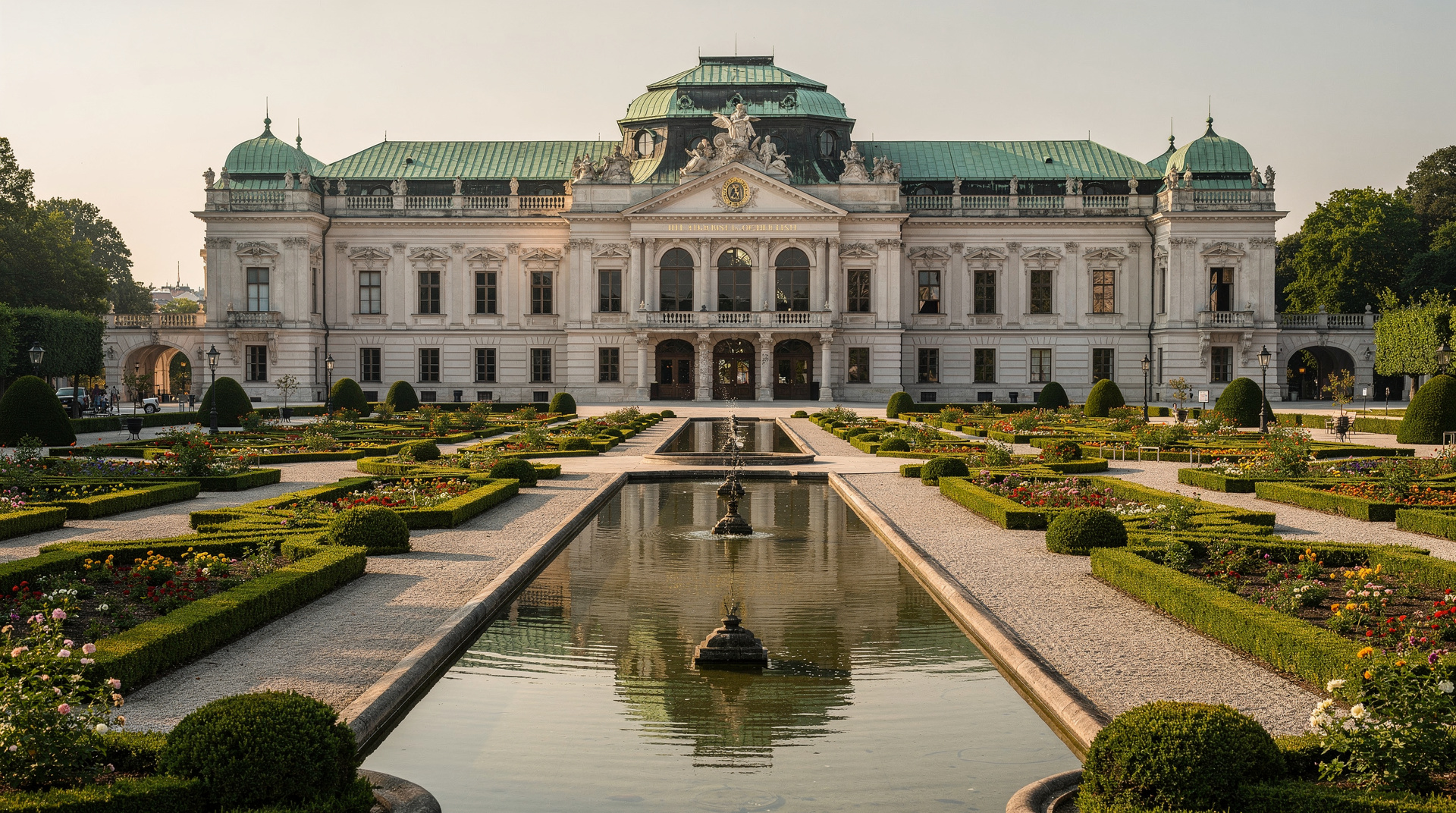
The Upper Belvedere is one of Vienna’s best-adapted historic buildings. Lift access from the garden level and accessible route through the permanent collection (including Klimt’s The Kiss) are well-organised. The café and shop at the Lower Belvedere are accessible. The gardens between Upper and Lower Belvedere have some gravel sections but the main axis is accessible.
Contact: +43 1 795 57 0 for current accessibility map.
Kunsthistorisches Museum
The Kunsthistorisches Museum on the Ring has been well-adapted. There is step-free entrance via the accessible entrance on Maria-Theresien-Platz (ask staff for guidance), lifts to all floors, accessible toilets, and adapted facilities throughout. One of Vienna’s better museum accessibility experiences.
Albertina Museum
The Albertina has lift access to all gallery floors. The accessible entrance is clearly marked on the Albertina-Platz side. The historic staterooms on the first floor are accessible via lift.
Naturhistorisches Museum
Ground floor accessible. Upper floors via lift. One of the more complex historic buildings in terms of internal accessibility — call ahead (+43 1 521 77) if you have specific requirements.
Haus der Musik
An unusual building (a converted Flakturm — anti-aircraft tower) with a lift throughout. The aquarium sections on different floors are all accessible. Well-adapted.
Restaurants and coffee houses
Vienna’s coffee houses and restaurants vary considerably. The most central and tourist-facing establishments (Café Central, Café Landtmann, Café Hawelka) generally have step-free or low-step entrances and accessible toilet areas — confirm individually. Hawelka in particular is a narrow, crowded space that may be challenging. Café Landtmann has the most accessible ground-floor seating.
The Naschmarkt has uneven market surfaces and is challenging for wheelchairs in the busiest sections, but the outer stalls and the Saturday farmers’ market area are navigable.
Practical planning tools
Wiener Linien accessibility map: wienerlinien.at/en/accessibility provides real-time lift status and accessible route planning.
Vienna Tourist Board: wien.info/en/travel-info/accessible-vienna has an accessibility guide and a list of adapted tour operators.
Mobil in Wien: A dedicated Vienna disability travel resource available via the city’s official channels.
Eureka: The national accessibility database for Austria, listing hotels, restaurants, and attractions with verified accessibility information.
Accommodation accessibility
When booking Vienna accommodation, specify accessibility needs explicitly and confirm:
- Lift to room (not all older hotels have lifts reaching all floors)
- Roll-in shower or wetroom
- Doorway width (70 cm minimum for most standard wheelchairs)
- Ground floor option if lift is unavailable
Vienna’s major hotel chains (Marriott, Hilton, IHG) have standardised accessible rooms. Boutique hotels in converted historic buildings vary greatly — always confirm by phone rather than relying on website descriptions.
Accessible tours and sightseeing
Vienna: Hop-On Hop-Off sightseeing bus tour in 19 languages The Hop-On Hop-Off sightseeing buses provide a practical accessible overview of Vienna’s Ringstrasse sights. Low-floor vehicles are available on some routes — confirm when booking. The 24-hour pass allows you to stop at Schönbrunn, Belvedere, and the city centre at your own pace.
For a structured city centre orientation, guided walking tours with accessible routing can be arranged through specialist operators listed on the Vienna Tourist Board website. The standard group walking tours from Stephansdom involve some cobblestone sections.
Vienna: guided walking tour of city centre highlightsAccessible day trips from Vienna
Several popular day trips from Vienna are more manageable than they first appear. The Wachau valley day trip can be done largely by river cruise, which avoids the walking that a self-driven wine-route tour would demand — the boat itself has accessible seating and a level boarding ramp at most Danube piers.
Melk Abbey, by contrast, involves a hill climb from the town and several staircases inside the monastery; it is one of the harder day trips for wheelchair users without assistance. If a full day trip feels ambitious, a half-day option closer to the city, or simply extending time in central Vienna, is often the more comfortable choice — see how many days in Vienna for a realistic pacing guide.
Building a realistic accessible itinerary
The most comfortable way to use this guide is to anchor each day around one well-adapted indoor site and keep the rest of the day light. A morning at the Kunsthistorisches Museum or the Albertina pairs well with a slow afternoon in a coffee house; our coffee house guide explains how the ritual works, so you can settle in without feeling rushed. The Belvedere guide and the Schönbrunn guide cover the visit details that sit alongside the accessibility notes above.
If you want a ready-made structure, the 3-day itinerary and the weekend itinerary can be adapted by swapping the cobbled stretches for the museums and low-floor tram rides described here. For getting in and out of the city, the airport to city guide compares the options, and it is worth confirming step-free access for whichever one you choose before you travel.
Budget and family considerations
Accessible travel in Vienna does not have to be expensive. Low-floor buses and trams are covered by the same tickets as the rest of the network, and the Vienna on a budget guide applies just as well to accessible itineraries — the accessible museums above (Belvedere, Kunsthistorisches, Albertina) are also among the city’s best value cultural stops. Families travelling with both a wheelchair user and children should read the Vienna with kids guide: pram and wheelchair logistics overlap closely, particularly on trams and at museum cloakrooms, and the same low-floor vehicles and lift-equipped stations work for both.
Seasonal accessibility considerations
Winter: Vienna’s cobblestone streets become more challenging when wet or icy (November–March). The heated U-Bahn system is a warm, accessible alternative to street-level navigation in cold weather.
Summer: The main palace sites (Schönbrunn, Belvedere) have outdoor accessible seating in the gardens. Heat at the U-Bahn stations without air conditioning (U6 in particular) can be intense in July–August.
Frequently asked questions about accessible Vienna
Is Vienna’s public transport wheelchair accessible?
Vienna’s U-Bahn has lifts at most central stations (check wienerlinien.at for current lift status). New low-floor trams cover about 80% of routes. Buses are universally low-floor. Night buses replace U-Bahn after midnight.
Can wheelchair users visit Schönbrunn Palace?
Ground floor accessible via ramp. Gardens are broadly accessible with some gravel surfaces. The Gloriette hilltop climb is not accessible. Call the palace directly for the current accessible tour route.
Is the Belvedere accessible?
The Upper Belvedere has a lift and is well-adapted. The permanent collection including Klimt’s The Kiss is accessible. The gardens have some gravel sections but are broadly navigable. One of Vienna’s better adapted cultural sites.
What is the most accessible hotel area in Vienna?
Hotels on or near the Ringstrasse and in the 1st–4th districts are closest to major sights and accessible U-Bahn stations. Confirm lift access and room configuration directly with hotels before booking.
Are there accessible city tours in Vienna?
The Hop-On Hop-Off bus has low-floor vehicles on some routes — confirm when booking. Private accessible taxi tours can be arranged through Wien Taxi 31300. The Vienna Tourist Board lists accessible tour operators on wien.info.
Top experiences
Bookable activities with verified prices and instant confirmation on GetYourGuide.