Aggstein Castle
Aggstein Castle ruins in the Wachau: how to visit the dramatic hilltop fortress above the Danube, its medieval history and combining it with Dürnstein.
Wachau Valley: 3 Castles & Wine Private Guided Day Tour
Quick facts
- Location
- Above Schönbühel, Wachau Valley
- Access
- Car or bicycle; no train stop nearby
- Admission
- Small fee for the castle courtyard
- Altitude
- 300m above the Danube
Aggstein: the Wachau’s most dramatic ruin
Burgruine Aggstein sits 300 metres above the Danube on a narrow ridge of primary rock — high enough that on a clear day you can see both directions of river traffic for kilometres, and dramatic enough to look exactly like a castle from an illuminated medieval manuscript. The ruin, though roofless and partially collapsed in sections, is one of the best-preserved and most atmospherically positioned medieval fortresses in Lower Austria. Standing on the uppermost tower platform with the Danube glinting far below, the terraced vineyards climbing the opposite slopes, and nothing but forest on the hillsides around you, it is easy to understand why the Wachau’s most frequent descriptor is “timeless.”
| Where | South bank of the Danube, between Melk and Spitz |
| Cost | Small fee at the gate for the courtyard and towers |
| Time needed | Around 2 hours including the uphill walk |
| Getting there | Car, bicycle, or a guided Wachau day trip |
| Best time | Weekday mornings, April–May or September–October |
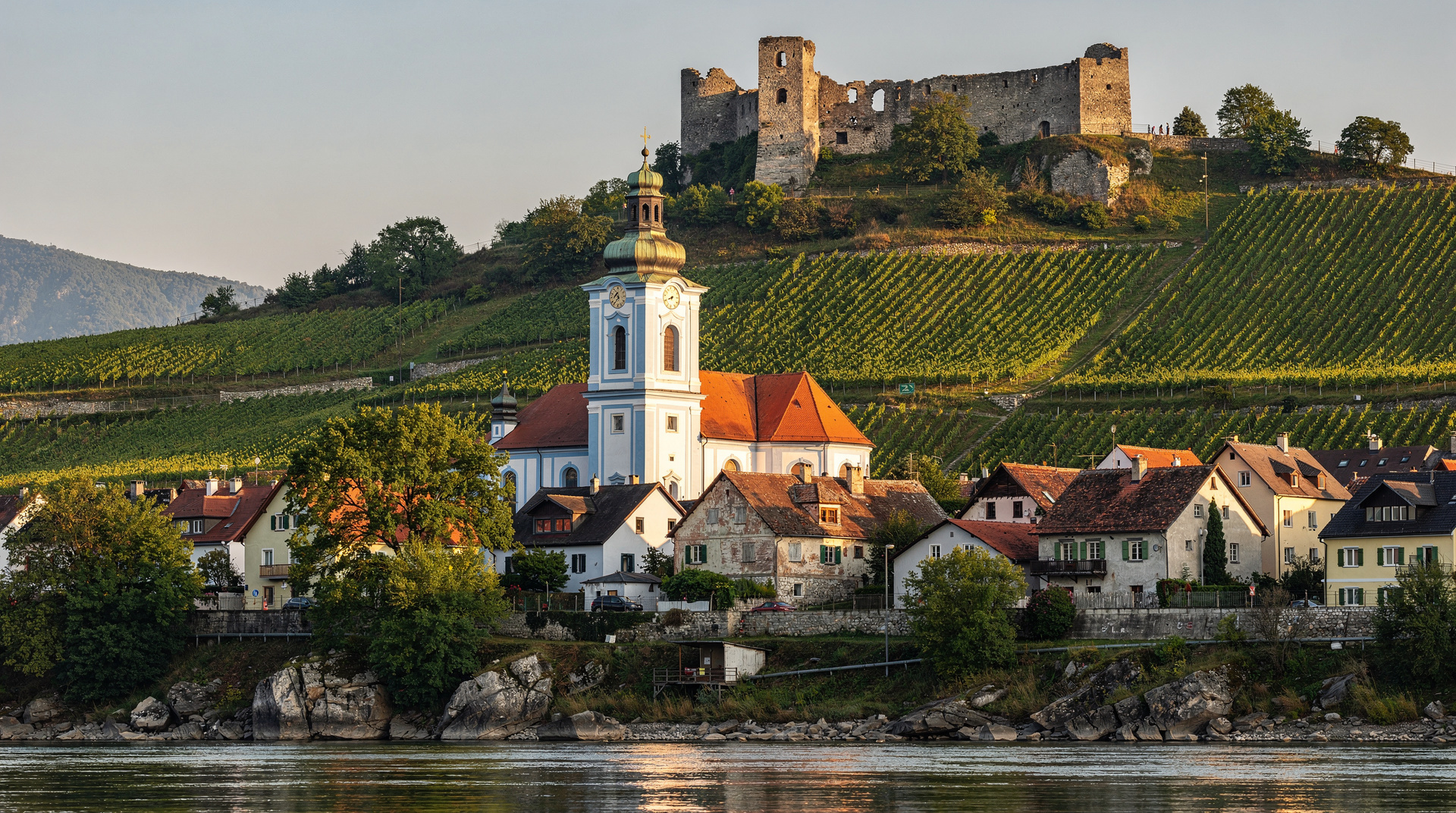
The castle’s ridge position made it one of the most strategically critical points in the entire valley. Whoever held Aggstein held the chokepoint — any boat coming upstream against the Danube current was at the mercy of the garrison above. The Kuenringer family — the same dynasty that imprisoned Richard the Lionheart at Dürnstein and dominated the Wachau throughout the high medieval period — built the first fortification here in the 12th century.
The castle passed through various hands over the following centuries, absorbed by the Habsburgs, transferred to the Counts of Losenstein in the 15th century, and eventually abandoned in the 17th century following a combination of Turkish raids, military obsolescence, and the slow economic decay that attended many riverside fortifications as trade routes shifted.
The “Schreckenwald” legend — that the castle’s lord forced captured river merchants to either pay a ransom or be thrown from the cliff into a garden of thorns below, there to survive or starve — is almost certainly a 19th-century romantic invention, but it has been enthusiastically retold since the Romantic era and has given the castle an atmosphere of gothic menace that the ruins themselves do nothing to dispel. You can, if you choose, visit the narrow ledge that generations of storytellers have identified as “the rose garden” — the thorned platform of the legend. The view from it is extraordinary; the story is probably fiction.
The ruins in detail
The castle complex is larger than it first appears from the road below. The main gate tower stands at the eastern end of the ridge and is the best-preserved section, with carved stone details still visible on the jambs. Beyond it, the central courtyard — the heart of the medieval fortress — is partly cleared and accessible, with enough standing masonry to give a clear sense of the original scale. The castle’s great hall, the domestic buildings, and the cisterns are identifiable even in ruined form.
The western tower, at the furthest point of the ridge, is the highest accessible point and commands the finest views: looking back eastward along the ridge toward the main castle structures, and outward northward over the full width of the Danube below. In both directions the view is unobstructed — the ridge runs precisely along the river’s widest meander here. In the other direction, the agricultural plain of Lower Austria extends toward the horizon with no interruption. It is worth spending twenty minutes up here before descending.
The foundations of the domestic buildings in the lower ward tell their own story — the scale of the kitchen complex, the stabling, and the service areas suggest a garrison of considerable size during Aggstein’s operational peak in the 13th and 14th centuries. Archaeological digs have recovered material confirming continuous occupation from the 12th century through to the late 17th.
Visiting Aggstein
The castle is open daily from April to October (check current hours before visiting, as seasonal opening times vary slightly year to year). A small admission charge applies to enter the main courtyard and upper sections — this is collected at the gate rather than in advance. There is a modest café in the lower castle area where the admission is handled, which does a reasonable job of coffee and simple food for anyone who has worked up a hunger on the uphill approach.
The walk from the road to the castle entrance takes around 15–20 minutes on a signed path through mixed forest — enough of an ascent to work the legs but not demanding for anyone who is moderately fit. Proper shoes are advisable rather than sandals; the path has stone sections that can be slippery in wet weather.
The views from the battlements — particularly from the northwestern tower looking back toward Melk — are among the finest in the valley. Photography conditions are best in morning light when the sun comes from the east and illuminates the tower faces.
Getting there independently
The site is not accessible by public transport in any practical sense. The nearest train station is Aggsbach Markt on the south bank of the Danube, from which a seasonal ferry crosses to Aggsbach Dorf on the south bank; from there it is a 2 km uphill walk to the castle. The ferry does not run on all days or in all seasons — check schedules locally before depending on this route.
By car from Vienna: approximately 1 hour via the A1 motorway to Melk, then the south-bank road B33. The castle is signed from the main road and there is a small car park at the base of the approach path. By bicycle on the Danube Cycle Path (Donauradweg), cyclists on the south bank route can access Aggstein via the ferry crossing from Emmersdorf — the castle sits directly above the path and the detour is a natural break on a longer cycling day.
The Wachau 3 castles and wine private guided day tour is the most practical way to visit Aggstein as part of a guided circuit that includes Dürnstein and Schönbühel — covering the valley’s castle heritage in a single day with transport included and a guide who can provide the historical context that the ruins alone do not supply.
Combining Aggstein with the Wachau circuit
Aggstein sits on the south bank of the Danube, between Melk (roughly 10 km to the east) and Spitz (roughly 15 km to the west). The classic Wachau day trip — train to Melk, abbey visit, Danube boat downstream to Krems — stays on the north bank and does not pass Aggstein at all. Most visitors doing the standard circuit never see it. To include the castle, you need either a car, a bicycle on the south-bank cycle path, or a guided tour that crosses the river.
Independent visitors driving the south bank road can combine Aggstein and Schönbühel Castle — a smaller 12th-century fortress visible from the road near Aggstein, privately owned and not open to visitors but striking from below — in a single morning before crossing via the ferry at Emmersdorf to the north bank for Dürnstein or a wine tasting in Krems in the afternoon. This south-bank approach to the Wachau is less visited than the standard route and, arguably, more atmospheric — the road is narrower, the villages quieter, and the relationship between the hillside castles and the river below is more immediately legible.
Cyclists combining both banks will find that the south-bank section from Aggstein to Spitz — through the Spitzer Graben side valley — is among the most scenic single stretches of the entire Donauradweg. The gradient is gentle, the traffic minimal, and the vineyard villages along the way (Willendorf, Spitz itself) are worth stops in their own right. Spitz’s late-Gothic parish church and the ruined Hinterhaus fortress above the village make a natural afternoon complement to an Aggstein morning.
Planning Aggstein around the rest of your Wachau trip
Aggstein works best as one chapter of a longer Wachau story rather than as a stand-alone outing. If you are still deciding how to structure the day, the Wachau day trip from Vienna guide lays out the main options, and the wider best day trips from Vienna overview helps you weigh the valley against other destinations before you commit a precious free day.
Travellers who prefer the river to the road can build a very different day around the water. The Wachau Danube cruise guide explains how the boats work, and the Melk to Krems boat trip is the classic way to see the valley’s castles from below. From the deck you will glimpse the ridges that carry ruins like Aggstein, which is a good way to decide whether the castle deserves a separate visit with your own transport on another trip.
If wine is part of your plan, remember that the south bank has its own quiet rhythm. The Wachau wine route guide is useful for choosing a tasting stop once you have come down from the ruin, and it pairs naturally with an afternoon in the vineyard villages. A castle morning followed by a long, unhurried lunch is arguably the most satisfying way to use the valley.
What to bring and how to pace the visit
Treat the visit as a short outdoor excursion rather than a museum stop. Bring water, a light layer for the exposed upper tower, and a camera or phone with enough battery for the views. The ruin has no polished interiors to shelter in, so the experience is largely about walking the ridge, climbing to the high points and simply sitting for a while with the river below.
Go slowly on the uphill approach and give yourself time at the top. Many visitors rush the towers and then regret it; the best moments tend to come when you stop for a few minutes and look along the valley in both directions. If you are travelling with children or less confident walkers, take the path at an easy pace and use the café area as a resting point before or after the ruins.
Pairing the castle with other stops
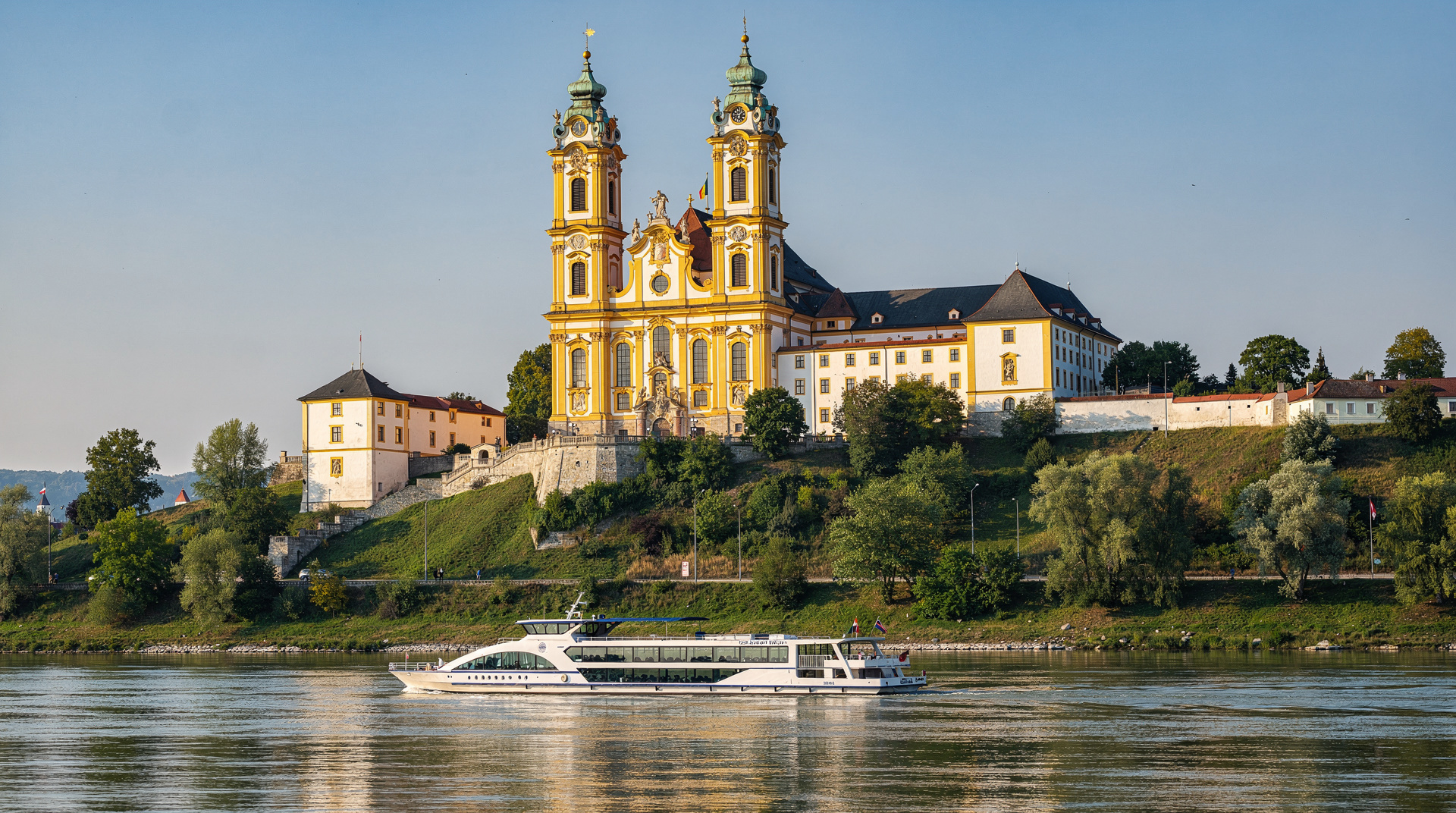
For a fuller picture of the region, read the Melk Abbey day trip guide alongside this page. Melk and Aggstein offer a pleasing contrast: one is a fully intact baroque monument, the other a stark medieval shell. Seeing both gives you a sense of how the valley moved from fortified frontier to grand religious and cultural centre. Together with Dürnstein and the vineyards, they make a coherent theme for a multi-day stay, and the Vienna Woods offer a gentler, greener contrast if you have another half day to fill closer to the capital.
If you would rather not drive
Not everyone arrives with a car or a bicycle, and that is fine. A guided day is the simplest answer: a small-group Wachau day tour with a wine tasting lets someone else handle the roads while you concentrate on the scenery, and a Melk Abbey tour combined with a Danube boat trip gives you the river perspective that the ruin itself is built to dominate. Neither replaces a slow wander along the ridge, but both make the valley easy to read as a whole.
Whichever way you go, it helps to place Aggstein inside the wider valley first. The Wachau Valley page describes the landscape and villages, Melk and Krems mark the natural start and end points of most itineraries, and Dürnstein supplies the postcard view that most people picture when they think of the region.
Fitting the castle into a longer stay
Aggstein suits a Vienna stay of several days better than a rushed overnight. If you are still working out how long to give the capital, the how many days in Vienna guide is a good starting point, and the 5-day Vienna itinerary leaves room for a valley excursion without squeezing the city sights. Seasonal timing matters too: the best time to visit Vienna overview, Vienna in spring and Vienna in autumn all point towards the same shoulder-season windows that suit the castle.
For first-hand colour, the autumn in the Wachau diary and the Wachau by bike trip report show what the valley feels like on the ground. Once you are back down from the ruin, the Grüner Veltliner guide and the Heuriger guide explain what to order and how a wine-growers’ tavern works, which turns a castle morning into a full and unhurried day.
When to visit
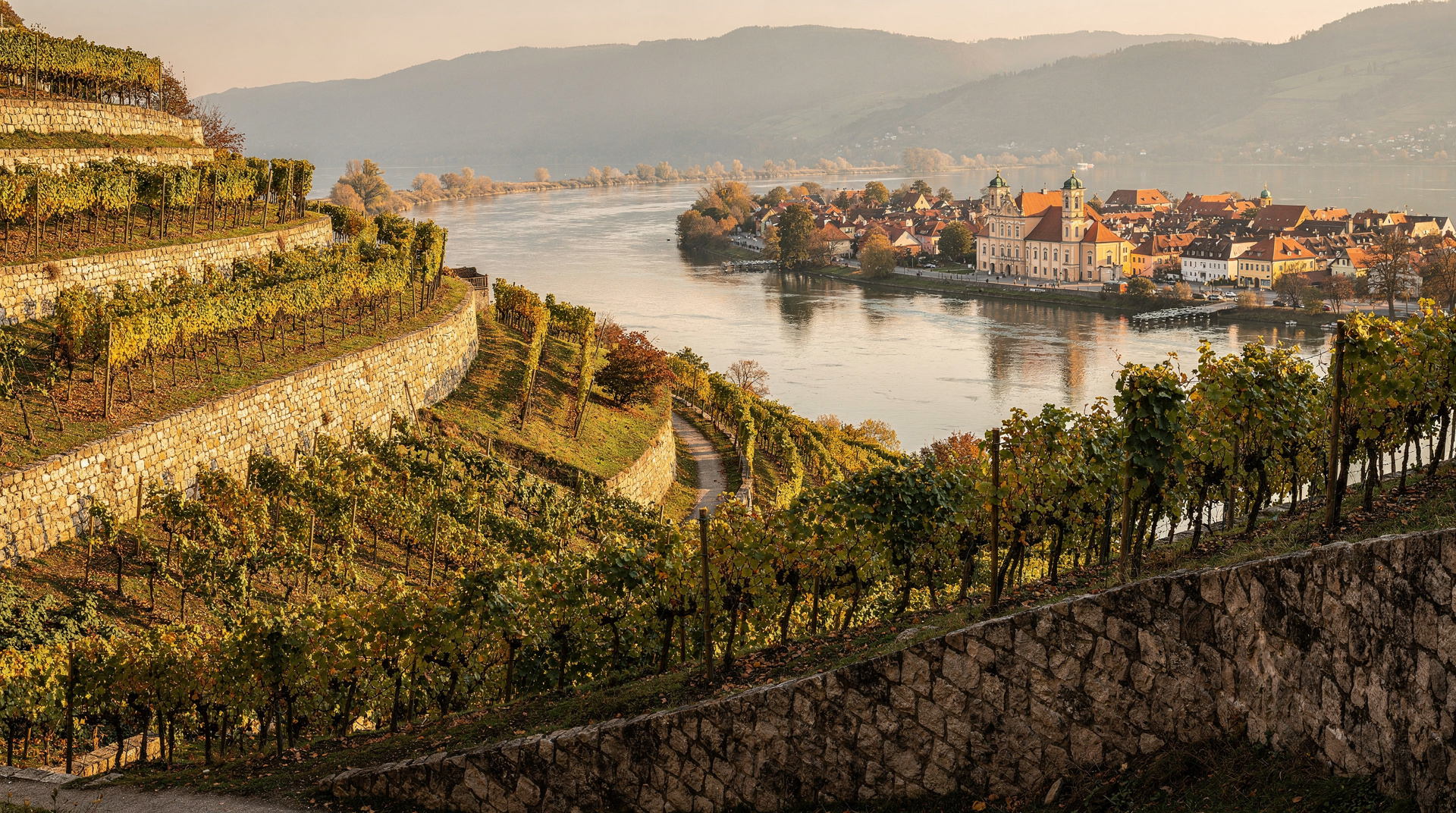
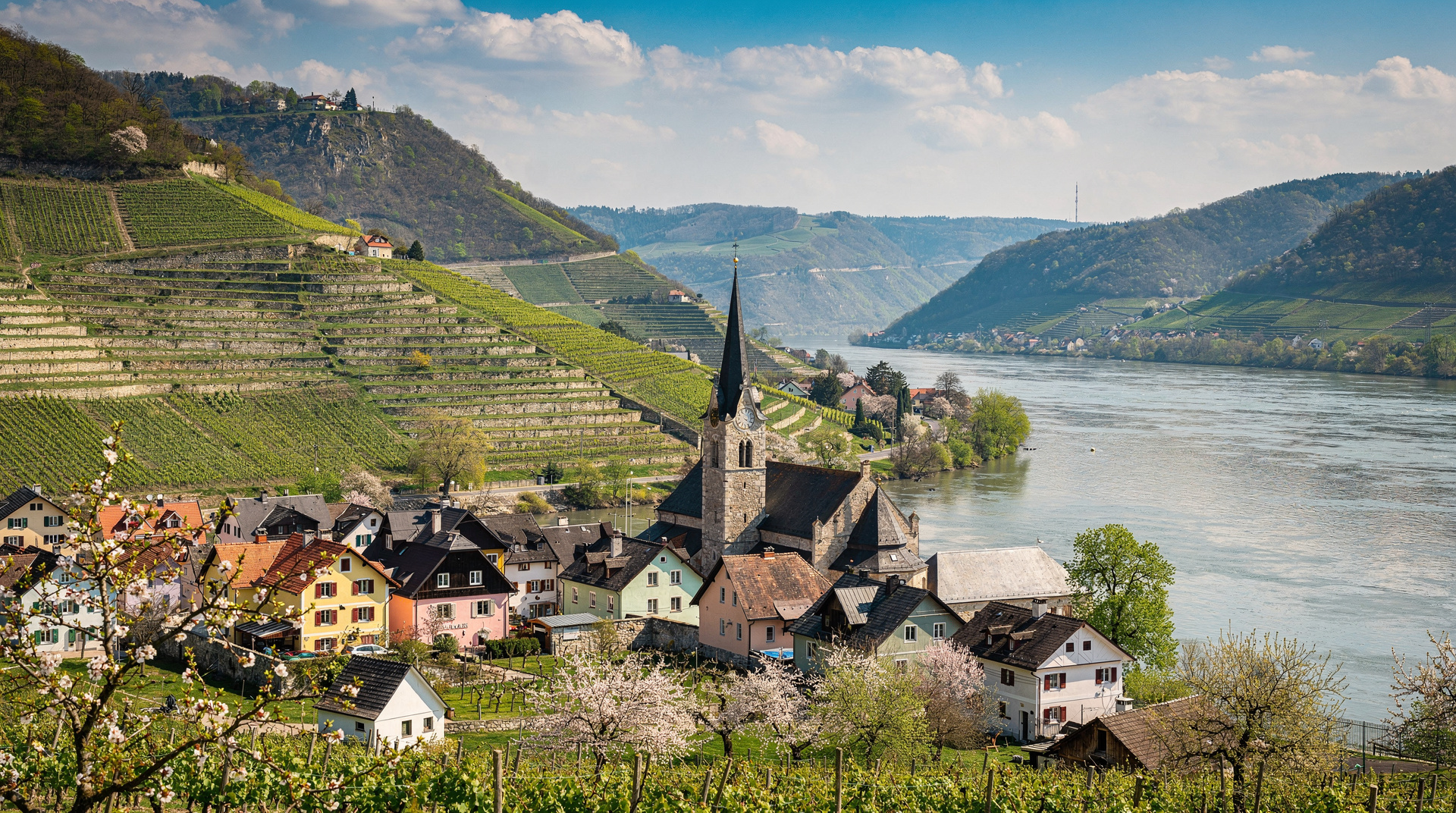
The castle is at its best in the shoulder seasons — April and May when the apricot orchards on the lower slopes are in flower, and September and October when the vine terraces turn yellow and gold. In summer the site is popular with Viennese day-trippers and cycling groups, and the afternoon light makes photography from the upper tower challenging. Arriving in the morning — especially on weekdays — means relative quiet and better light on the stone.
The castle is atmospheric even in overcast conditions: the mist that sits in the Danube valley on autumn mornings often reaches the tower bases but not the upper walls, leaving the ruin standing above a white layer with the river invisible below — a surreal and memorable effect that no photograph quite captures.
Aggstein vs Dürnstein vs Melk: which to prioritise
Most visitors cannot fit all three Wachau castles into a single day trip from Vienna, so it helps to know how they differ before choosing.
| Site | Character | Effort | Best for |
|---|---|---|---|
| Aggstein | Genuine ruin, minimal restoration, biggest views | Car/bike only, 15–20 min uphill walk | Photographers, quiet atmosphere |
| Dürnstein | Blue abbey tower + castle ruin, Richard the Lionheart story | Reachable by boat/train, 30–40 min uphill climb | First-timers, boat-trip stopovers |
| Melk | Intact working abbey, grand baroque interiors | Fully accessible, short walk from town | Baroque architecture, guided tours |
If time only allows one castle and you are travelling independently without a car, Dürnstein is the easier and more rewarding choice — it is reachable by the Danube boat and the standard Melk-to-Krems circuit passes directly through it. Aggstein rewards those who already have a car or bicycle and want the least-visited, most atmospheric ruin in the valley, ideally paired with Krems or the wider Wachau Valley circuit.